Time travel
25th century BC
Egypt's Fifth Dynasty kings build sun temples at Abusir and compile a year-by-year royal chronicle even as their pyramids shrink from Giza's scale, and in Sumer the city of Lagash carves the first known inscribed war monument.
Mental Worlds: Evidence and Inference
A priest serving one of the new sun temples at Abusir this century inhabits an Egypt visibly different in style, if not in fundamental structure, from the one that built Giza's pyramids the century before. Userkaf, Sahure, Neferirkare, and Niuserre, the Fifth Dynasty kings whose reigns fill most of this century, still build pyramids, but smaller ones with rubble cores that will not outlast the millennia the way Khufu's solid masonry has, and they invest instead in open sun temples honoring Ra around a squat obelisk. What this century's Egyptian administration does newly well is track time itself as continuous record: material later compiled into the Palermo Stone treats each year of a reign as a line in an ongoing ledger, Nile flood height noted beside festivals and temple gifts, an act of bureaucratic memory that binds one king's reign to the next into a single legible sequence, a shift toward record-keeping precision even as monumental ambition itself recedes from its Giza peak.
In Sumer, a very different kind of permanence is being carved this century. Eannatum, ruler of Lagash, commissions a limestone stele to commemorate victory in a border war with the neighboring city of Umma, a conflict over irrigated farmland that has likely simmered for generations and will keep simmering for generations more. What makes the Stele of Vultures genuinely new is not the violence it depicts, vultures carrying off severed enemy heads, the god Ningirsu holding a net full of captured soldiers, but the fact that image and inscribed text now work together to make a specific, named political claim: this city defeated that city, over this land, under this god's sanction. A Lagash citizen standing before the stele could, for the first time in Mesopotamian history, connect a carved scene directly to a documented event rather than a general theological or economic assertion.
For most people alive this century, in Egypt as much as Sumer, none of this monumental writing or building touched daily experience directly. A farmer along the Nile knew the flood's rhythm through lived seasonal experience rather than any written annal, and understood royal power mainly through the periodic labor obligations, taxation, or conscription a king's administration could impose, not through reading a chronicle he likely could not read at all. Literacy remained the possession of a narrow scribal and priestly class in both civilizations, and the gap between what the era's monuments could express and what an ordinary person could access grew, if anything, wider as the monuments themselves grew more sophisticated.
Further east, cities are rising along the Indus and its tributaries, their planned streets and drainage systems implying a level of civic organization that would not embarrass Sumer or Egypt, yet the Indus script, where it appears at all on seals and pottery, remains and will remain undeciphered. A literate person at Abusir or Lagash this century had no way of knowing that a third urban civilization, potentially as populous as either, was taking shape far to the east; the century's three literate or proto-literate worlds, Egypt, Mesopotamia, and the still-emerging Indus, existed largely in ignorance of one another, each building its own understanding of permanence in isolation.
The political map
Major Polities and Cultural Regions
- Egypt (Fifth Dynasty) United Nile kingdom under Userkaf, Sahure, Neferirkare, and Niuserre, building sun temples at Abusir and compiling the Palermo Stone annals.
- Lagash Sumerian city-state under Eannatum, victorious in a border war with neighboring Umma commemorated on the Stele of Vultures.
- Other Early Dynastic Mesopotamian city-states Ur, Uruk, Kish, Umma, and others, still independently governed and periodically at odds with Lagash and each other.
- Indus valley civilization (early urban phase) Cities forming along the Indus and its tributaries; still no deciphered script.
Borders are approximate scholarly reconstructions from historical-basemaps (GPL-3). Nearest available basemap anchor year: 2000 BC.
State of the domains
Texts and Written Culture
Egyptian record-keeping takes a further step this century with material later compiled into the Palermo Stone, a basalt annal recording Nile flood heights, festivals, and temple donations year by year across many reigns down through the mid-Fifth Dynasty, treating history as a continuous administrative ledger rather than a narrative. In Mesopotamia, Lagash's ruler Eannatum commissions the Stele of Vultures, combining image and inscribed text to commemorate a border victory over the rival city of Umma, the earliest known monument to pair sustained written narrative with pictorial scenes of specific, named warfare, a genuine step beyond both pure accounting and formulaic praise.
Art
Fifth Dynasty kings, beginning with Userkaf, shift Old Kingdom religious architecture toward open sun temples dedicated to Ra at Abusir, built around a squat obelisk, alongside their own pyramids nearby, smaller and less durably built than Khufu and Khafre's Giza monuments the previous century but often paired with finely carved relief programs celebrating royal ritual and the natural world. In Mesopotamia, Eannatum's Stele of Vultures depicts the god Ningirsu holding a net full of trapped enemy soldiers and vultures carrying off severed heads, a war monument whose violent imagery is matched by, rather than substituting for, its accompanying inscribed text.
Medicine
Fifth Dynasty Egypt leaves no medical text behind, any more than the centuries before it, and Mesopotamia stays equally silent. Relief programs decorating Fifth Dynasty sun temples and pyramid causeways occasionally show physical debility, dwarfism, emaciation, rendered as observed reality rather than medical case study, the closest either civilization comes to a documented interest in the unusual body. Skeletal remains from ordinary Egyptian and Mesopotamian burials of this period continue to show healed fractures and the physical wear of hard labor, without any accompanying written diagnosis, prognosis, or treatment in either region.
Science
The Palermo Stone's year-by-year format, recording Nile flood heights alongside festivals and royal events, represents an early systematic attempt to track a natural cycle numerically over a long span of time, though it remains a record rather than an explanation of why the flood behaves as it does. Fifth Dynasty sun temples at Abusir, oriented and built around the worship of Ra, imply a developed solar religious calendar, though no contemporary text sets out its underlying method. Mesopotamian scribes continue refining sexagesimal counting and land-measurement conventions in support of Lagash's own administrative and military recordkeeping.
Military
Eannatum of Lagash's Stele of Vultures commemorates a real border war with the neighboring city of Umma over disputed agricultural land, the earliest inscribed Mesopotamian monument to combine text and image around one specific, nameable conflict, showing Ningirsu's net of captured enemies and vultures carrying off the slain. This border dispute between Lagash and Umma, recorded here for the first time, will recur across multiple Sumerian rulers for generations to come. In Egypt, Fifth Dynasty military activity remains comparatively undocumented, royal resources now directed toward sun temples and administrative record-keeping rather than pyramid-building on Giza's earlier scale or any recorded campaign.
Technology
Fifth Dynasty pyramids at Abusir and Saqqara are built with rubble cores faced in fine limestone rather than Khufu and Khafre's solid masonry at Giza, a real retreat in permanence even as relief-carving technique reaches new refinement. Egyptian metalworking remains a copper and arsenical-copper technology throughout the Old Kingdom; in Mesopotamia, by contrast, bronze weapons and tools continue spreading, gradually supplementing and in places replacing earlier copper technology. Lagash's ability to mobilize an armed force and commission a stone monument recording its victory reflects a comparable, if smaller-scale, administrative capacity to Egypt's own bureaucracy.
Material world
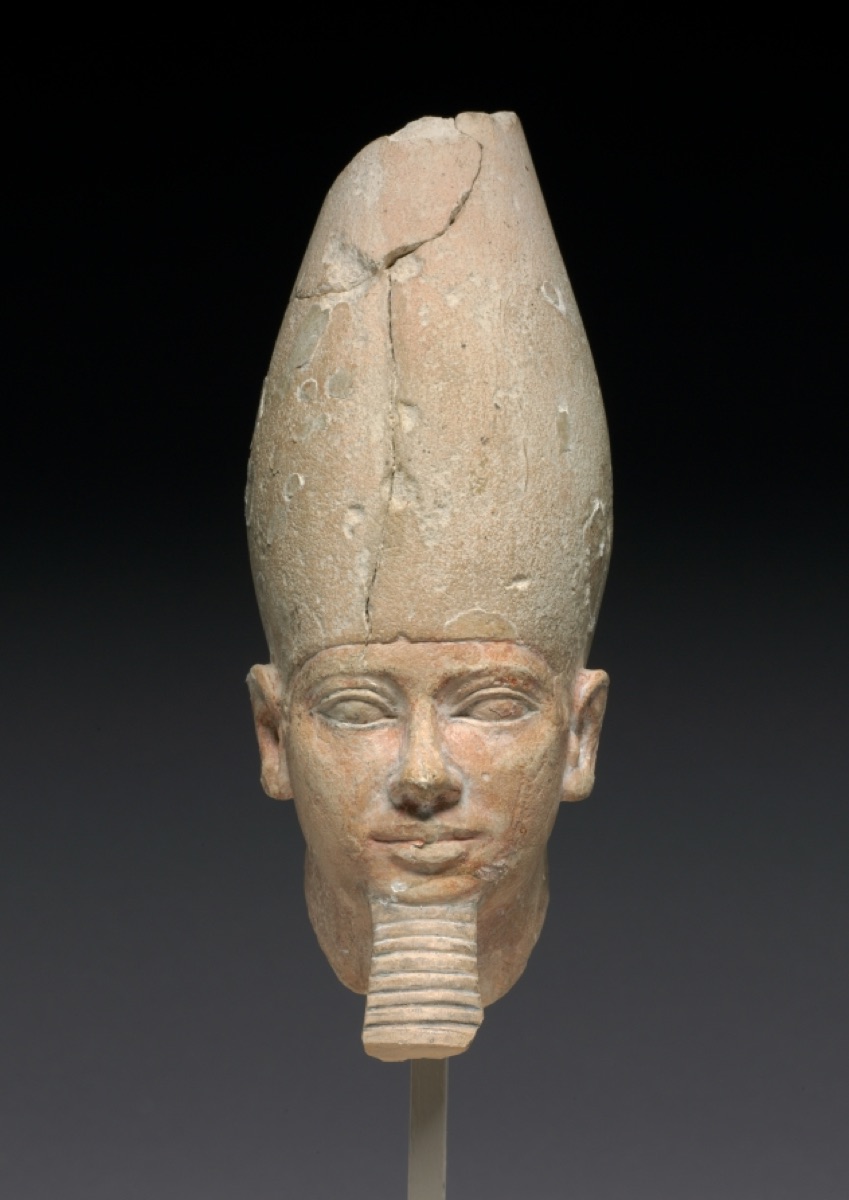
Head of King Userkaf
A carved head of Userkaf, founder of the Fifth Dynasty and traditionally credited as the first king to build a dedicated sun temple to Ra, raised at Abusir while his pyramid stood at Saqqara.
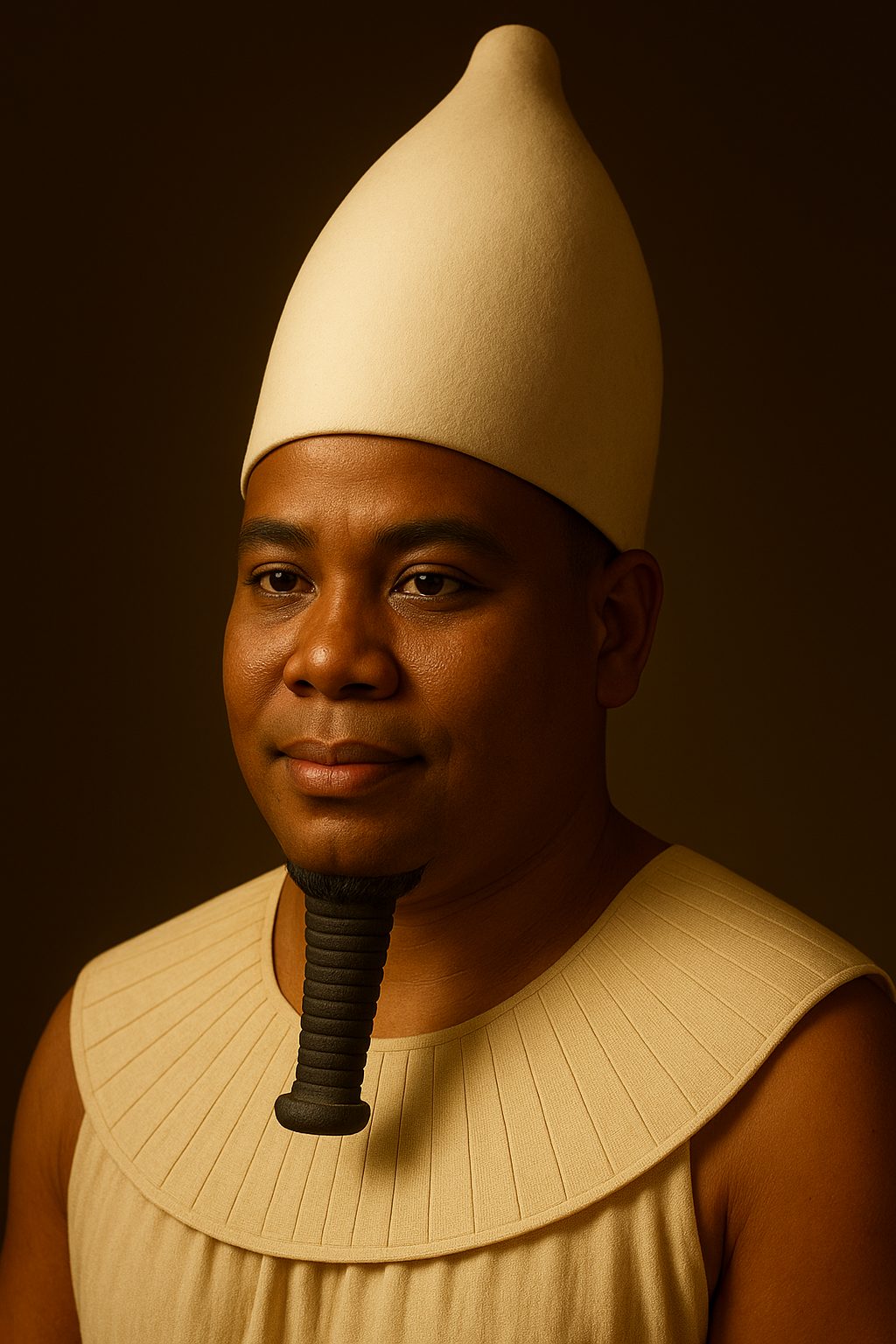
AI reconstruction
King Userkaf - reconstruction
Userkaf, founder of Egypt's Fifth Dynasty, imagined as a living man from his painted limestone portrait head: the tall white crown of Upper Egypt, the braided ceremonial false beard, and a broad pleated linen collar. The face follows the sculpture's full cheeks, broad nose and composed mouth. The likeness depends entirely on the carver's accuracy; no other record of his appearance survives.
AI reconstruction (2026), based on Head of King Userkaf, The Cleveland Museum of Art
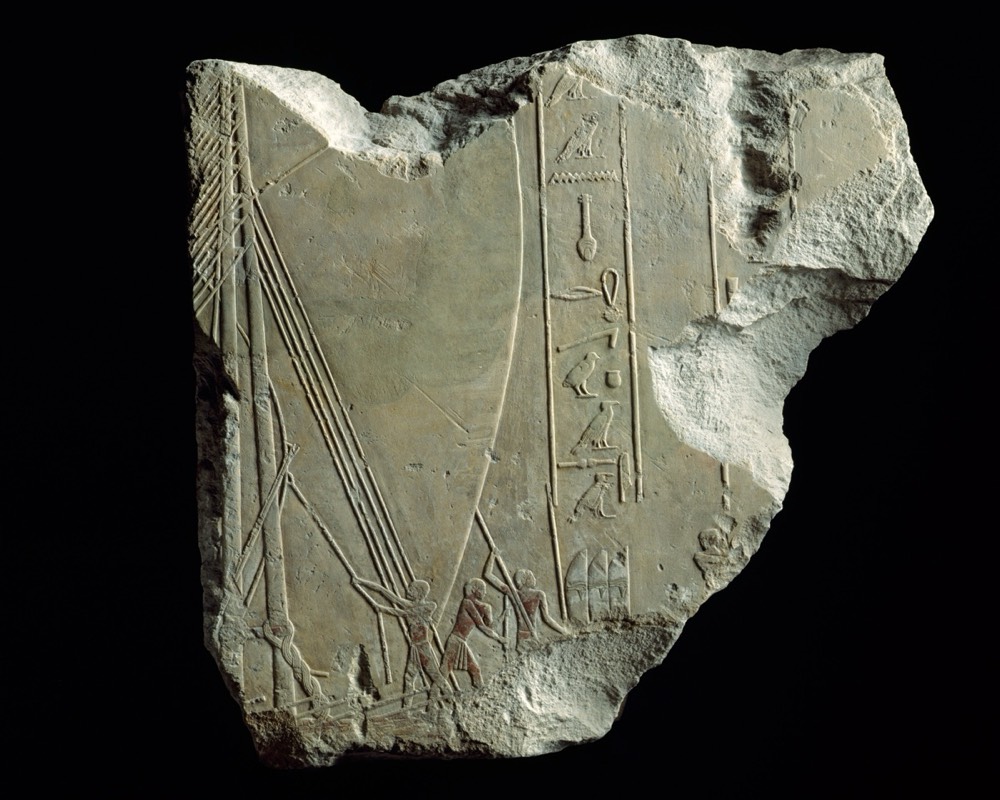
Relief Fragment with a Ship Under Sail
A carved relief of a ship under full sail, made as Fifth Dynasty Egypt mounted seaborne expeditions on the Nile and the Red Sea.
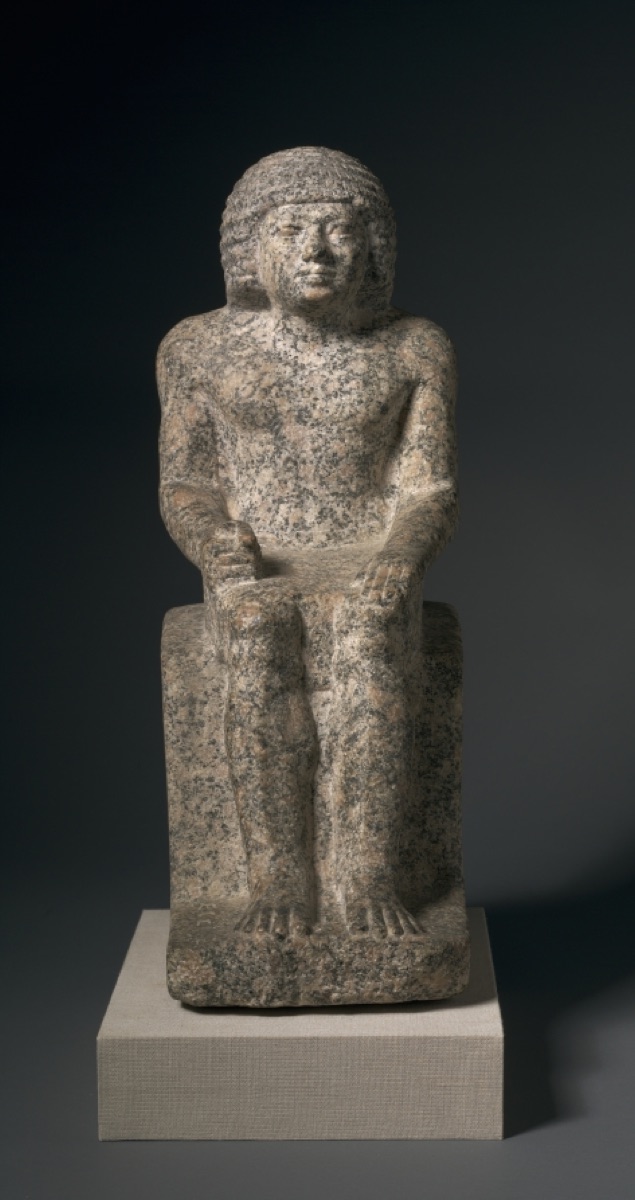
Seated Statue of Nykara
A red granite tomb statue of the official Nykara, seated in the rigidly frontal pose Egyptian sculptors used to guarantee a figure's presence for eternity.
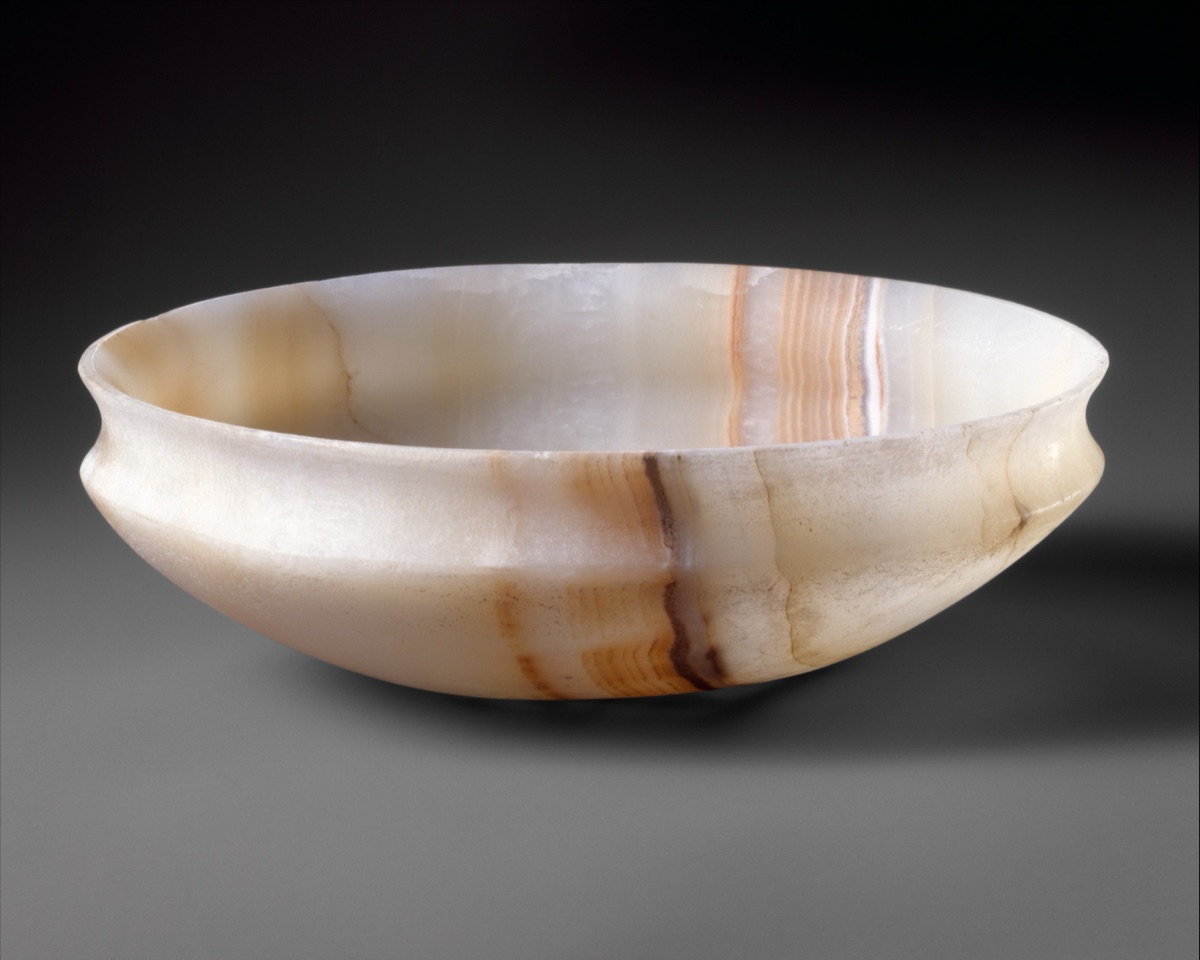
Shallow Bowl with a Recurved Rim
A finely worked Old Kingdom travertine bowl whose recurved rim shows the precision Egyptian craftsmen brought to everyday vessels at the height of the pyramid age.
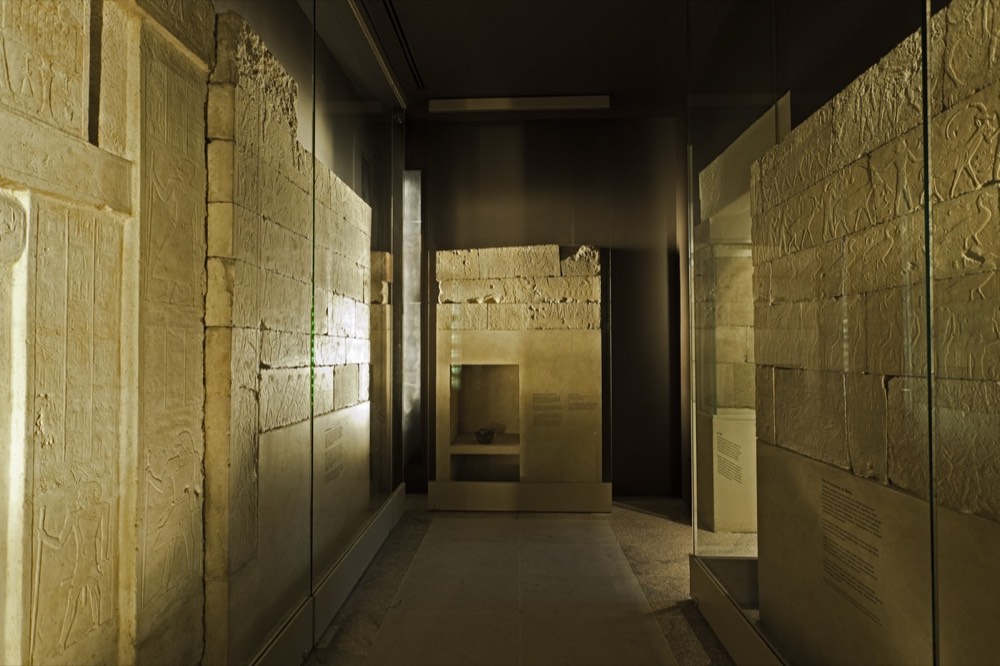
Tomb Chapel of Raemkai
A complete limestone offering chapel from a Fifth Dynasty official's tomb at Saqqara, removed and reassembled intact, preserving its architecture room by room.
New this century
- Caral-Supe Khipu Candidate
Excavations at Caral, a monumental pyramid-and-plaza city in Peru's Supe Valley and among the earliest urban centers anywhere in the Americas, recovered in 2005, from a sealed room within one of Caral's large pyramids, a ladder-like assemblage of twelve cotton strings, some knotted, wrapped around sticks, reported in Science with an apparent age of 4000 to 4500 years and proposed by excavator Ruth Shady as a proto-khipu, the record-keeping cord technology later used at vast scale by the Inca; the identification remains disputed rather than settled, since archaeologist Daniel Sandweiss called the huge temporal gap to the next firmly carbon-dated khipu (AD 779-981) 'puzzling' in the same article, and other specialists regard a much later find, wrapped batons from the Paracas culture (c. 350-200 BC), as a more securely established early khipu precursor; nothing about the Caral find, or any Andean khipu of any period, constitutes writing in the linguistic sense the corpus's textual entries record.
- Palermo Stone
Kingship is legitimate because it can be counted: each king's reign is validated by an unbroken annual record stretching back to the rule of the gods.
The canon by now
No tier-one work in the corpus predates this century.