Time travel
11th century BC
The Bronze Age world's survivors adjust to a smaller, poorer order: Assyria and Egypt both contract, Zhou displaces Shang in China, and Levantine trading cities begin filling the vacuum the palace economies leave behind.
Mental Worlds: Evidence and Inference
A century after the palace world's collapse, the survivors are not rebuilding what existed before; they are improvising something smaller and different. Egypt's clearest evidence for this comes from an unusually frank travel account: an official named Wenamun, sent to Byblos to buy cedar for the god Amun's ceremonial barge, is kept waiting, mocked, and nearly stranded by a Levantine ruler who no longer treats Egyptian authority as automatic. A century or two earlier such treatment of a pharaoh's representative would have been unthinkable. Now it is simply recorded, apparently without much editorial outrage, as how things are.
Assyria's experience captures the same pattern at larger scale. Tiglath-Pileser I, coming to the throne generations after Tukulti-Ninurta I's overreach and assassination, manages a genuine if temporary revival, campaigning to the Mediterranean and boasting of it in annals modeled on the grand royal inscriptions of the previous two centuries. But the revival does not outlive him. Within a generation or two of his death around 1076 BC, Assyria contracts again into what modern historians call its own dark age, a shrinkage that will last roughly two hundred years before the Neo-Assyrian empire eventually rises from it. Babylon fares somewhat better: the recovery of Marduk's cult statue from Elam that Nebuchadnezzar I achieved the previous century is still being narrated, in chronicle and in a text framed as the god's own first-person account, as a restoration of proper order, evidence that even a diminished state can keep telling its history as triumph rather than only loss.
The century's one unambiguous rupture happens far from any of this. Around 1046 BC, by later reckoning, the Zhou defeat the last king of Shang at Muye and take the Yellow River valley. It is worth noticing how differently this transition is remembered compared to the Near Eastern collapse a century earlier: Shang oracle-bone divination, a sophisticated and centuries-old state institution, simply stops, and a new dynasty begins casting inscribed bronzes recording its own grants of land and title, a different genre of state memory entirely. Nothing about this event has any connection to what is happening in Egypt, Assyria, or the Levant; it is the same kind of dynastic rupture experienced independently, on the far side of a continent no one in Babylon or Thebes has any concept of.
For a literate person in the Levant, the century's real news is coastal. Byblos, Tyre, and Sidon, no longer overshadowed by an intact Hittite state or a confident Egypt, are beginning to build the trade networks and craft traditions, particularly in metalwork and ivory, that later centuries will recognize as distinctly Phoenician. The alphabet these cities use for their own administration has not yet reached beyond the Levantine coast in any form later ages will read; that transmission still belongs to the future. What exists now is simply a set of small, ambitious port cities operating in the gap two fallen empires and a diminished third have left behind, not yet knowing they are laying the groundwork for how most of the ancient world will eventually learn to write.
The political map
Major Polities and Cultural Regions
- Assyria Contracting after Tukulti-Ninurta I, briefly revived by Tiglath-Pileser I's campaigns before renewed decline sets in
- Babylonia Second Dynasty of Isin, ruling from a position Nebuchadnezzar I secured the previous century by recovering Marduk's statue from Elam
- Egypt Twenty-First Dynasty, power split between Tanis and Thebes, its Levantine influence largely gone, as Wenamun's account attests
- Western Zhou Displaces the Shang around 1046 BC and begins governing the Yellow River valley through bronze-recorded land grants
- Phoenician city-states Byblos, Tyre, and Sidon on the Levantine coast, beginning to fill the trade vacuum left by the palace economies
Borders are approximate scholarly reconstructions from historical-basemaps (GPL-3). Nearest available basemap anchor year: 1000 BC.
State of the domains
Texts and Written Culture
Egyptian scribes produce the Report of Wenamun, a Levantine travel account whose officials treat Egypt's representative with open disrespect, an unusually candid record of the state's fallen prestige abroad. In Assyria, the Middle Assyrian Laws' Tablet A copy is colophon-dated to Tiglath-Pileser I's reign, evidence the legal tradition his court draws on stays in use even as his revival does not outlive him. Babylonian scribal circles produce court-flattering fictions like the Marduk Prophecy, framing dynastic politics as divine will, alongside wisdom literature like Advice to a Prince, warning rulers that impiety carries consequences. In China, the new Zhou dynasty begins casting bronze vessels with inscriptions recording grants of land and office, a genre that runs for centuries.
Art
Zhou bronze founders inherit Shang casting technique and adapt its ritual vessel forms to a new dynasty's ancestor cult, while inscribing the vessels themselves rather than leaving them anonymous. Egyptian tomb and temple art continues on established templates, though the Twenty-First Dynasty's divided, poorer state commissions far less large-scale royal building than the previous two centuries. Levantine coastal cities, no longer overshadowed by Egyptian or Hittite patronage, begin producing carved ivory work and metal bowls that will become a recognizable Phoenician export style within a few generations. In the Aegean, painted pottery grows simpler and more geometric as the resources palace workshops once commanded disappear.
Medicine
In Babylon, Esagil-kin-apli compiles the standard edition of Sakikku, the Diagnostic Handbook, during the reign of Adad-apla-iddina, a systematic catalog of symptoms and their prognoses that becomes the reference text for Mesopotamian diagnosis for the rest of antiquity; it still explains illness through divine and demonic agency rather than natural cause, but its comprehensiveness and internal organization are genuinely new. Egyptian temple physicians likely continue established practice through the Twenty-First Dynasty's contraction, though no new Egyptian medical papyrus from this exact window survives and the administrative shrinkage affecting most record keeping affects medical texts too. No comparable compilation is attested elsewhere this century.
Science
Babylonian scribes continue building the omen astronomy compiled into Enuma Anu Enlil, watching the sky for signs rather than seeking causes behind it. In Egypt, no scientific advance is attested; existing star clock and calendar knowledge is maintained rather than extended, consistent with a state focused on survival rather than the expansion of learning. China offers the century's one striking exception to continuity: the last Shang oracle bone divinations, in which royal diviners frame every question as put to royal ancestors, end abruptly with the Zhou conquest around 1046 BC, and no comparable divinatory record genre survives from the new dynasty's opening decades. Everywhere, prediction still means reading intention, not modeling mechanism.
Military
Assyria briefly reverses its post-collapse contraction under Tiglath-Pileser I, campaigning to the Mediterranean coast and the Zagros, before his death around 1076 BC is followed by a long renewed decline lasting two more centuries. In Babylon, court scribes commemorate the previous century's recovery of Marduk's cult statue from Elam under Nebuchadnezzar I, a victory substantial enough that texts like the Marduk Prophecy narrate it as proof of divine favor for the dynasty he founded. In China, the Zhou king Wu defeats the last Shang king at Muye around 1046 BC, ending a dynasty that had ruled the Yellow River valley for five centuries and beginning the Zhou, who govern in some form for the next eight hundred years.
Technology
Iron working spreads more widely this century across the eastern Mediterranean and Near East, gradually displacing bronze for tools and some weapons as the tin trade bronze depends on remains disrupted; the process is uneven and slow rather than a sudden technological leap. Phoenician coastal cities begin building the seagoing ships that will carry their trade networks across the Mediterranean in coming centuries, though the alphabet that will travel with them has not yet spread beyond the Levant. Zhou China inherits Shang bronze-casting technique largely intact, along with the chariot and the walled, rammed-earth city, continuity of craft across a change of dynasty.
Material world

Book of the Dead of Hori
A funerary papyrus written in cursive hieroglyphic script, the spells a priest named Hori needed for safe passage into the afterlife.
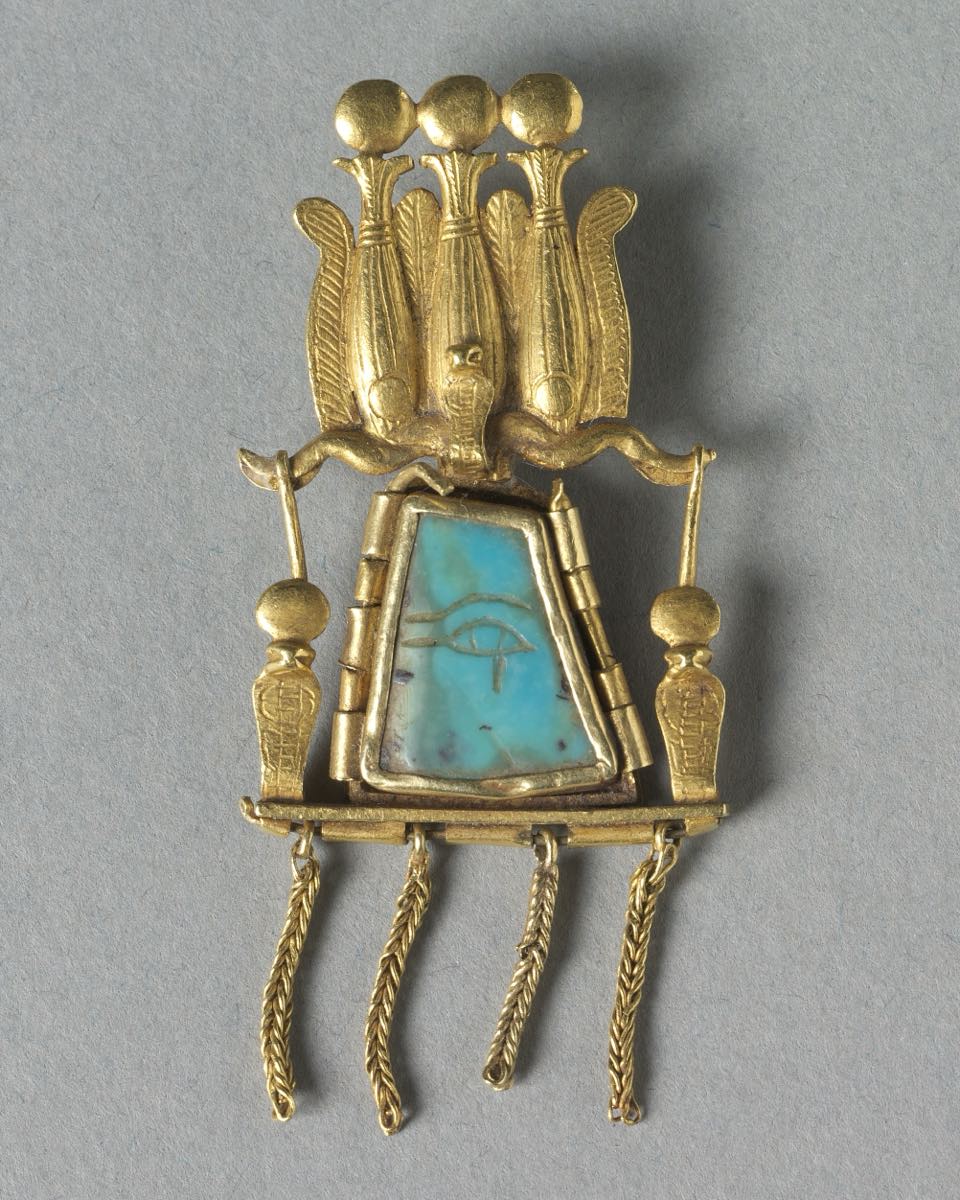
Pendant
A gold and turquoise pendant from the fractured decades after the New Kingdom, when Egypt split between rival dynasties at Tanis and Thebes.
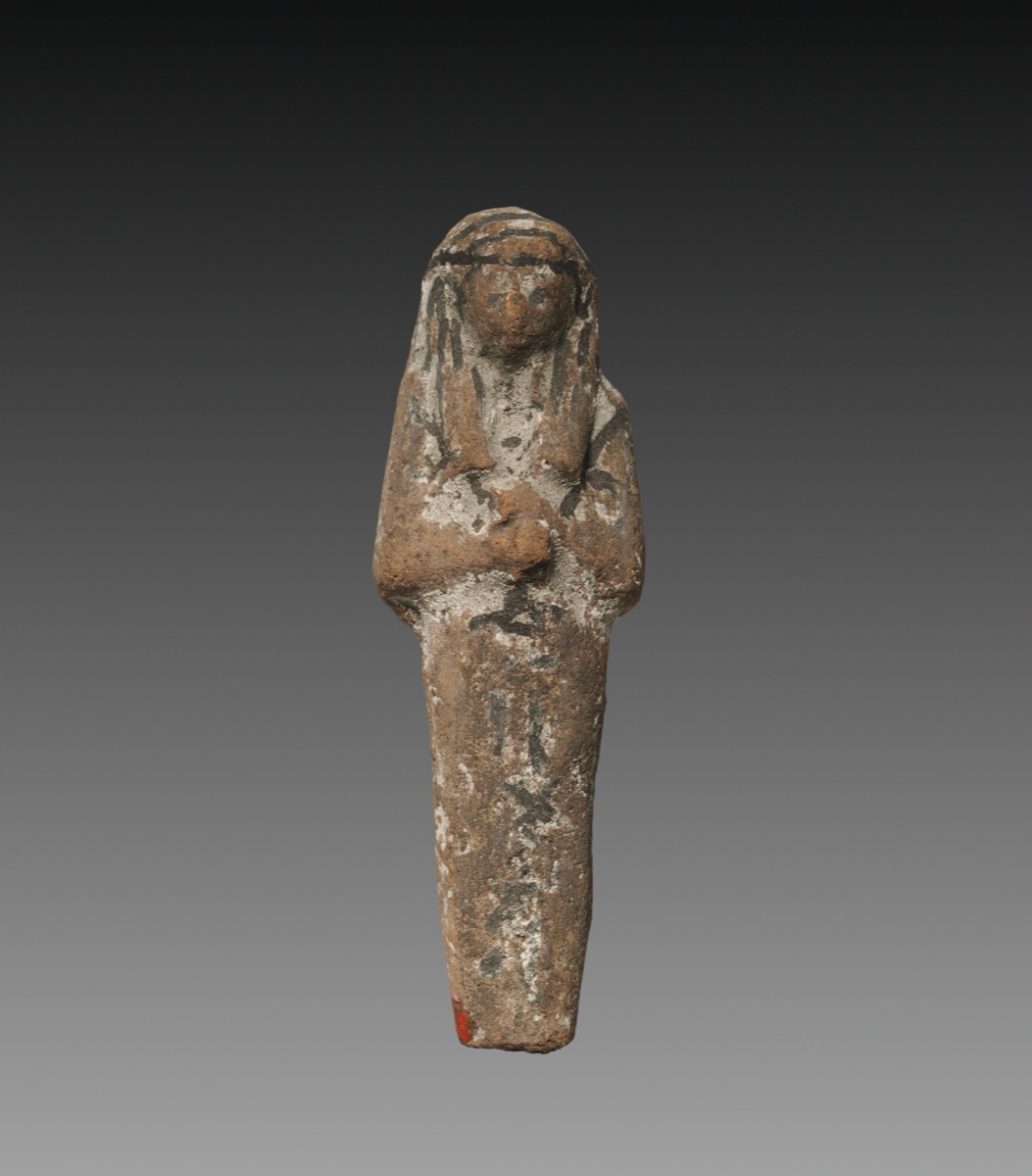
Shawabty of Padiamen
A painted terracotta funerary figurine inscribed for its owner, made to perform his labor in the afterlife on command.
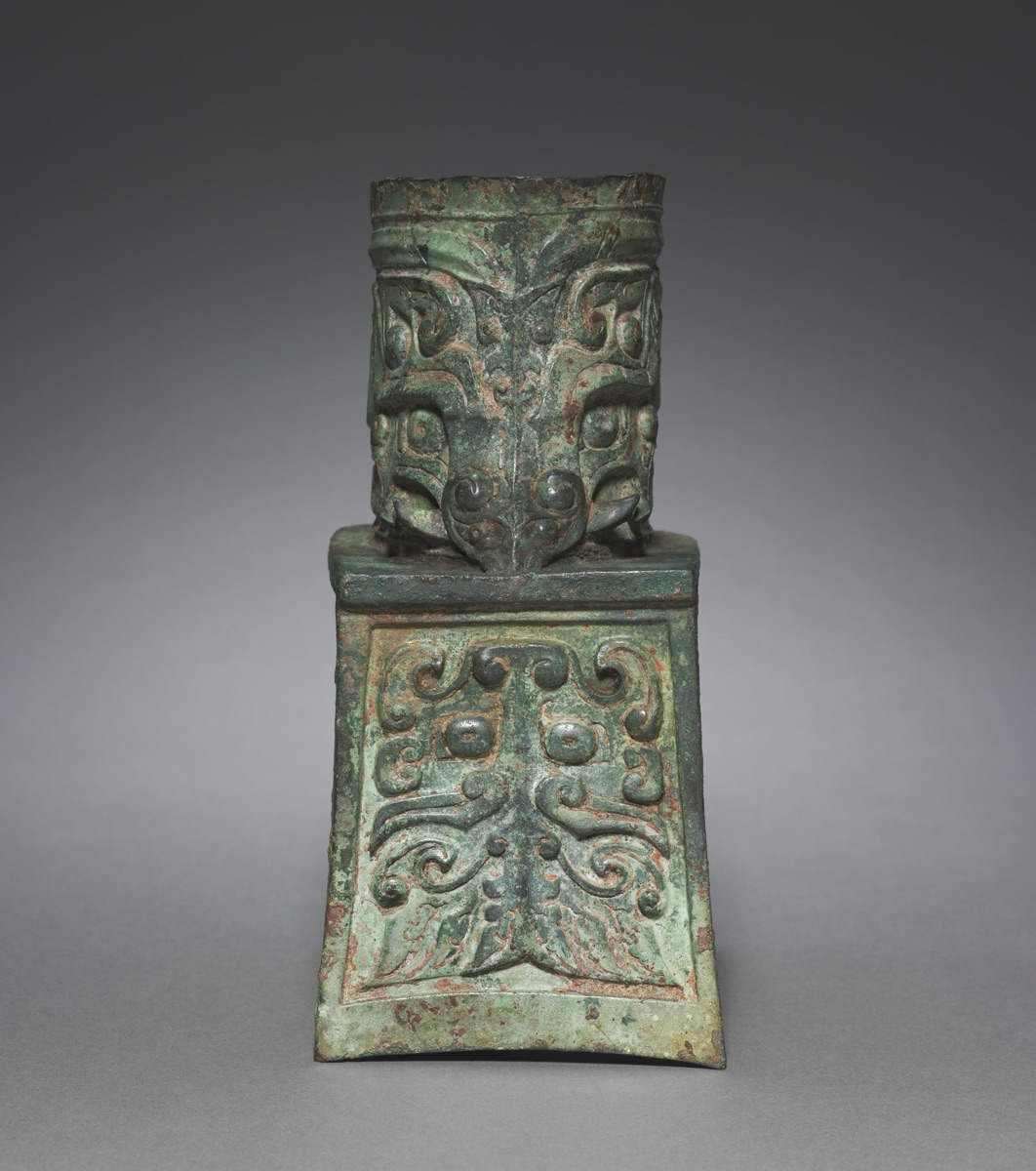
Chariot Axle Cuff
A bronze fitting that reinforced a chariot's axle, evidence of the wheeled-vehicle technology found in Henan province, of the kind Zhou aristocrats were buried with.
New this century
- Report of Wenamun
Egypt's once-unquestioned authority abroad has quietly collapsed, and a royal envoy sent to buy cedar for the god Amun's ceremonial boat must now negotiate, plead, and bargain like any ordinary merchant.
- Middle Assyrian Laws
Where Hammurabi's code presents justice as royal benevolence, the Middle Assyrian Laws argue for control through fear, prescribing mutilation, flogging, and forced labor, especially against women, at a severity no earlier Mesopotamian code approaches.
- The Babylonian Theodicy
A twenty-seven-stanza acrostic dialogue argues, through a sufferer and a more conventionally pious friend who never fully persuades each other, that the gods deliberately built injustice into human nature rather than that suffering is always earned.
- Western Zhou Bronze Inscriptions
A gift, appointment, or victory is only secure once it is cast in bronze and dedicated to a lineage's ancestors, so the durability of the vessel itself is what makes the political or legal claim inside it permanent.
The canon by now
- Pyramid Texts
- Royal Inscriptions of Sargon of Akkad
- The Exaltation of Inanna
- The Curse of Agade
- Coffin Texts
- Admonitions of Ipuwer
- Eloquent Peasant
- Code of Hammurabi
- Old Babylonian Gilgamesh (Pennsylvania and Yale Tablets)
- Inanna's Descent to the Netherworld
- Edwin Smith Surgical Papyrus
- Book of the Dead
- Rigveda
- Baal Cycle
- Ludlul Bel Nemeqi
- Epic of Gilgamesh
- Instruction of Amenemope
- Gathas