Time travel
24th century BC
A cupbearer's son named Sargon founds the world's first documented empire at Akkad, ending the better part of six centuries of Mesopotamian city-state rivalry, while Unas, last king of Egypt's Fifth Dynasty, has one of the earliest surviving bodies of religious writing presently known carved into his own pyramid's burial chamber.
Mental Worlds: Evidence and Inference
A person living in southern Mesopotamia at the start of this century inhabits a political world that has looked essentially the same for the better part of six centuries: independent, walled city-states, Ur, Uruk, Kish, Lagash, Umma, each with its own king, its own temple hierarchy, its own local rivalries over land and canal rights. By the century's end, that entire order has been overturned by one man. Sargon, remembered in his own later inscriptions as having risen from the position of cupbearer to a king of Kish before seizing that throne himself, defeats Lugalzagesi of Uruk, the most powerful ruler of the old Sumerian order, and brings city after city under a single crown. A Sumerian scribe who spent an early career learning to read and account for a single city's affairs might, within one working lifetime, have found that city absorbed into something genuinely new: an empire, a single political authority spanning what had been a fractured landscape of rivals for as long as living memory reached.
What such a person could now know about the wider world expanded accordingly. Sargon's own inscriptions boast of ships from Meluhha, Magan, and Dilmun, almost certainly the Indus valley, the Omani peninsula, and Bahrain, docked at Akkad's own quay, a claim of commercial reach stretching from the Iranian plateau to the edge of India. Whether this reflects genuine new trade or simply Akkad's absorption and amplification of contacts Sumerian cities had long maintained individually, the effect on a literate Akkadian subject's sense of geography is the same: the known world has grown larger, or at least the political center capable of claiming it has. A scribe copying Sargon's inscriptions, even the later Old Babylonian copies through which this century's words actually survive, learns of lands whose people that scribe would almost certainly never see in person, Meluhha above all, a name for a civilization, likely the Indus valley cities, that Mesopotamia would trade with and speak of for centuries without ever fully explaining.
None of this means ordinary experience changed as dramatically as royal inscriptions suggest. A farmer or weaver in a newly conquered city still worked the same fields and looms, paid taxes now routed through a different, more distant authority, and likely continued speaking Sumerian even as an increasing share of administrative business shifted into Akkadian, the Semitic language of the new ruling dynasty. The empire's real innovation, evident even this early, is bureaucratic rather than purely military: an Akkadian-language administrative layer imposed over Sumerian city economies that continued largely as before, a pattern of governance through existing local institutions rather than wholesale replacement.
In Egypt, no comparable political rupture occurs, but a quieter one does. At the end of the Fifth Dynasty, the aged king Unas has his own burial chamber at Saqqara carved, wall after wall, with spells meant to carry him into the sky and seat him among the imperishable stars, the first time any king's pyramid has been inscribed with connected religious text rather than left bare. The Pyramid Texts, as later scholars will call them, are among the earliest substantial bodies of religious writing presently known anywhere in the world, and though at first reserved for Unas alone, they mark a shift as consequential in its own register as Sargon's conquest: Egyptian writing, for the first time, is asked to solve the problem of a specific king's own death and afterlife, in his own words rather than through image and label alone, a contrast in political style between two of the century's major powers, one solving an old problem in a new medium, the other advancing a sudden conquest without earlier known precedent in the region and a new, still-untested claim to universal kingship.
The political map
Major Polities and Cultural Regions
- Akkad (under Sargon) Newly founded empire uniting Sumer and Akkad under Sargon, the first documented ruler of a multi-city Mesopotamian state.
- Egypt (late Fifth Dynasty into early Sixth) United Nile kingdom under Djedkare and Unas, then Teti and Pepi I; Unas's pyramid carries the first Pyramid Texts.
- Susa and Elam Southwestern Iranian center, drawn into contact and periodic conflict with the newly expansive Akkadian state.
- Indus valley civilization (early urban phase) Cities forming along the Indus system; a likely trading partner named Meluhha in Sargon's own inscriptions.
Borders are approximate scholarly reconstructions from historical-basemaps (GPL-3). Nearest available basemap anchor year: 2000 BC.
State of the domains
Texts and Written Culture
Sargon of Akkad's royal inscriptions, known only through Old Babylonian scribal copies made roughly six centuries later, describe his rise from cupbearer to king of Kish and his claim to a new title, King of Kish, marking universal Mesopotamian kingship; their language is terse and formulaic, a campaign list building toward one cumulative claim of unification. In Egypt, the Pyramid Texts appear for the first time, carved into the burial chamber of Unas, last king of the Fifth Dynasty, at Saqqara: spells equipping the dead king to rise and join the imperishable circumpolar stars, one of the earliest substantial bodies of religious writing presently known anywhere in the world.
Art
Akkadian royal art begins to distinguish itself from Sumerian precedent, with portraiture, notably in bronze and stone sculpture attributed to this dynasty, moving toward more individualized, naturalistic royal faces rather than the generic conventions of earlier Sumerian statuary. Cylinder seal carving under Akkadian influence grows more dynamic, favoring combat and contest scenes between heroes and monsters over the static banquet and procession imagery common in Early Dynastic Sumer. In Egypt, Fifth Dynasty royal art favors smaller pyramids and sun-temple relief programs over Giza-scale ambition, while the walls of Unas's pyramid, carved with the Pyramid Texts in finely cut vertical columns, introduce hieroglyphic writing itself as a major element of royal funerary art for the first time.
Medicine
Neither empire commits medicine to writing this century. Sargon's own later legendary tradition, that he was set adrift as an infant in a reed basket on a river and rescued, is only attested in texts composed many centuries after this one and cannot be read back into this century's actual medical knowledge. The Pyramid Texts, concerned entirely with the dead king's passage to the afterlife rather than the living body, occasionally invoke gods elsewhere associated with healing in passing, evidence of medicine and religion sharing vocabulary without medicine yet becoming its own written discipline. Skeletal evidence from Mesopotamian and Egyptian burials continues to show healed injuries consistent with warfare and hard labor.
Science
Sargon's inscriptions describe ships from Meluhha, Magan, and Dilmun, likely the Indus valley, Oman, and Bahrain, docking at Akkad's quay, evidence of a long-distance trade network spanning much of the known world, though the text asserts prestige and reach rather than explaining navigation, cargo, or route. Akkadian administration, layered atop conquered Sumerian city-state economies, required standardizing weights, measures, and language for governance across a newly unified territory. The Pyramid Texts assume real observational familiarity with the night sky, the imperishable circumpolar stars the dead king is meant to join, though the spells remain religious formula rather than astronomical explanation.
Military
Sargon's conquest of Sumer is the century's defining military event: after seizing the throne of Kish, he defeats Lugalzagesi of Uruk, previously the most powerful Sumerian ruler, and brings the region's independent city-states under a single crown for the first time in Mesopotamian history, adopting the title King of Kish as a marker of universal kingship. This ends the better part of six centuries of Early Dynastic city-state rivalry, dating back to roughly 2900 BC, in a single generation's campaigning. His inscriptions, preserved only through much later scribal copies, present the conquest as a cumulative, terse list of defeated rulers and captured cities rather than a dramatized narrative, but the underlying military and political achievement is genuine and, on current evidence, without earlier precedent in the region.
Technology
Akkadian imperial administration develops standardized year-name formulas, naming each year after a king's major military or building achievement rather than numbering regnal years, a system requiring centralized coordination to keep dated transactions consistent across a newly unified territory. Bronze weaponry and tools continue spreading through the Akkadian sphere. Sargon's claimed trade contacts with Meluhha, Magan, and Dilmun imply established maritime technology capable of Gulf and Indian Ocean coastal navigation. In Egypt, Fifth Dynasty builders work in smaller, rubble-cored pyramids rather than Giza's solid masonry, redirecting resources toward sun temples and, at Unas's pyramid, toward the technically demanding work of carving finely cut hieroglyphic text directly into stone burial-chamber walls.
Material world
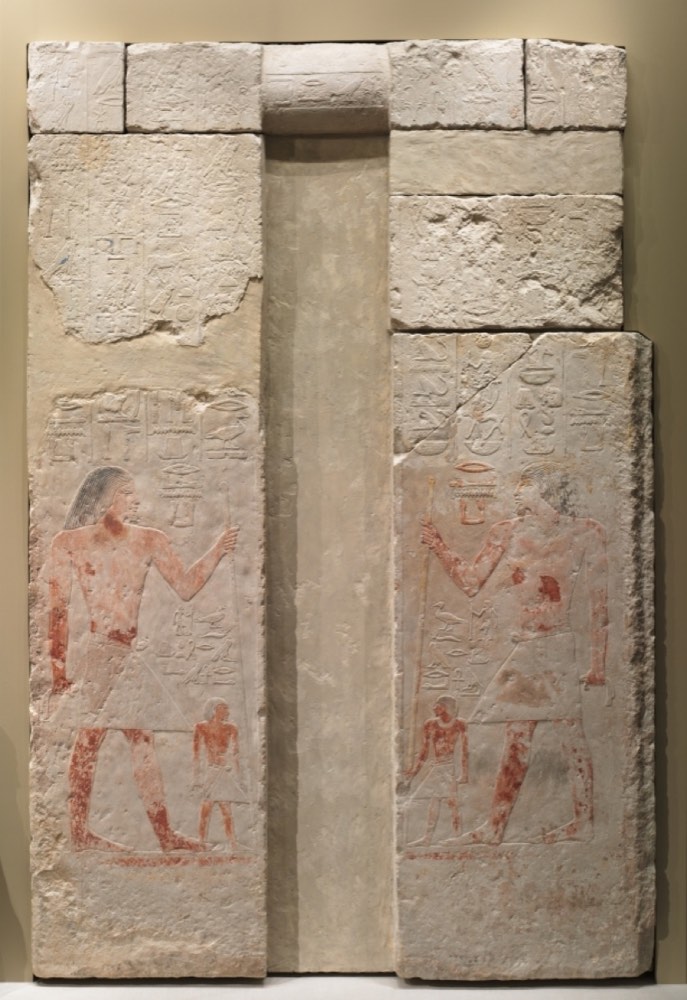
False Door of Nykara
A carved stone false door from Nykara's tomb, the architectural threshold Egyptians believed let the deceased's spirit pass between the offering chapel and the burial chamber.
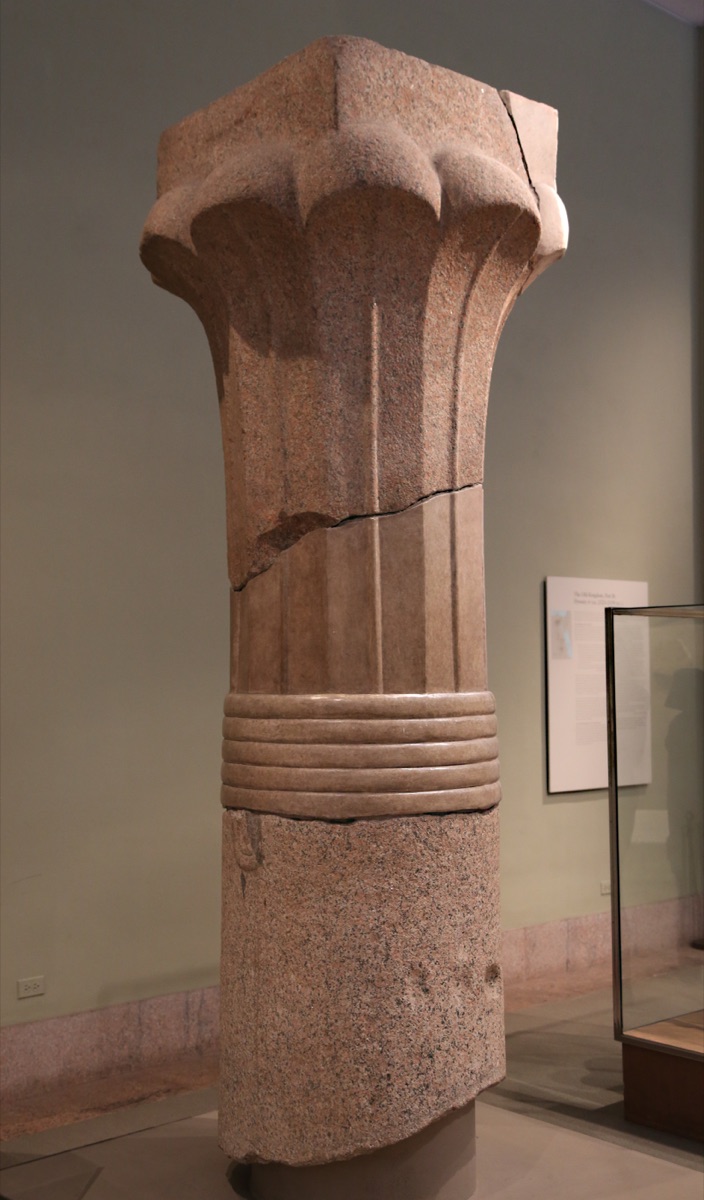
Fragments of a Palm Column
Fragments of a stone column carved to resemble a bundle of palm fronds, an Old Kingdom architectural form that translated organic plant supports into permanent stone.
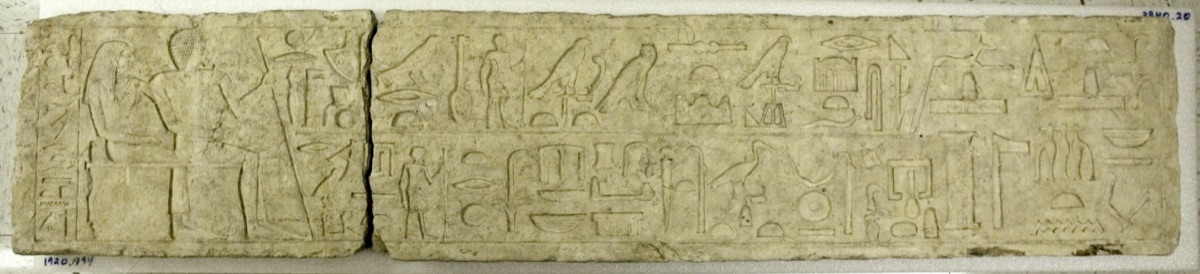
Lintel of Mereruka
A carved limestone lintel from the western cemetery at Giza, naming a Fifth Dynasty official called Mereruka - a different, earlier man than the better-known Sixth Dynasty vizier of the same name.
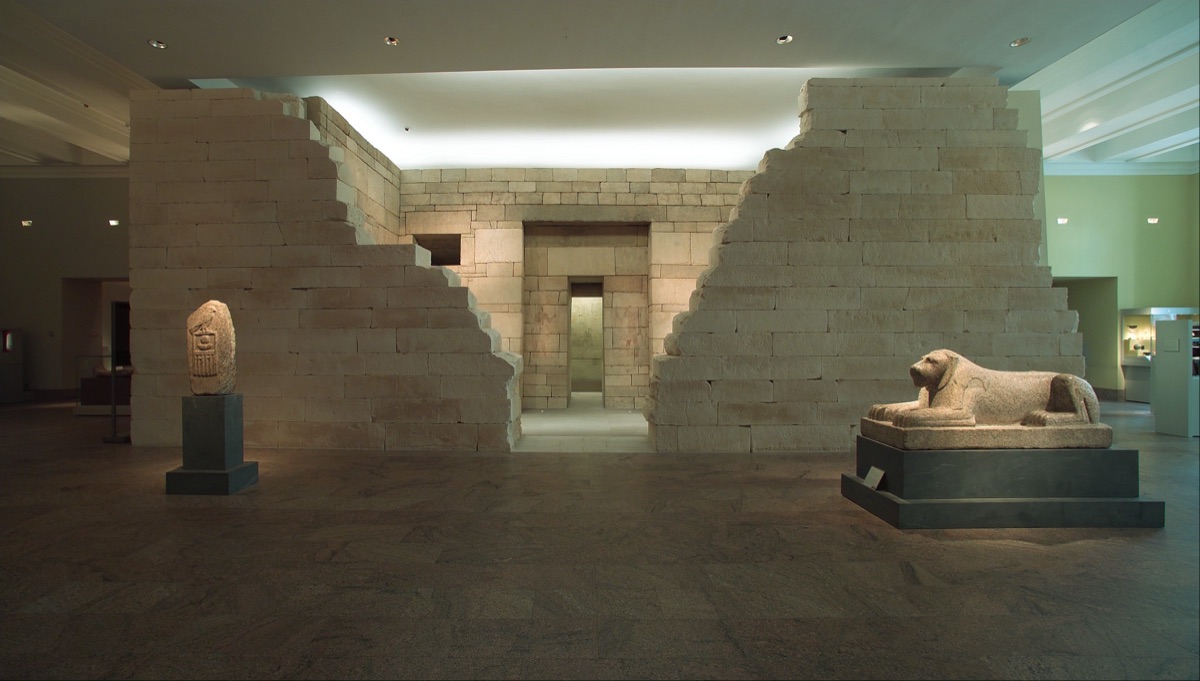
Mastaba Tomb of Perneb
A complete limestone tomb chapel from Saqqara, dismantled and reassembled stone by stone in New York, preserving the full architecture of an Old Kingdom official's burial place.
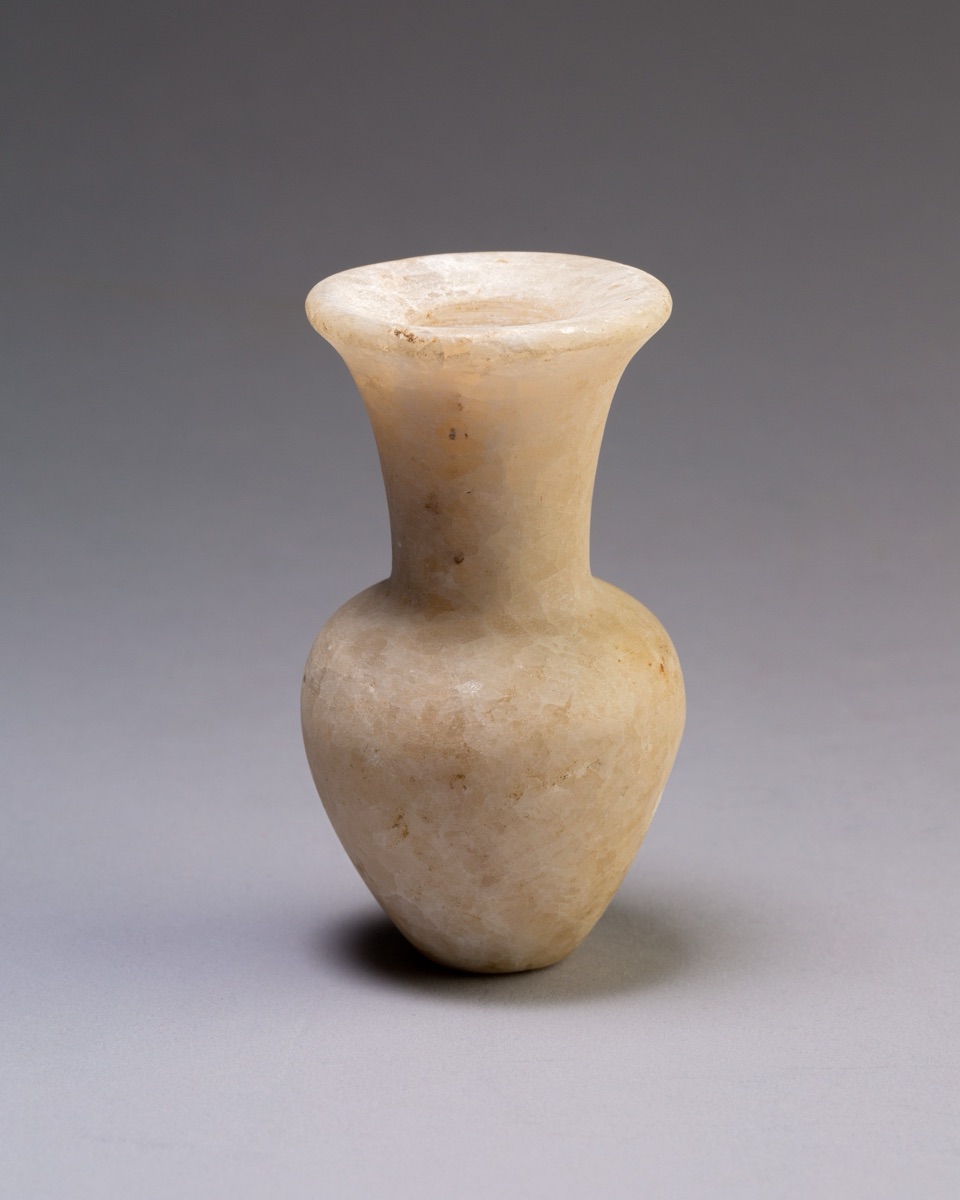
"Opening of the Mouth" Vessel of Perneb
Ritual equipment from Perneb's tomb used in the Opening of the Mouth ceremony, the rite Egyptians believed restored a mummy's senses in the afterlife.
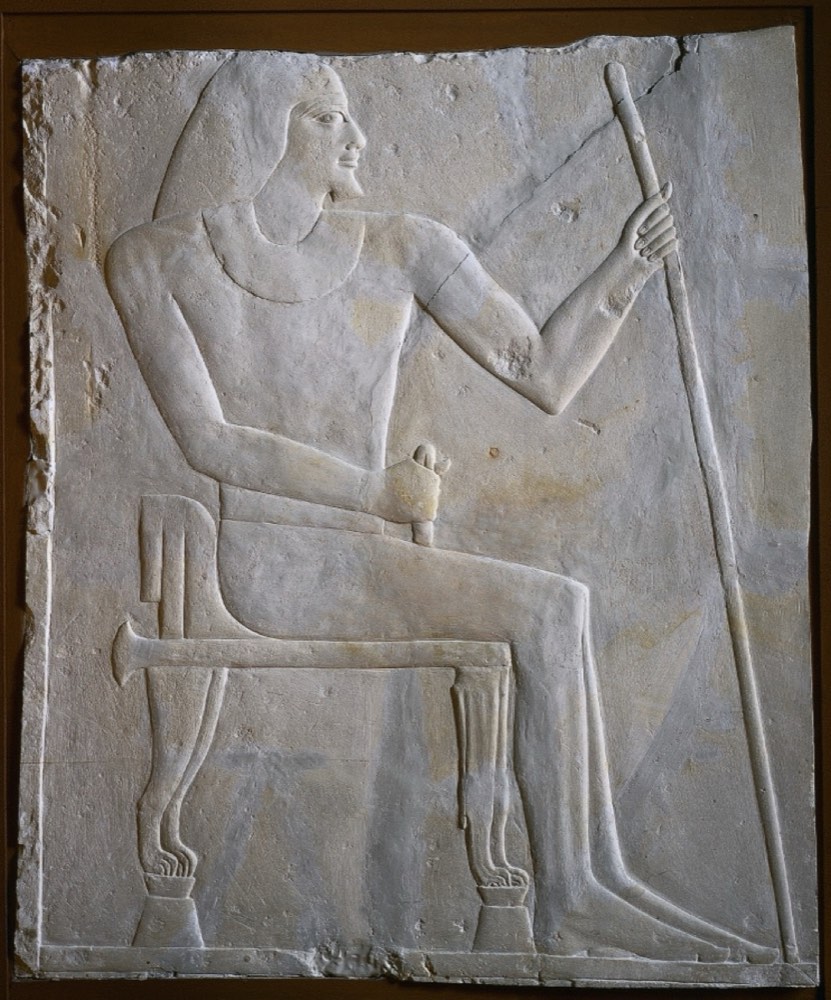
Relief of Nyankhnesut
A carved relief from the Saqqara tomb of Nyankhnesut, made as the Sixth Dynasty's provincial officials grew steadily more powerful.
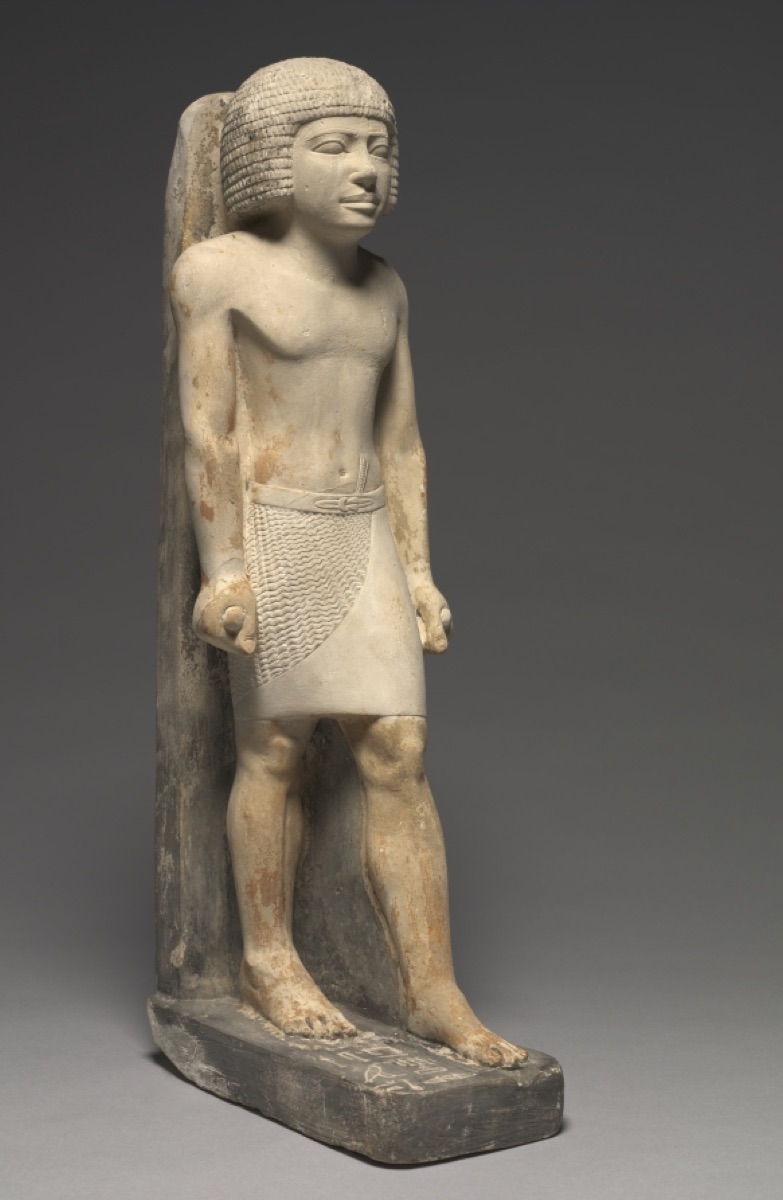
Striding Statue of Minnefer
A limestone statue of the official Minnefer caught mid-stride, the conventional pose Egyptian sculptors used to show a man in the prime of active life.
New this century
- Ebla Palace G Archives
More than fourteen thousand tablets recovered from a single archive room inside the royal palace known as Palace G at Ebla give the independent Syrian kingdom, rather than Mesopotamia, its own detailed written record of third-millennium administration, diplomacy, and scholarship.
- Pyramid Texts
The king's ascent to the imperishable stars is guaranteed by the correct recitation of spells, making the afterlife one of the earliest problems Egyptian civilization applied sustained written composition to solving.
- Royal Inscriptions of Sargon of Akkad
A cupbearer's son who seized a throne argues for his own legitimacy the only way a usurper can, by piling up an unanswerable list of conquered cities, defeated kings, and a title, King of Kish, that no single ruler had ever unified before him.
The canon by now
No tier-one work in the corpus predates this century.