Time travel
18th century BC
A code carved in stone claims to unify Mesopotamia under Hammurabi's justice, even as Mari burns and scribes weld old Sumerian tales into a new, still-evolving Gilgamesh.
Mental Worlds: Evidence and Inference
A scribe trained in Babylon this century sits at the hinge of Mesopotamian literary history without necessarily knowing it. He copies the same Sumerian school texts his predecessors copied for generations, Gilgamesh and Aga, Gilgamesh and Huwawa, Enmerkar and the Lord of Aratta, Enki and the World Order, hymns to Nanshe and Ninurta, even though Sumerian itself has stopped being anyone's native tongue; it now survives as the language of scholarship and liturgy, learned the way a much later student learns Latin. At the same time, something new is happening in his own lifetime: the separate Sumerian Gilgamesh tales are being woven, in Akkadian, into a more unified narrative, the Old Babylonian Gilgamesh, that gives the hero a coherent arc from restless king to grieving friend to failed seeker of immortality. He could not know that this version will itself be superseded centuries later by a fuller Standard Babylonian text; to him it is simply the current, authoritative telling.
If he serves at court, or has access to royal correspondence, he may read Hammurabi's own law code, its prologue framing the king as a shepherd chosen by the gods to make justice visible in the land, its penalties for surgeons, builders, and boat-renters alike organized by outcome rather than intent, a legal imagination closer to an insurance schedule than a modern statute. He would have heard, and possibly witnessed, the destruction of Mari partway through the century, an event that ended a major rival court and, unknown to anyone at the time, buried an archive of some twenty thousand tablets that will not be read again until the twentieth century AD. The letters among them, when eventually recovered, will reveal a world of vassal kings, itinerant diplomats, and anxious administrators that this Babylonian scribe experienced only as reported news of a neighbor's fall.
An Egyptian counterpart in these same decades inhabits a much quieter literary landscape. His Thirteenth Dynasty kings rule briefly and often, real authority slipping toward provincial officials, and no comparable literary explosion marks his century the way Gilgamesh's Old Babylonian recension marks Mesopotamia's. He still copies Ptahhotep, Kagemni, and Sinuhe as school texts, works already a century or more old, without producing an obvious new classic of his own. In Anatolia, an early Hittite-speaking ruler at Kanesh, Anitta, campaigns across central Anatolia, capturing and famously cursing the site of Hattusa rather than ruling from it; his own inscription, the earliest surviving Hittite royal text, dates from mid-century. A fully formed Hittite literary or legal tradition, centered on Hattusa itself, still lies three or four generations ahead, the work of Hattusili I in the century to come.
Rigveda remains three centuries from its first oral verses; Ugaritic writing, the Amarna correspondence, and Hittite treaty diplomacy are all still generations away. A thinking person's actual education this century runs no wider than a single scribal school, Sumero-Akkadian in Babylon, hieratic Egyptian in the Nile valley, or the still-forming Hittite tradition in Anatolia, each wrestling with its own version of the same questions about justice, kingship, and mortality, on its own timetable.
The political map
Major Polities and Cultural Regions
- Old Babylonian Empire Under Hammurabi, unifying most of Mesopotamia by mid-century
- Mari Euphrates kingdom with a vast royal archive, destroyed by Hammurabi's forces mid-century
- Elam Highland power shifting between coalitions with and against Babylon
- Egypt (Thirteenth Dynasty) Weakening central authority sliding toward the Second Intermediate Period
- Minoan Crete New Palace period beginning after earthquake destructions of the old palaces
Borders are approximate scholarly reconstructions from historical-basemaps (GPL-3). Nearest available basemap anchor year: 2000 BC.
State of the domains
Texts and Written Culture
Old Babylonian scribal schools produce the literary curriculum that will define Sumerian studies for the rest of Mesopotamian history: Gilgamesh and Aga, Gilgamesh and Huwawa, Enmerkar and the Lord of Aratta, and a run of hymns and disputations, all copied as exercises even as spoken Sumerian dies out in favor of Akkadian. The Old Babylonian version of Gilgamesh itself takes shape now, welding older separate Sumerian tales into something closer to a single hero's story. The Mari palace archive preserves thousands of royal letters, an unmatched window into diplomacy and administration. Hammurabi's law code, inscribed on a stele, opens with a prologue casting the king as Shamash's appointed guarantor of justice.
Art
Hammurabi's law stele itself is the century's landmark artistic object: a black diorite pillar carved with a relief of the king receiving his authority from the sun god Shamash above nearly three hundred columns of cuneiform law. Mari's palace, destroyed by Hammurabi's forces mid-century, preserves in its ruins vivid wall paintings of investiture ceremonies and processions. Old Babylonian cylinder seals favor presentation scenes before a seated deity, carved with increasing technical polish. Minoan Crete, entering its New Palace period after earthquake destructions, begins the fresco tradition that will define later Aegean painting.
Medicine
The Kahun Gynecological Papyrus, the earliest surviving medical text organized around a single subject, addresses Egyptian women's fertility and gynecological complaints with fumigations, suppositories, and diagnostic tests, an onion pessary judged by odor and an examination of the eyes, to assess a woman's condition. No comparable Mesopotamian medical compendium survives from this century; healing there continues through herbal treatment, ritual incantation, and omen-based diagnosis, embedded in temple practice rather than an independent professional literature. Hammurabi's law code does address medical practice indirectly and harshly, setting fees for successful surgery and severe penalties, including amputation of the hand, for a physician whose patient dies or loses an eye under the knife.
Science
Old Babylonian mathematics reaches real sophistication: Plimpton 322 lists sets of numbers now recognized as Pythagorean triples generations before Pythagoras, and YBC 7289 records a sexagesimal approximation of the square root of two, accurate to six decimal places when converted, both products of scribal schools training administrators rather than theorists. Sexagesimal place-value notation, already mature, lets Babylonian scribes handle large calculations efficiently. No comparable leap occurs in Egypt this century. Astronomy remains observational and omen-focused rather than predictive; the systematic planetary tables that will later define Babylonian astronomy are still centuries away.
Military
Hammurabi spends much of his reign in patient alliance-building before turning on his former partners one by one, defeating Larsa, then Mari, whose destruction around mid-century ends one of the era's great palace states and its extraordinary letter archive. By his death Babylon controls most of Mesopotamia, though the unified state proves harder to hold than to win. Chariots remain rare and are not yet a decisive battlefield arm; infantry, siege technique, and above all diplomacy backed by credible force are what actually build Hammurabi's kingdom. Egypt's Thirteenth Dynasty, by contrast, grows weaker, its central authority fragmenting toward the coming Second Intermediate Period.
Technology
Hammurabi's stele demonstrates Mesopotamian stoneworking and monumental inscription at a high standard, its columns of tightly spaced cuneiform legible enough to still be read by scribes a thousand years later. Mari's palace, before its destruction, shows sophisticated multi-story mudbrick construction with plumbing and archive rooms purpose-built for tablet storage. Bronze tools and weapons remain standard; iron is still a curiosity. Anatolia sees the first stirrings of a distinct Hittite political identity, though not yet the infrastructure of a state. Egyptian technology in this weaker period shows little advance over the previous century's fortress and canal engineering.
Material world
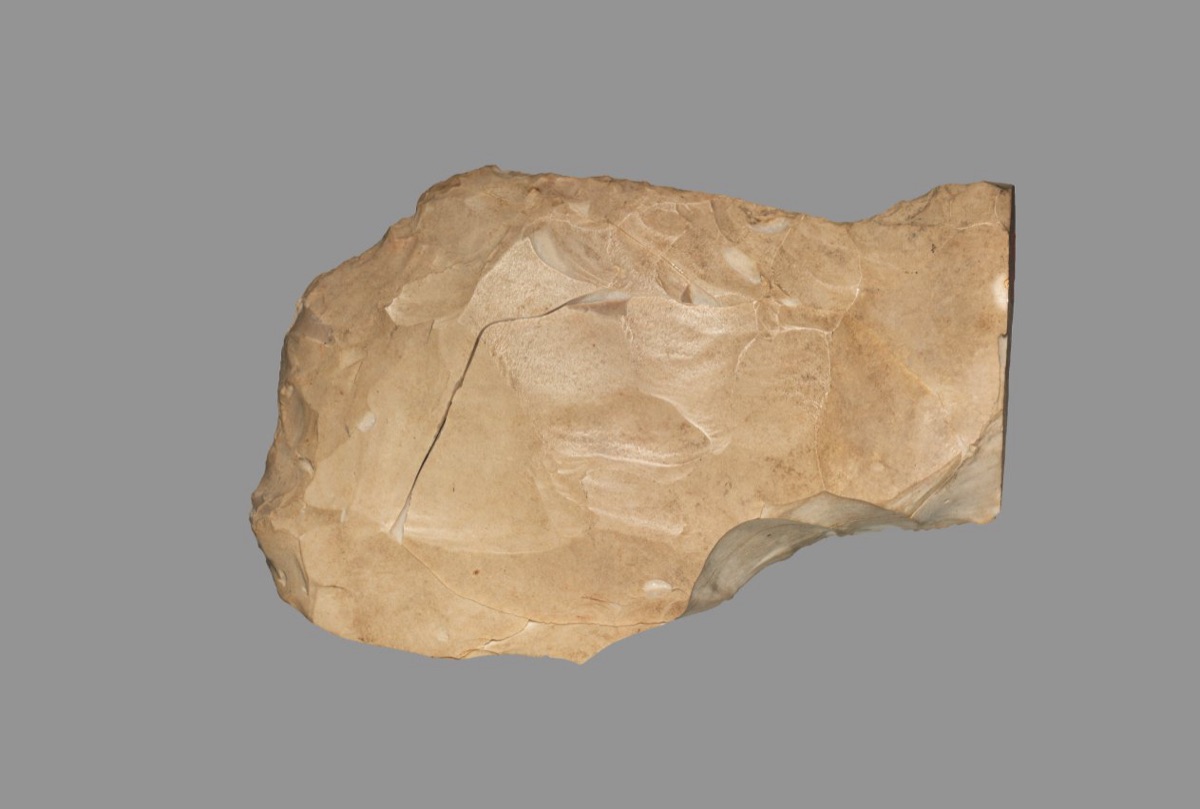
Ax Head
A flint ax head excavated at Haraga, evidence that stone tools remained in everyday use in Egypt well after bronze became available.
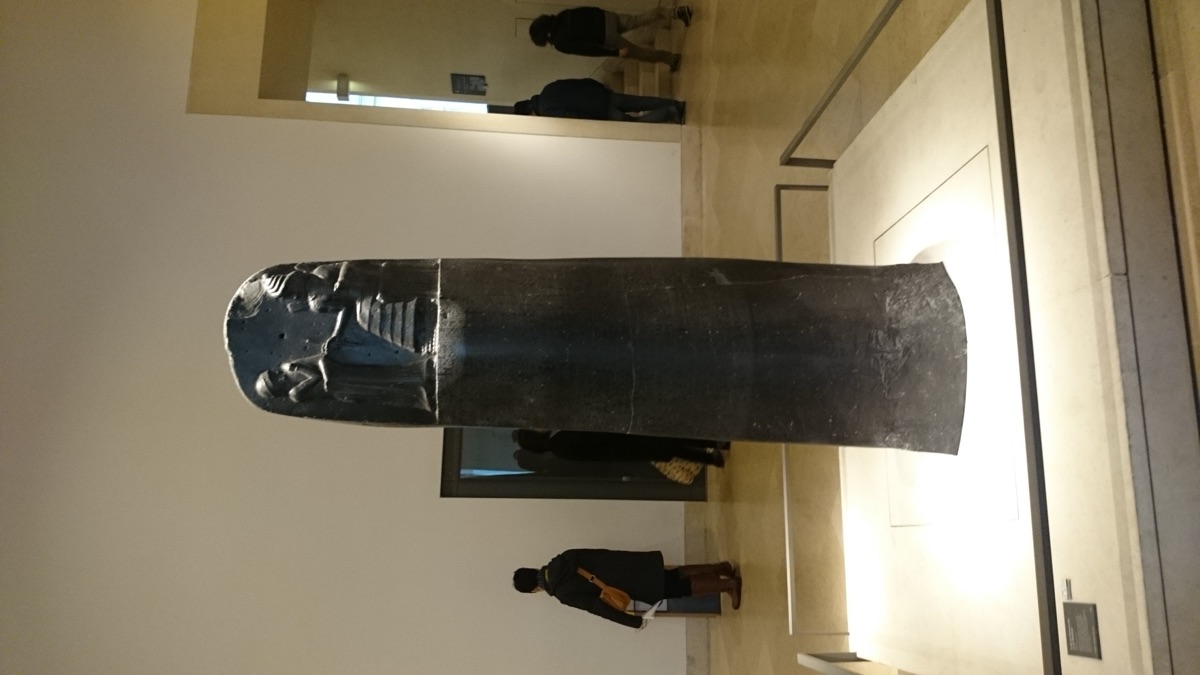
Code of Hammurabi
A basalt stele inscribed with roughly 280 laws issued by the Babylonian king Hammurabi, the fullest surviving law collection of the ancient Near East.
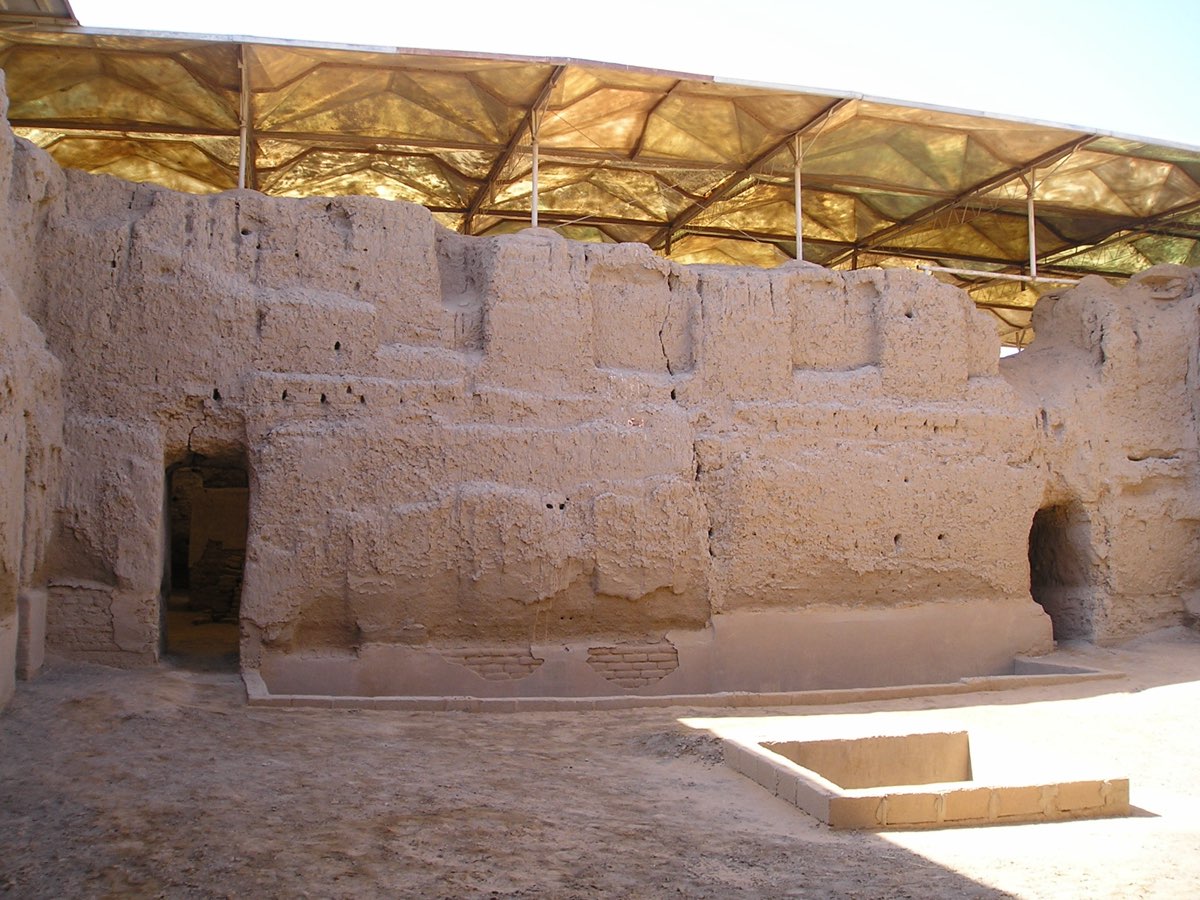
Palace of Zimri-Lim, Mari
The sprawling mudbrick palace of King Zimri-Lim on the Euphrates, whose 20,000 administrative tablets survived because Hammurabi burned the building down in 1761 BC.
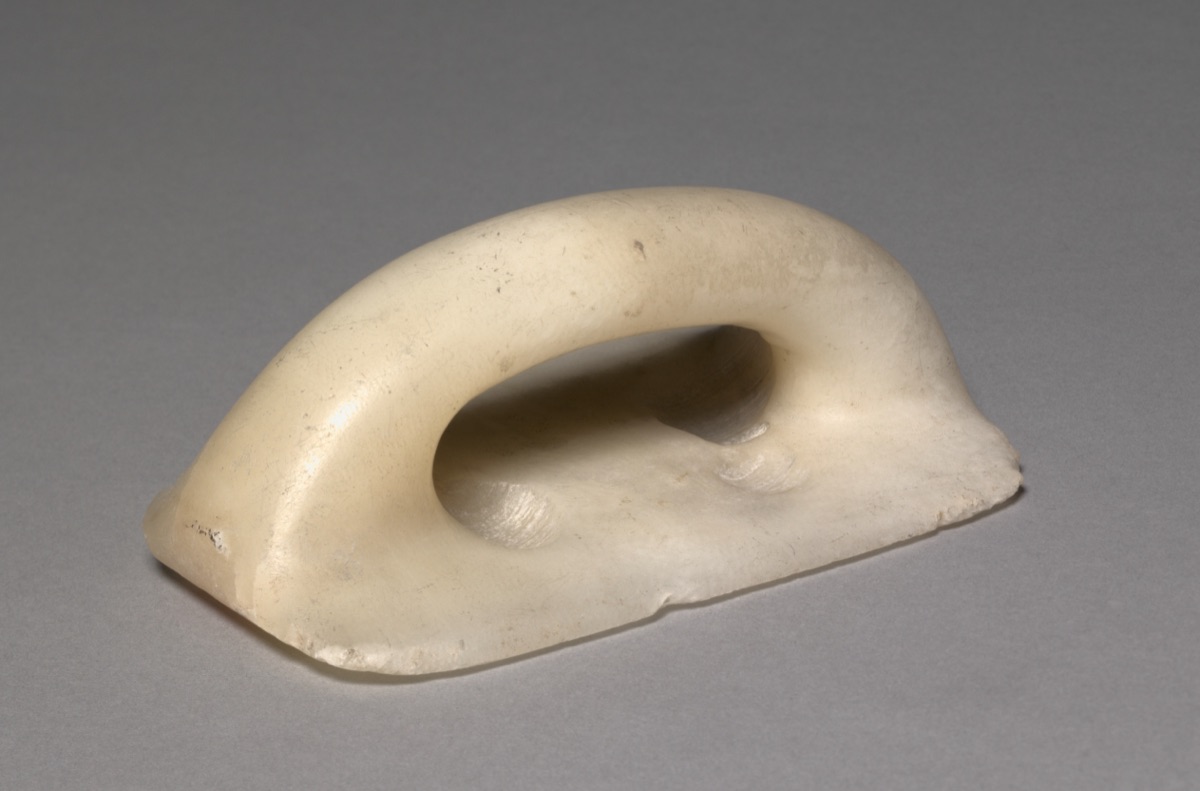
Plasterer's Float
A travertine hand tool for smoothing wet plaster, evidence of the finishing trades that built and decorated Middle Kingdom tombs and temples.
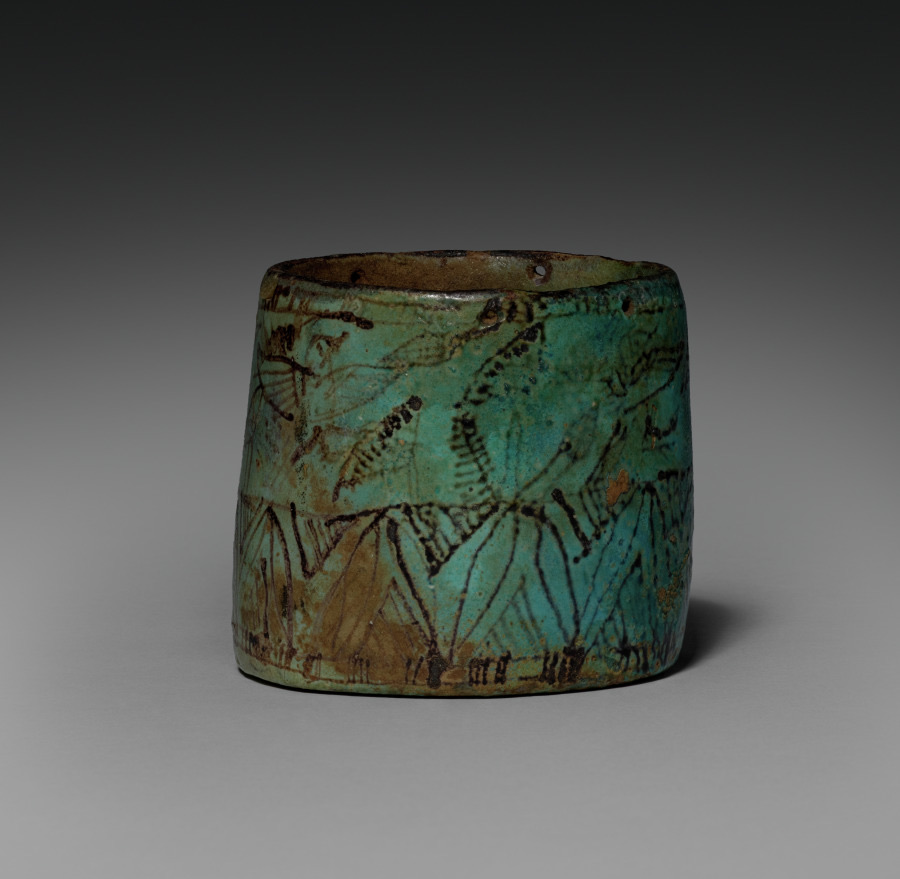
Pyxis with Lid
A turquoise faience box with a lid, made in the glazed composition material Egyptians used for cosmetic containers, amulets, and tomb goods alike.
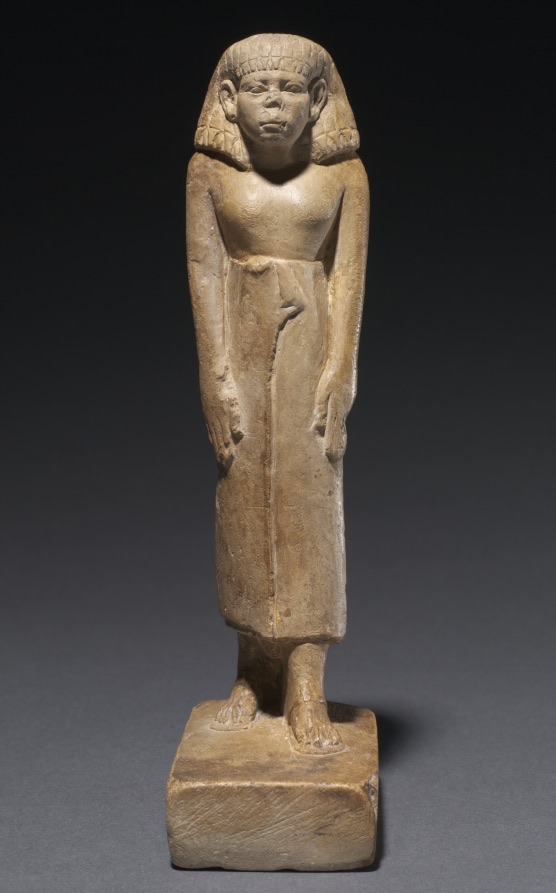
Statuette of a Man
A small painted limestone tomb statuette of a standing man, a modest private counterpart to the royal portraiture of the same dynasties.
New this century
- The Mari Letters
Over twenty thousand letters from a single royal archive argue that Old Babylonian-era diplomacy, espionage, and even prophecy were conducted through exhaustive, almost bureaucratic written correspondence rather than oral tradition alone.
- The Myth of Etana
A king with no heir argues that even the gap in kingship itself, no line, no successor, can be closed only by an impossible journey, riding an eagle to the sky in search of the plant of birth.
- The Epic of Anzu
The god Ninurta earns the right to be called upon in every future crisis by pursuing and killing the giant bird Anzu, who stole the Tablet of Destinies itself, the object that grants control over the fixed order of the entire universe.
- Story of the Shipwrecked Sailor
Misfortune survived and honestly reported can still fail to console a superior anxious about his own audience with the king, exposing the limits of consolation through storytelling.
- Loyalist Instruction
Loyalty to the reigning king is not merely dutiful but existential, because the king is the source of every subject's prosperity, memory, and even breath.
- Kahun Gynecological Papyrus
Women's reproductive health is a distinct medical domain requiring its own diagnostic categories, treated as seriously and as early as any other branch of Egyptian medicine.
- Laws of Eshnunna
A rival Mesopotamian kingdom's law collection argues, a generation before Hammurabi, that price ceilings and fixed compensation tables can regulate an economy just as effectively as they resolve individual disputes.
- Code of Hammurabi
Justice is the king's duty and must be written in public stone, so the strong do not oppress the weak.
- Gilgamesh and Aga
A young king proves his fitness to rule not by defeating a besieging army but by talking his way out of the siege entirely, arguing that civic debate is itself a form of martial strength.
- Gilgamesh, Enkidu and the Netherworld
The dead can still speak to the living, but only through a crack opened by a friend's sacrifice, so that even the underworld's silence is shown to be a boundary that grief and loyalty can briefly cross.
- Enki and the World Order
Civilization is not a single invention but an inventory, and the god Enki proves his supremacy by touring the world and personally assigning each land, craft, and office its proper function.
- Dumuzi-Inanna Courtship Songs
Erotic desire between a shepherd-king and a goddess is presented as the ritual engine of the state itself, since the king's sexual union with Inanna, performed yearly, is what actually guarantees the land's fertility.
- Lugal-e
The warrior-god Ninurta earns his place at the head of the pantheon by defeating a rebellious stone demon, Asag, and then repurposing the mountain's defeated stones into the useful and useless materials of the civilized world.
- Old Babylonian Gilgamesh (Pennsylvania and Yale Tablets)
Before Gilgamesh's story became a meditation on mortality, it argued something narrower and more social: that a king's excessive, exhausting vitality must be checked by an equal, and that friendship between equals is what turns a tyrant into a hero.