Time travel
16th century BC
The Hyksos are expelled and Egypt's New Kingdom opens under Ahmose I, the same century Kassite newcomers quietly take the Babylonian throne a Hittite raid emptied earlier on.
Mental Worlds: Evidence and Inference
An Egyptian scribe serving Ahmose I's court this century watches his kingdom put itself back together. He can read the autobiographies of Ahmose son of Ebana and Ahmose-Pennekhbet, soldiers who fought at the siege of Avaris and afterward in Nubia, a new kind of first-person military memoir carved into tomb walls rather than staged as royal inscription, more personal and specific than anything the previous Middle Kingdom produced. He also has, if he serves in a mortuary context, an early form of what will become the Book of the Dead, a flexible set of spells adapted from the older Coffin Texts to guide a soul through judgment, a text that will keep being copied and expanded for the next millennium and a half without ever quite settling into one fixed version.
If he trains as a physician, or studies alongside one, he can consult two remarkable texts that between them show Egyptian medicine at its most sophisticated. The Edwin Smith Surgical Papyrus works through forty-eight trauma cases with a case-method discipline, examine, diagnose, state the prognosis, treat, that even includes cases the text bluntly says cannot be treated, an honesty about medicine's limits rare for the ancient world. The Ebers Papyrus, by contrast, mixes genuinely useful herbal remedies with incantations against demons, evidence that this same medical culture reaches for magic wherever direct observation runs out. He would not think of these as contradictory approaches; both are simply what medicine is.
A Babylonian scribe of the same decades inhabits a quieter, more uncertain world. The Hittite raid that ended the Old Babylonian dynasty earlier this century left no occupying government behind, and it is Kassite newcomers, a people whose origins remain debated even now, who are slowly filling the vacuum and founding the dynasty that will rule Babylon for the next four centuries. He inherits the sexagesimal mathematics, the omen literature, and, just possibly, the first stirrings of what will become Enuma Elish, the story of how Marduk earned kingship among the gods by defeating the sea-monster Tiamat, though most modern scholarship favors a substantially later date for its actual composition, likely Kassite or even the following Isin II dynasty, centuries after this century; no manuscript survives from this early to settle the question either way.
In Anatolia, a Hittite scribe watches his own kingdom struggle rather than build on its dramatic raid into Mesopotamia decades earlier; a contested succession has left central authority weak, a pattern that will recur throughout Hittite history whenever a strong king dies without a clear heir. Further east, in north Syria, a new power called Mitanni is beginning to consolidate, though it produces little text yet that any of these other scribes could read even if they encountered it.
None of them know Rigveda, its first Sanskrit verses still a century away in the Punjab. None know Ugaritic writing, Amarna diplomacy, or the treaty culture that will bind Hittite, Egyptian, and Babylonian courts together within a few generations; all of that lies ahead. What exists now is renewal after collapse: an Egyptian kingdom reassembling itself with new confidence and new literature to match, a Babylonian kingdom quietly absorbing a foreign dynasty, and a Hittite kingdom that peaked too early for its own political stability, each rebuilding on its own schedule.
The political map
Major Polities and Cultural Regions
- New Kingdom Egypt Newly founded by Ahmose I after expelling the Hyksos, reasserting control from the Delta to Nubia
- Kassite Babylon New dynasty consolidating control after the Hittite raid ended the Old Babylonian line
- Hittite kingdom Weakened by contested succession after the Babylon raid, holding central Anatolia
- Mitanni Hurrian kingdom emerging in north Syria, soon to rival Egypt for control of the Levant
- Kerma Nubian kingdom now targeted for conquest as Ahmose's successors push the New Kingdom frontier south
- Minoan Crete New Palace civilization continuing at Knossos, its trade and artistic influence reaching Egypt
Borders are approximate scholarly reconstructions from historical-basemaps (GPL-3). Nearest available basemap anchor year: 1500 BC.
State of the domains
Texts and Written Culture
Egypt's liberation war against the Hyksos generates a new kind of first-person military literature: the autobiographies of Ahmose son of Ebana and Ahmose-Pennekhbet record soldiers' own careers fighting at Avaris and beyond, a genre distinct from royal inscription. The Book of the Dead begins taking the form that will define Egyptian funerary literature for the next fifteen centuries, a flexible collection of spells meant to guide the deceased safely through judgment. Enuma Elish, the Babylonian creation epic recounting Marduk's rise to kingship among the gods, is dated by the surviving evidence anywhere across a five-century window; most scholars favor a substantially later, Kassite-to-Isin-II composition rather than the tentative stirrings sometimes proposed for this early century.
Art
Ahmose's Theban court commissions triumphal stelae commemorating the Hyksos expulsion, reasserting a native Egyptian royal art after a century of divided rule. Early Eighteenth Dynasty Theban tomb painting and a revived tradition of royal statuary, reasserting Middle Kingdom models after the Hyksos interruption, mark the visual arts of the new regime. Kassite Babylon, newly established after the Hittite raid ended the Old Babylonian dynasty, has left little distinctive art from these early decades. Minoan fresco painting continues developing at Knossos, its influence beginning to reach Egyptian and Levantine courts through trade and diplomatic gift exchange.
Medicine
This century produces two landmark medical texts. The Edwin Smith Surgical Papyrus, in the copy that survives, catalogues forty-eight trauma cases in a case-by-case format, examination, diagnosis, prognosis, treatment, that reads remarkably close to clinical method, including several cases the text honestly labels untreatable. The Ebers Medical Papyrus is broader and more magical, a compendium of remedies for ailments from digestive complaints to what appears to be a description of tumors, mixing genuinely effective plant-based treatment with incantation. Together they show Egyptian medicine capable of careful clinical observation in surgery while leaning on ritual and magic for internal disease it could not otherwise explain.
Science
Egyptian medical scribes demonstrate real diagnostic reasoning in the Edwin Smith Papyrus's structured case method, an approach to knowledge closer to empirical observation than anything in contemporary Mesopotamian science. Kassite Babylon, still consolidating after the Old Babylonian dynasty's fall, has not yet produced major new mathematical or astronomical texts of its own, though it inherits the sexagesimal tradition intact. Chariot technology continues to demand and reward advances in wheel, axle, and yoke engineering across the Near East as the new weapon system spreads from its Hyksos-associated origins into every major army.
Military
Ahmose I completes the expulsion of the Hyksos from the Delta, besieging and taking Avaris and pursuing Hyksos forces into southern Canaan, then turns south to reassert control over Nubia, founding the campaigns of conquest that will define the New Kingdom. Egyptian armies now field chariots as a standard arm, technology absorbed from the very Hyksos they expelled. In Anatolia, the Hittite kingdom that sacked Babylon earlier this century falls into a period of weak, contested succession, unable to translate its dramatic raid into lasting Mesopotamian power. Kassite rulers fill the vacuum in Babylon, beginning a dynasty that will hold the city for centuries.
Technology
Chariot warfare is now fully established across Egypt and the Near East, its wheel construction, spoke technology, and horse harnessing representing some of the era's most consequential applied engineering. Egyptian shipbuilding and siege technique both advance during the Hyksos war, evident in the campaign narratives of Ahmose's officers. Kassite Babylon inherits Mesopotamian irrigation and canal infrastructure largely intact despite this century's political upheaval. Bronze remains the dominant metal for tools and weapons everywhere; scattered meteoric or smelted iron objects exist only as rare curiosities, nowhere yet a practical alternative to bronze.
Material world
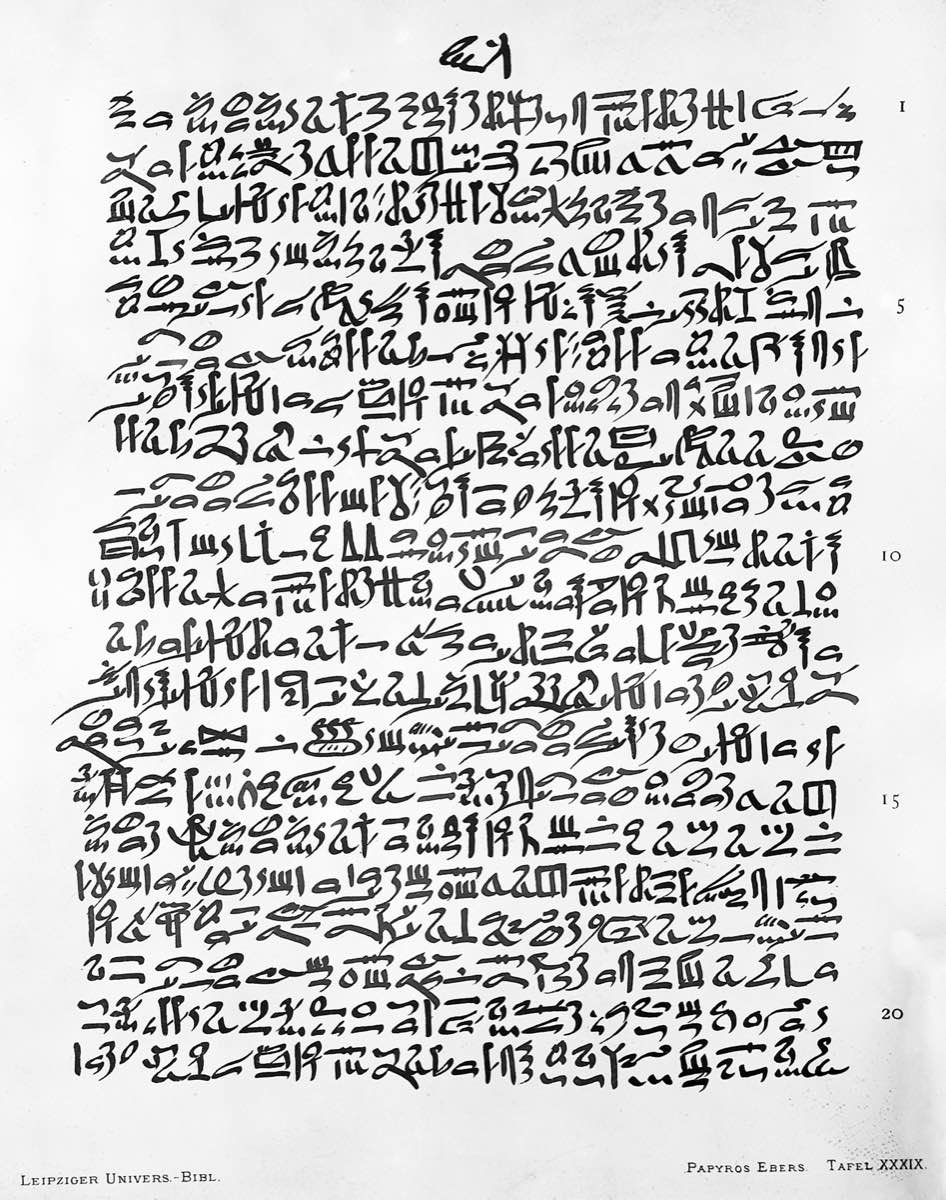
Ebers Papyrus
A Leipzig University Library facsimile plate of the Ebers Papyrus, a scroll of some 700 remedies, spells, and diagnoses which a note on its verso ties to the ninth regnal year of Amenhotep I, roughly 1550 BC.
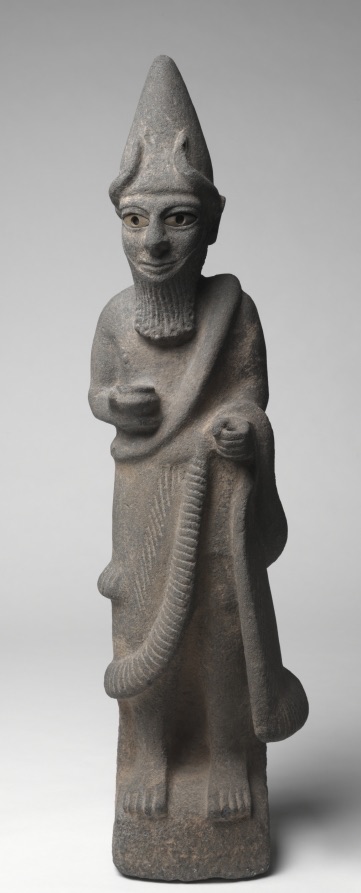
Priest-King or Deity
A basalt figure with inlaid bone eyes from the Hittite Old Kingdom sphere in North Syria, its stiff frontal pose typical of early Hittite religious sculpture.
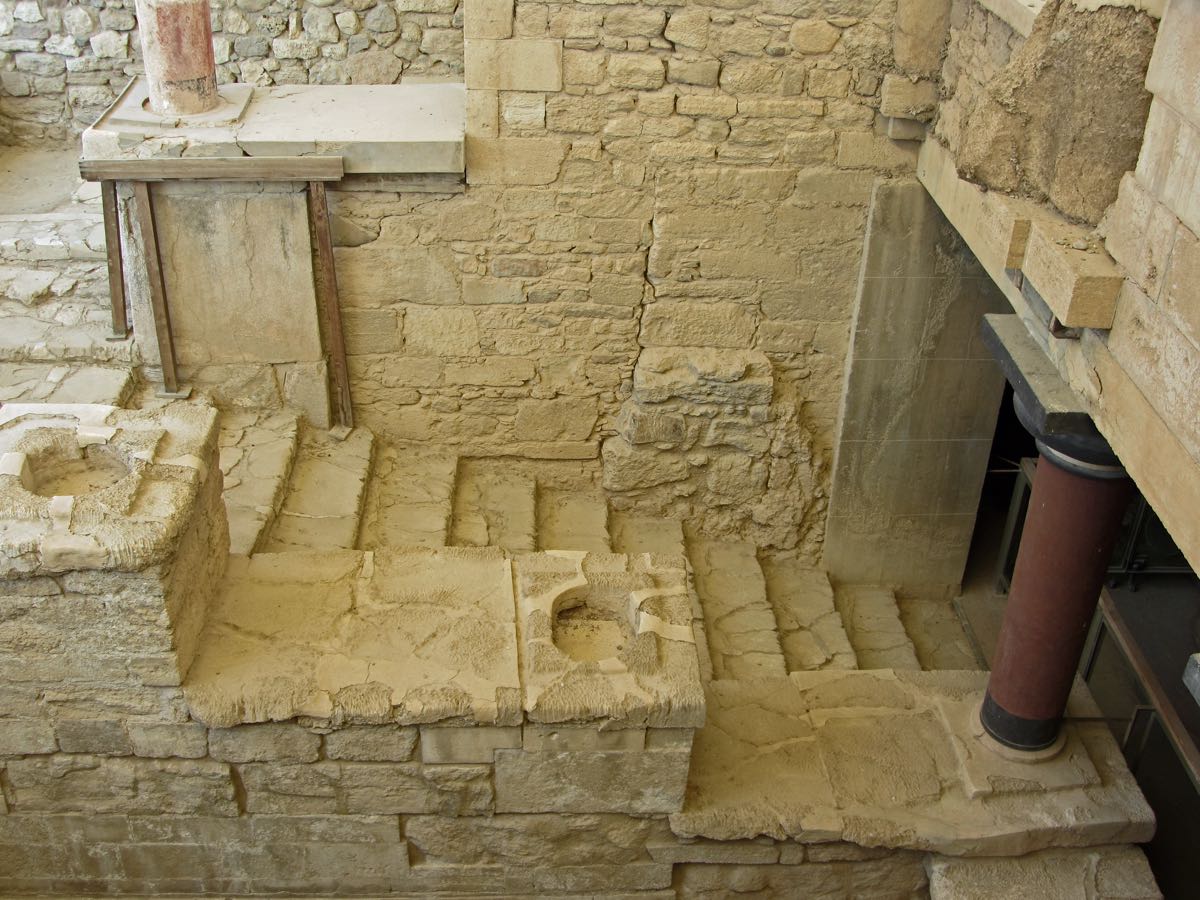
Grand Staircase, Palace of Knossos
The multi-story light-well staircase at the heart of the rebuilt New Palace at Knossos, the architectural showpiece of Minoan Crete at its height.
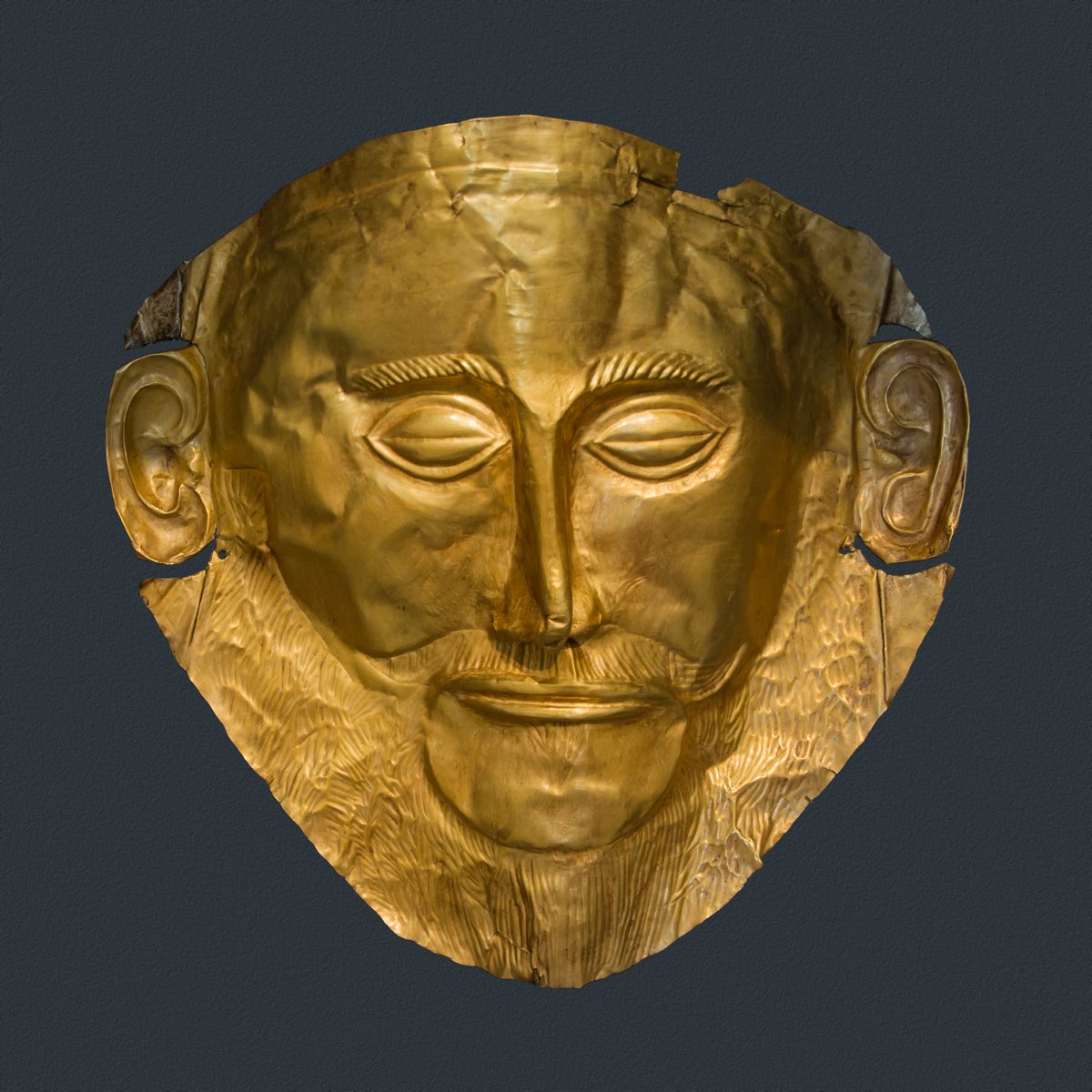
Gold Funerary Mask ("Mask of Agamemnon")
A beaten-gold death mask from a shaft grave at Mycenae, named for the Trojan War king by its excavator Heinrich Schliemann though it predates the Trojan War by centuries.
Photo: Jebulon / Wikimedia Commons, National Archaeological Museum, Athens
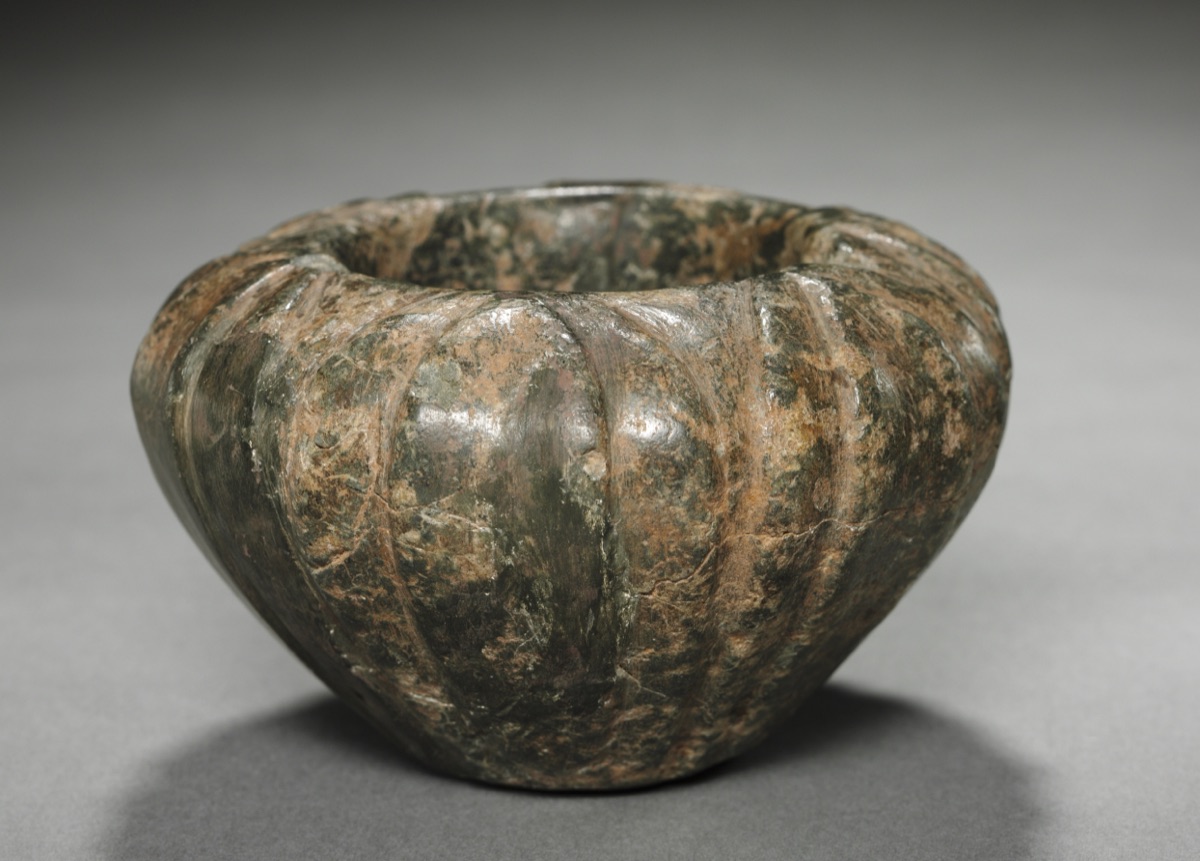
Minoan Petal Bowl
A stone bowl carved with a petaled rim, a form of Minoan luxury vessel that stone-cutters produced for both ritual and elite domestic use.
New this century
- Enuma Elish
Order is not given but won: Marduk becomes king of the gods only after defeating the chaos-sea Tiamat in single combat, and creation itself is built from her corpse.
- Edwin Smith Surgical Papyrus
Injury can be diagnosed and treated through observation and reasoned prognosis alone, without invoking magic, making trauma medicine a rational discipline distinct from the rest of Egyptian healing.
- Book of the Dead
Death is a journey that can be navigated with knowledge, and the heart is weighed against truth itself.
- Ebers Medical Papyrus
Illness has many causes and remedies, medical, magical, and religious together, and a physician's competence lies in knowing which to apply to a given complaint.