Time travel
30th century BC
Egypt's First Dynasty kings are buried at Abydos surrounded by subsidiary burials interpreted as sacrificed retainers, while in Mesopotamia the Uruk period's long expansion gives way to smaller, more local networks.
Mental Worlds: Evidence and Inference
A servant attached to the Egyptian royal court this century lives under an authority whose reach, on the evidence of the tombs alone, may have extended to death: when a First Dynasty king is buried at Abydos, subsidiary burials surrounding the tomb, rows of retainers, court officials, craftsmen, and animals among them, have been interpreted as evidence that members of the court were killed or otherwise selected to accompany him, though the precise circumstances and extent of sacrificial killing remain debated among specialists; each grave is marked with a small stela bearing little more than a name. What such a person, or their family, understood about this fate is not recorded and cannot be reconstructed from the labels alone; the practice is documented entirely from the outside, through excavated graves, not from any surviving voice explaining or justifying it. It is one of the century's starkest reminders that the written record, thin as it already is, is thinner still on the experience of anyone but the king himself.
For the king, by contrast, this century sharpens a very particular kind of knowing: a sense of time as regnal time, structured around his own reign rather than any impersonal calendar. Ivory and wood labels from royal tombs record events, a flood, a festival, a delivery of oil, by pinning them to a particular year of a particular king's rule, a habit of mind that will eventually mature into Egypt's continuous chronological tradition. A literate Egyptian official of this century already thinks about the past as a sequence of named reigns rather than an undifferentiated blur, even though no connected historical narrative yet exists to hold that sequence together; what survives is closer to a string of dated captions than a story.
In Mesopotamia, a comparable but distinct contraction is underway. The long trade network that carried Uruk's administrative culture into Syria, Anatolia, and Iran over the previous two centuries visibly recedes, and southern Mesopotamian cities turn somewhat more inward. A scribe at Uruk itself continues to use the same tallying system perfected by earlier generations, still confined to temple and palace accounts, unaware that the very network which once carried that system outward is now pulling back. Whether this reflects political trouble, shifting trade routes, or simply the natural rhythm of an overextended system, no text says, because no text yet exists whose purpose is explanation rather than record.
Beyond Egypt and Mesopotamia, the century's silence continues undisturbed. Proto-Elamite scribes at Susa write in a script that remains largely, not wholly, undeciphered, a civilization legible in outline, invisible in detail. Farming communities from the Indus to the Aegean live and die without writing at all. What connects a retainer at Abydos whose burial has been interpreted as evidence of sacrificial killing, though the practice remains debated, a scribe tallying grain at Uruk, and a herder on the Iranian plateau who has never seen a written sign is not shared knowledge but shared circumstance: all three inhabit a world in which almost nothing that happens to an ordinary person is ever written down, and where the written record that does exist belongs almost entirely to the small number of people, and the smaller number of institutions, wealthy and powerful enough to command it.
The political map
Major Polities and Cultural Regions
- Egypt (First Dynasty) United Nile kingdom under successive kings buried at Abydos; one of the earliest sustained dynastic states presently known anywhere.
- Uruk and southern Mesopotamian city-states Still the largest urban center in Mesopotamia, though its distant colony network is contracting.
- Susa (proto-Elamite sphere) Lowland Iranian center using its own still-undeciphered script alongside Mesopotamian-style numerical notation.
- Indus valley farming communities Pre-urban cultures of the Indus system continuing to develop toward the urbanism of later centuries.
Borders are approximate scholarly reconstructions from historical-basemaps (GPL-3).
State of the domains
Texts and Written Culture
Royal ivory and wood labels from the tombs of First Dynasty kings, Aha, Djer, Djet, and their successors, continue Egypt's practice of naming a ruler and recording goods and events tied to specific years of his reign, an early form of annalistic dating that will eventually produce continuous king lists. Individual entries remain terse, closer to a caption than a sentence. In Mesopotamia, the Jemdet Nasr period's tablets carry the proto-cuneiform tradition forward with somewhat more standardized sign forms, still confined to temple and palace accounting, while the long-distance Uruk colony network that defined the previous two centuries visibly contracts.
Art
Egyptian royal tombs at Abydos and the larger mudbrick funerary enclosures nearby grow more elaborate, incorporating rows of subsidiary graves for retainers and animals arranged around the king's own burial, a display of court hierarchy carried into death. Carved stelae marking individual retainer graves, small and uninscribed beyond a simple name sign, appear by the hundred at some sites. In Mesopotamia, glyptic art on cylinder seals continues the established repertoire of processions and animal files, while monumental temple building at Uruk itself, though still significant, no longer dominates the region as singularly as it did a century earlier.
Medicine
Egyptian mummification in a developed embalming sense has not yet begun this century; bodies are typically desiccated naturally by hot desert sand rather than deliberately treated, though wrapping in linen is already practiced. No medical text accompanies any of this anywhere in the world. This natural preservation gives modern researchers unusually direct evidence of injury, disease, and diet from skeletal and soft-tissue remains, but none of it corresponds to any contemporary written explanation, since no medical writing has yet been identified from Egypt at this date.
Science
Egyptian annalistic labeling, recording a Nile flood height or a notable event against a specific regnal year, represents an early administrative habit that will eventually mature into the continuous year-by-year record later compiled on the Palermo Stone, though that compilation itself lies centuries ahead. In Mesopotamia, the sexagesimal counting system and standardized measures of grain and land remain the era's chief intellectual technology. No text in either region explains a natural phenomenon; the closest either comes to abstraction is the classification exercise embodied in Uruk's lexical lists of professions and objects, copied and recopied as scribal training.
Military
Egyptian royal tombs of this century are surrounded by subsidiary burials, likely court servants and craftsmen interpreted as killed or otherwise selected to accompany the king, though the precise circumstances and extent of sacrificial killing remain debated, a practice that speaks to the absolute authority claimed by First Dynasty kingship even if it says little directly about warfare. Ivory labels occasionally depict bound captives and military standards, continuing the smiting iconography established by the Narmer Palette. In Mesopotamia, the contraction of the long-distance Uruk trade network may reflect regional instability or simply changing trade patterns; either way, no text from this century in either region narrates a specific campaign, battle, or named enemy.
Technology
Egyptian craftsmen achieve increasingly fine stoneworking, visible in polished stone vessels placed in royal tombs, alongside continued copper tool production and early experiments with mudbrick tomb architecture that will lead toward the mastaba form. Wine importation from the Levant, recorded on royal labels, implies organized long-distance trade even as the more diffuse Uruk colonial network in the north contracts. In Mesopotamia, standardized bevel-rim bowls and sealed storage containers remain the backbone of institutional rationing, and wheeled transport, cart and wagon imagery well attested by now, continues to move goods within and beyond the Mesopotamian heartland.
Material world
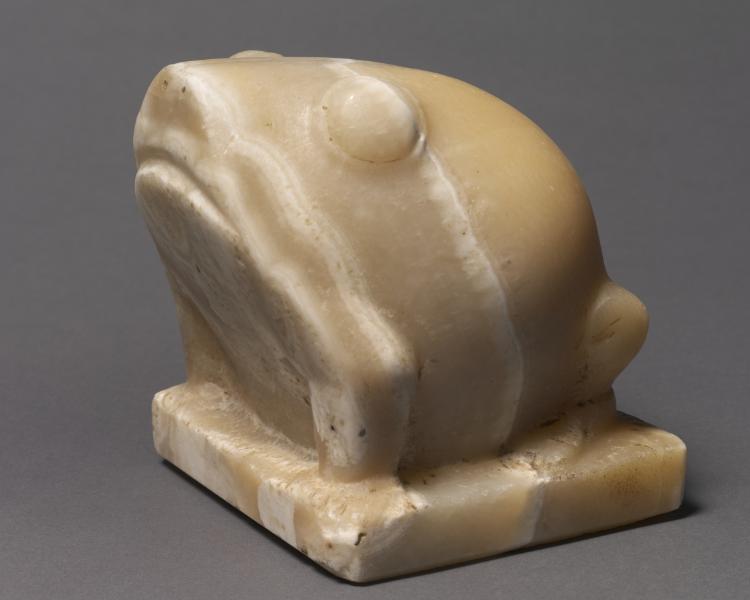
Statue of Heqat, the Frog Goddess
A travertine statuette of Heqat in full frog form, the goddess of childbirth, among the earliest surviving images of an Egyptian deity in animal form.
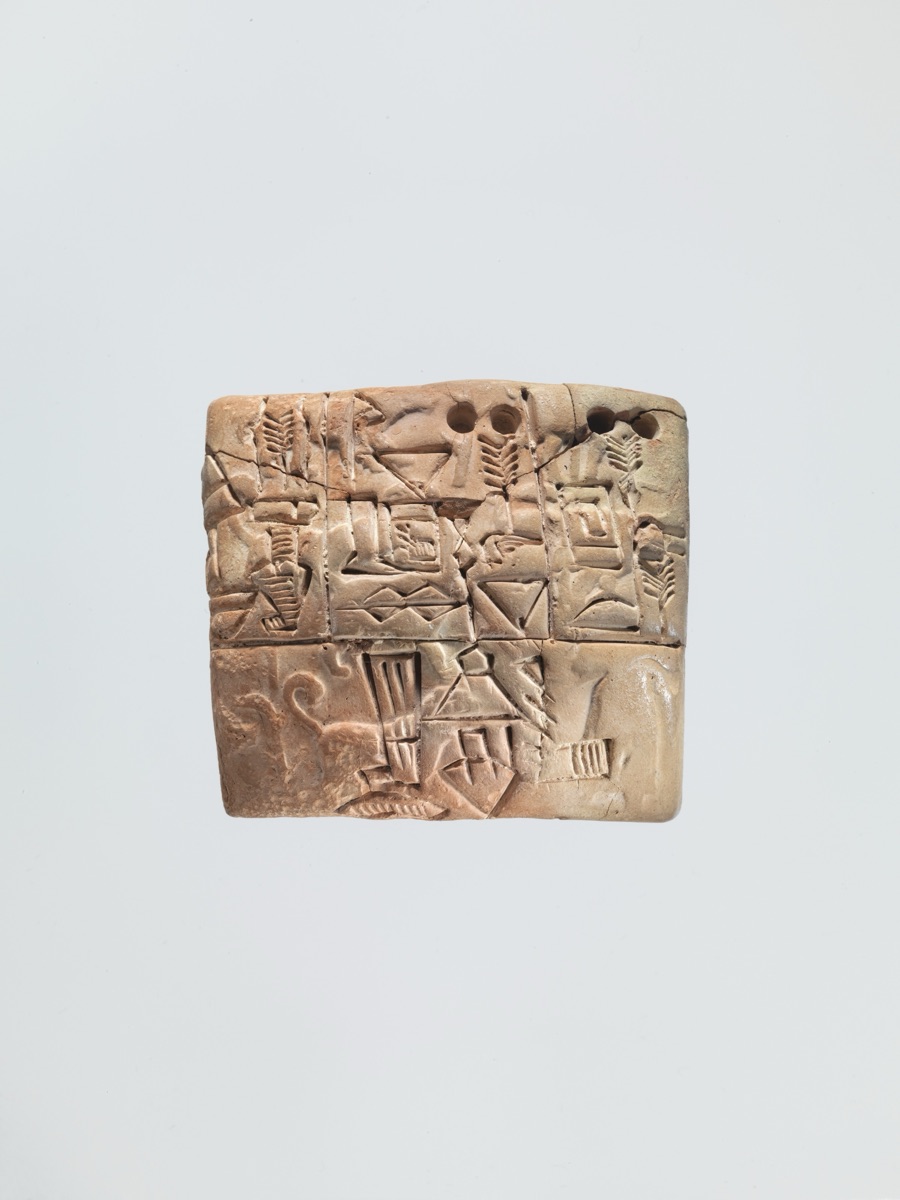
Proto-Cuneiform Tablet with Seal Impressions
A clay administrative tablet recording a barley distribution in pictographic proto-cuneiform, stamped with a cylinder seal of a hunter and dogs, among the earliest surviving writing anywhere.
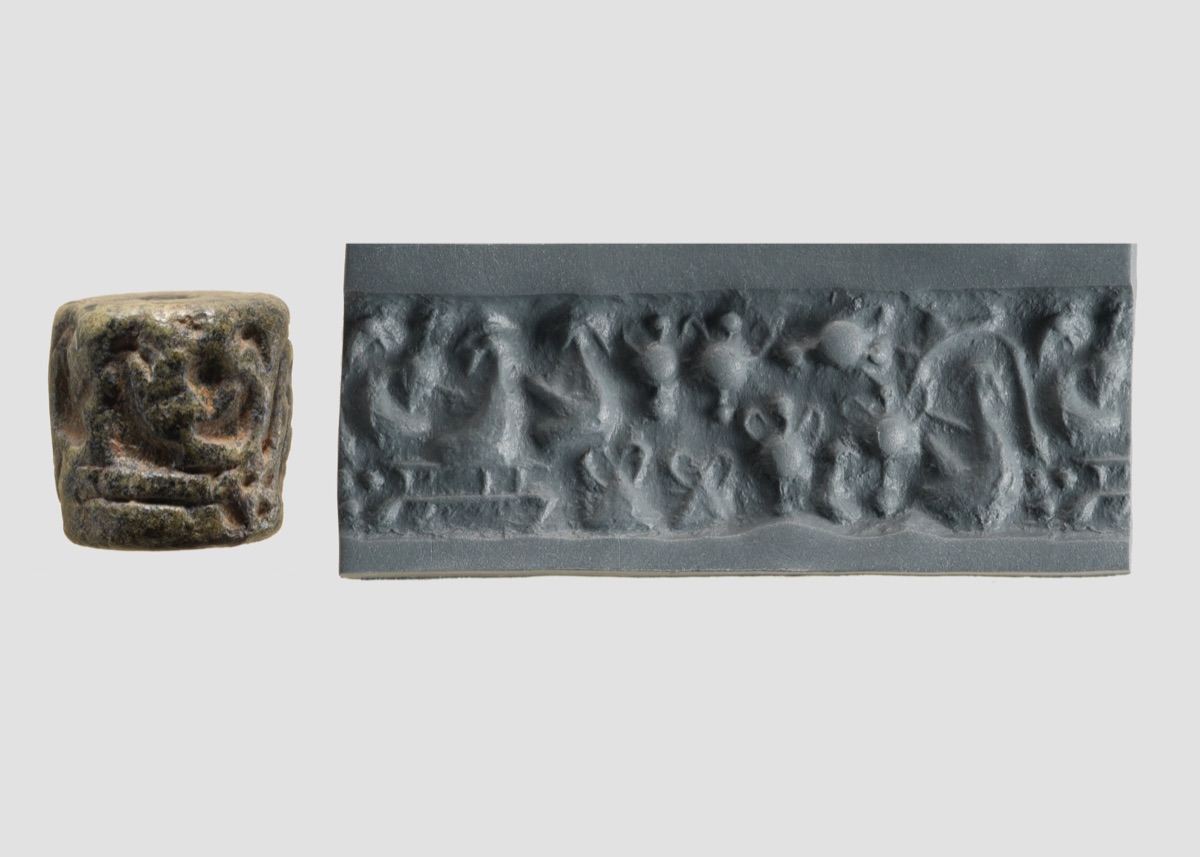
Cylinder Seal: Seated Figure with "Pigtailed Ladies" and Pots
A cylinder seal, shown here in modern impression, depicting a female figure seated on a platform among so-called "pigtailed ladies" and pots, Jemdet Nasr imagery whose exact ceremonial meaning is still debated.
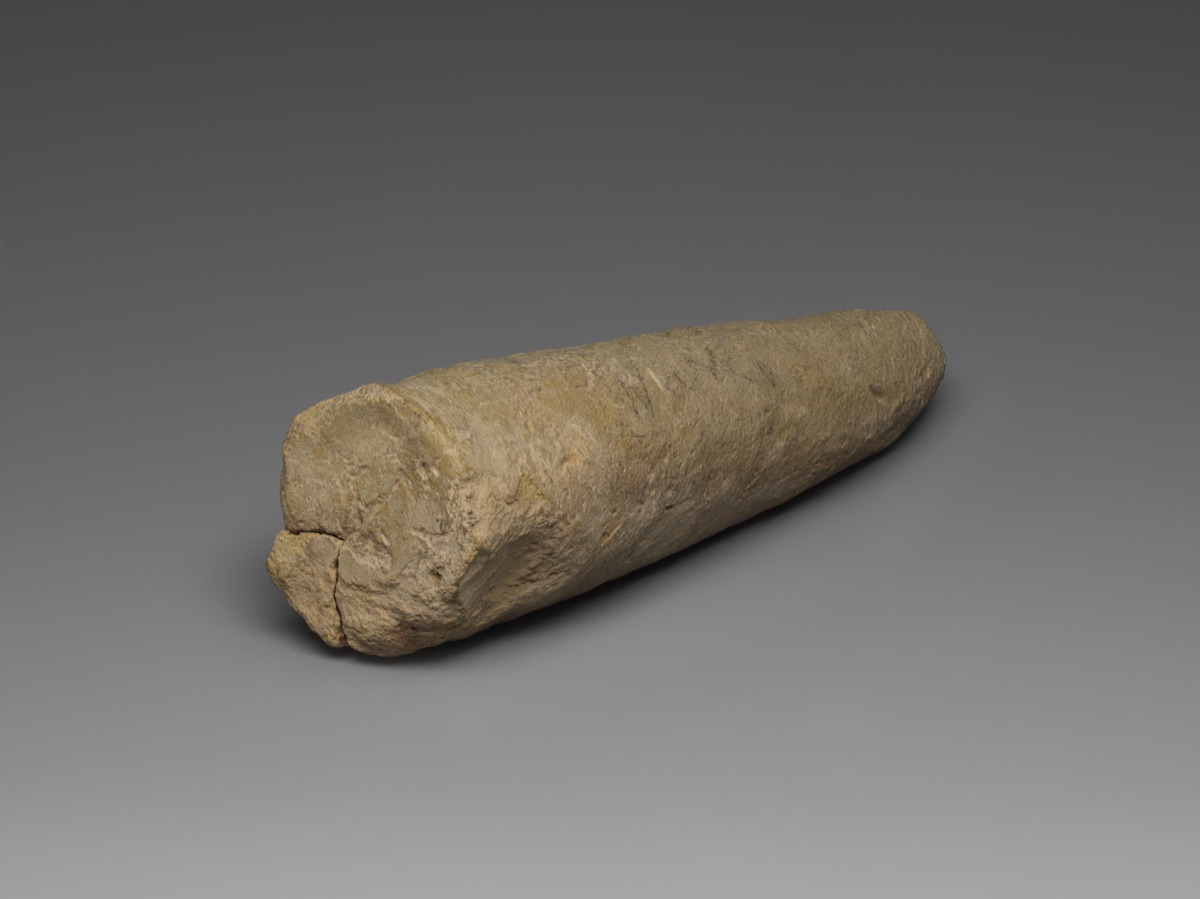
Mosaic Cone
A plain buff clay cone pressed into mudbrick facades by the thousand to form geometric mosaics, an early solution to weatherproofing and decorating mudbrick architecture.
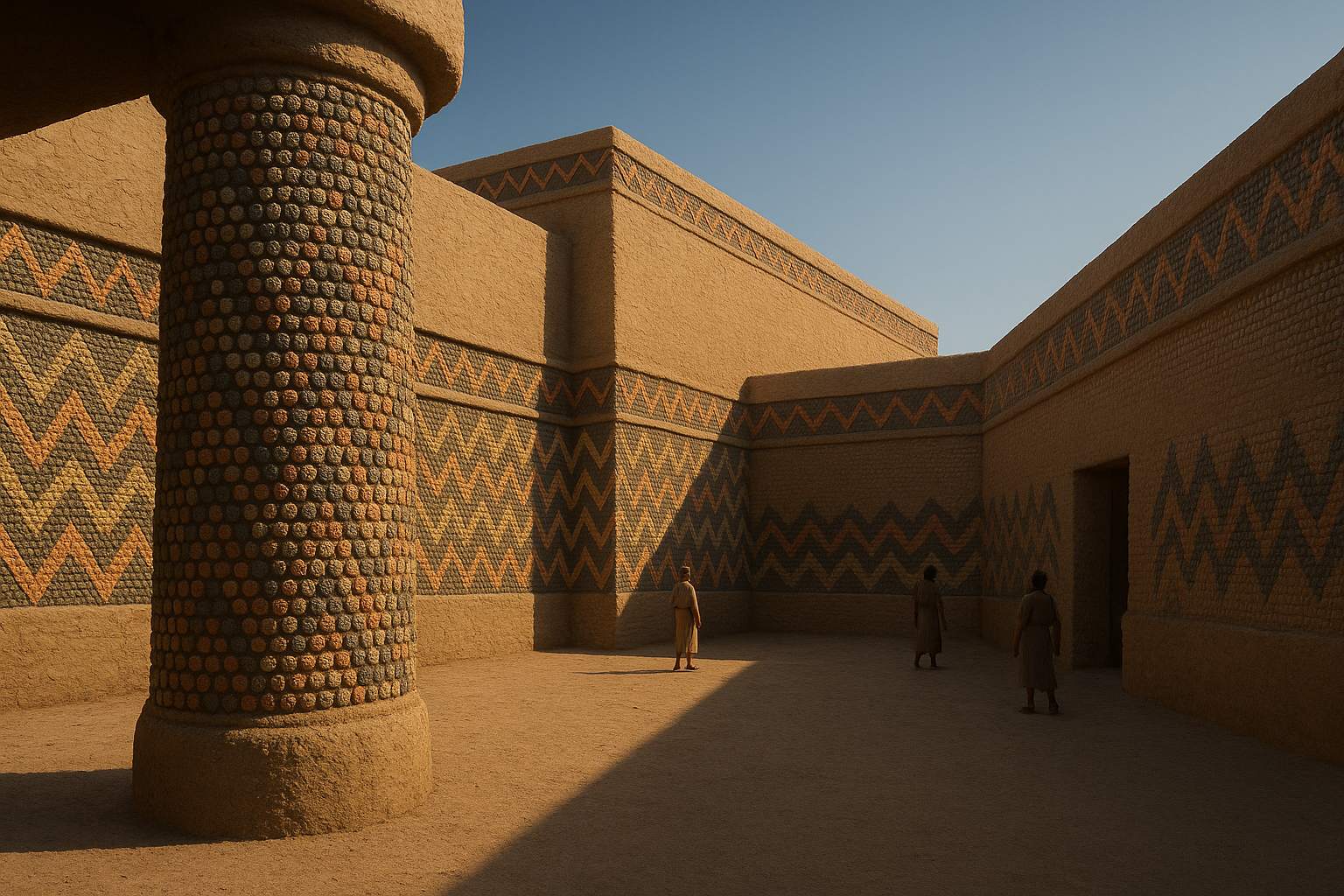
AI reconstruction
Cone-mosaic facade at Uruk - reconstruction
A courtyard in the Eanna precinct at Uruk as cone mosaic made it look when new: massive mudbrick columns and battered walls sheathed in thousands of clay cones like the museum's single example, their colored heads pressed into wet plaster in zigzag and lozenge bands. The technique is securely excavated at Uruk; this particular courtyard view is a composite of the surviving cone-mosaic buildings, not a plan-exact restoration.
AI reconstruction (2026), based on Mosaic Cone, The Metropolitan Museum of Art
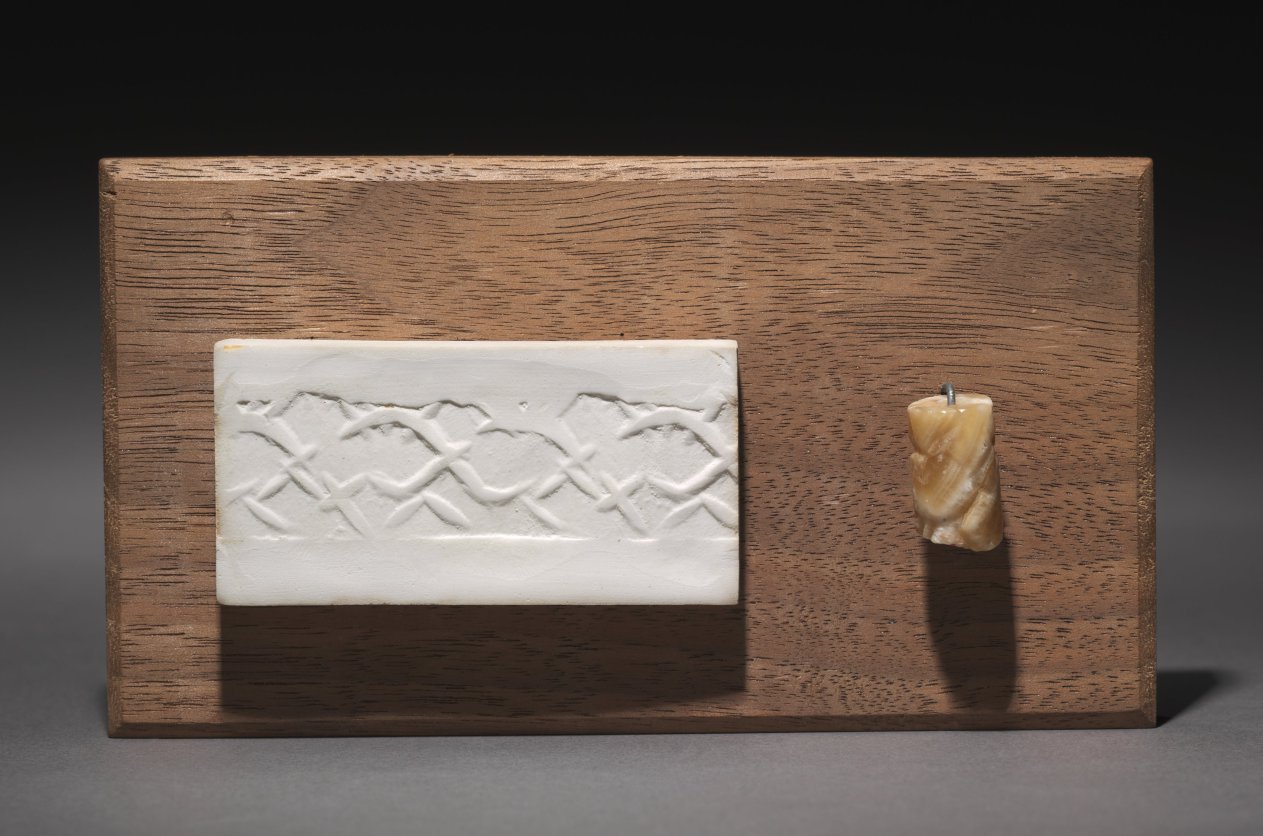
Cylinder Seal, Early Dynastic Period
An agate cylinder seal from the very start of the Early Dynastic period, when Sumerian city-states were consolidating around Uruk's administrative legacy.
New this century
No corpus entries yet from this century.
The canon by now
No tier-one work in the corpus predates this century.