Time travel
28th century BC
Egypt's fractured Second Dynasty is reunified under Khasekhemwy as the century ends, while Mesopotamia's rival city-states continue an uneasy balance of temple wealth and local kingship.
Mental Worlds: Evidence and Inference
An Egyptian official living through the end of this century witnesses something the previous generation's thinner, more contested record could not offer: a visible, commemorated reunification. Khasekhemwy's own name, understood by Egyptologists to mean roughly the two powerful ones have appeared, seems to announce reconciliation between two halves of a kingdom that Second Dynasty tradition suggests had been at odds. Inscriptions on stone vessels and statue bases record numbers of northern enemies killed, a bluntness about violence that later, more polished royal rhetoric will often soften into ritualized smiting imagery alone. A person alive at the century's end could plausibly have lived through real civil conflict and its resolution, though what such a person felt about it, relief, resentment, uncertainty about a still-fragile peace, is nowhere recorded; only the king's own triumphant framing survives.
In Mesopotamia, no comparable single dramatic reunification defines the century, because there is no single kingdom to reunify. Instead, a scribe or temple official in any of the region's competing cities, Ur, Uruk, Kish, Lagash, continues to operate within a stable but genuinely plural political order, where loyalty, taxation, and military obligation all run to a city rather than a wider state. Such a person's working knowledge is deep within a narrow compass: the specific land-survey conventions, temple offering schedules, and sign forms used in their own city, likely differing in small but real ways from the practice of a rival city only a few days' journey away. Whether this fragmentation felt to contemporaries like a natural order of things or an unresolved problem awaiting a future conqueror's solution, no surviving text says; the Sumerian King List's later claim that kingship properly belongs to a single city at a time, descending from one to the next, will not be composed for another seven centuries, and projecting that later ideology backward onto this century's own self-understanding would be a genuine anachronism.
Further east, the proto-Elamite writing system that dominated Susa and much of the Iranian plateau two centuries earlier had already gone silent by the start of the previous century, for reasons that remain unclear to modern scholarship, whether political disruption, a shift toward oral or perishable record-keeping, or simply changing administrative needs. A literate person at Susa in that earlier era might have expected the script to continue indefinitely; instead, it proved to be one of history's genuine dead ends in the story of writing, a system invented, used seriously for roughly two centuries, and then abandoned without ever being fully cracked by anyone since.
Across the rest of the world, the century changes nothing in the basic condition of most human beings: life organized by kinship, season, and oral tradition, without writing, without kings whose names survive, and without any reason to think their experience mattered less for being unrecorded. What a thinking person could know this century still depended almost entirely on where that person happened to be born, whether inside the narrow, competing literacies of the Near East or outside them entirely.
The political map
Major Polities and Cultural Regions
- Egypt (Second Dynasty, reunified under Khasekhemwy) Nile kingdom reunited by conquest of a northern rival faction by the century's end.
- Early Dynastic Mesopotamian city-states Ur, Uruk, Kish, Lagash, Umma, and others, still independently ruled and periodically at odds.
- Susa and the Iranian lowlands (post-proto-Elamite) Lowland Iranian center where the proto-Elamite script tradition, extinct for roughly a century now, has left no successor writing system.
- Indus valley farming communities Pre-urban cultures of the Indus system, still without cities or writing.
Borders are approximate scholarly reconstructions from historical-basemaps (GPL-3). Nearest available basemap anchor year: 3000 BC.
State of the domains
Texts and Written Culture
Royal inscriptions from the end of Egypt's Second Dynasty, particularly those of Khasekhemwy, whose name itself means the two powerful ones appeared, reflect and may commemorate the reunification of a kingdom troubled by internal division; even so, surviving text remains formulaic, naming a king and an event rather than narrating a connected account. In Mesopotamia, city-state archives at Ur, Uruk, Kish, and elsewhere continue the by-now well-established proto-cuneiform and early cuneiform administrative tradition, recording temple offerings, land transactions, and labor allocations with growing sign standardization, though still without producing anything resembling a sentence expressing a first-person thought.
Art
Khasekhemwy's monuments at the end of Egypt's Second Dynasty, including stone statues showing him in the White Crown seated and bound captives referenced in accompanying inscriptions, mark a notable increase in sculptural ambition compared to earlier in the dynasty. Egyptian architecture is also moving toward larger stone-built ceremonial enclosures. In Mesopotamia, Early Dynastic votive statuary, with its distinctive oversized inlaid eyes meant to keep a worshipper perpetually attentive before a god, continues to be produced across the region's temples, alongside cylinder seals whose banquet, combat, and procession scenes remain the dominant visual vocabulary of the period.
Medicine
Medicine remains entirely unwritten this century, in Egypt as in Mesopotamia. Skeletal and mummified remains from both regions continue to preserve evidence of healed injuries, arthritis, and occasional surgical intervention, none of it accompanied by written explanation. What honestly distinguishes this century from those before it is only that Egyptian preservation techniques, still based mainly on desiccation rather than deliberate embalming, are slowly improving, giving modern researchers somewhat richer physical evidence even as the total absence of contemporary medical writing remains unchanged in both regions.
Science
Egypt's reunification under Khasekhemwy likely required renewed administrative coordination between Upper and Lower Egypt, though no text from this century explains policy or method in explanatory rather than commemorative terms. Mesopotamian city-states continue refining shared systems of weights, measures, and land survey needed to manage irrigation agriculture and temple estates. Neither region yet produces anything approaching a scientific treatise; the intellectual work of the century remains organizational, classifying goods, offices, and now, in Egypt's case, a reunified kingdom's administrative structure, rather than investigating causes.
Military
Khasekhemwy's inscriptions include explicit references to conflict, with figures for slain northern enemies recorded on stone vessels and statue bases, suggesting the reunification of Egypt at the end of this century involved real suppression of a rival faction based in the Delta. This is among the more concrete pieces of evidence for actual warfare accompanying Egyptian political consolidation in the archaic period. In Mesopotamia, Early Dynastic city-states continue to maintain fortifications and periodically clash over agricultural land and canal rights, a pattern of endemic low-level city-state warfare well documented archaeologically even where no single battle from this exact century is named in surviving text.
Technology
Stoneworking reaches new heights in Egypt by the end of this century, laying technical groundwork for the dramatic architectural leap of the following century's Step Pyramid. Copper tools remain standard in both Egypt and Mesopotamia, with bronze alloying continuing to spread gradually across the wider Near East. Mesopotamian irrigation engineering, canal networks feeding the fields around each city-state, continues to be maintained and extended, sustaining the dense urban populations that make Early Dynastic Mesopotamia among the most urbanized regions on earth. Nile transport and Delta-to-Upper-Egypt logistics presumably underpin Khasekhemwy's reunification campaign, though no text describes the mechanics directly.
Material world
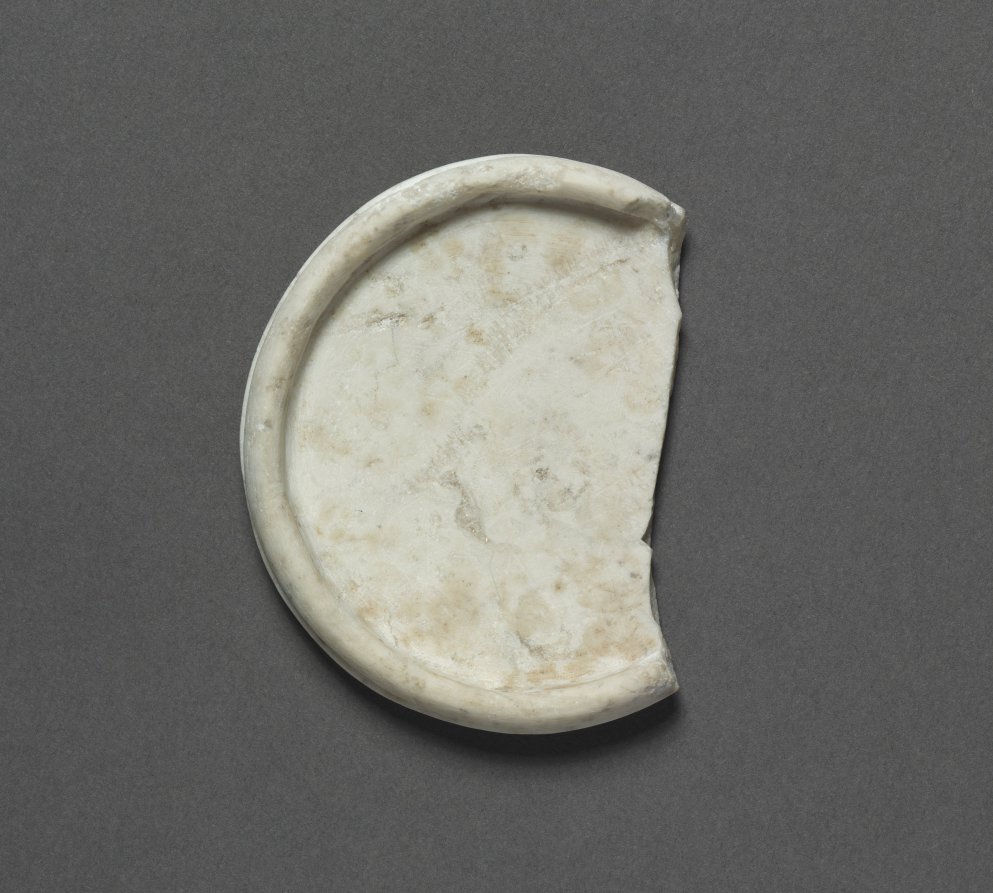
Cosmetic Vessel
A limestone cosmetic vessel from Second Dynasty Egypt, evidence of the stoneworking skill that would soon be turned to monumental architecture.
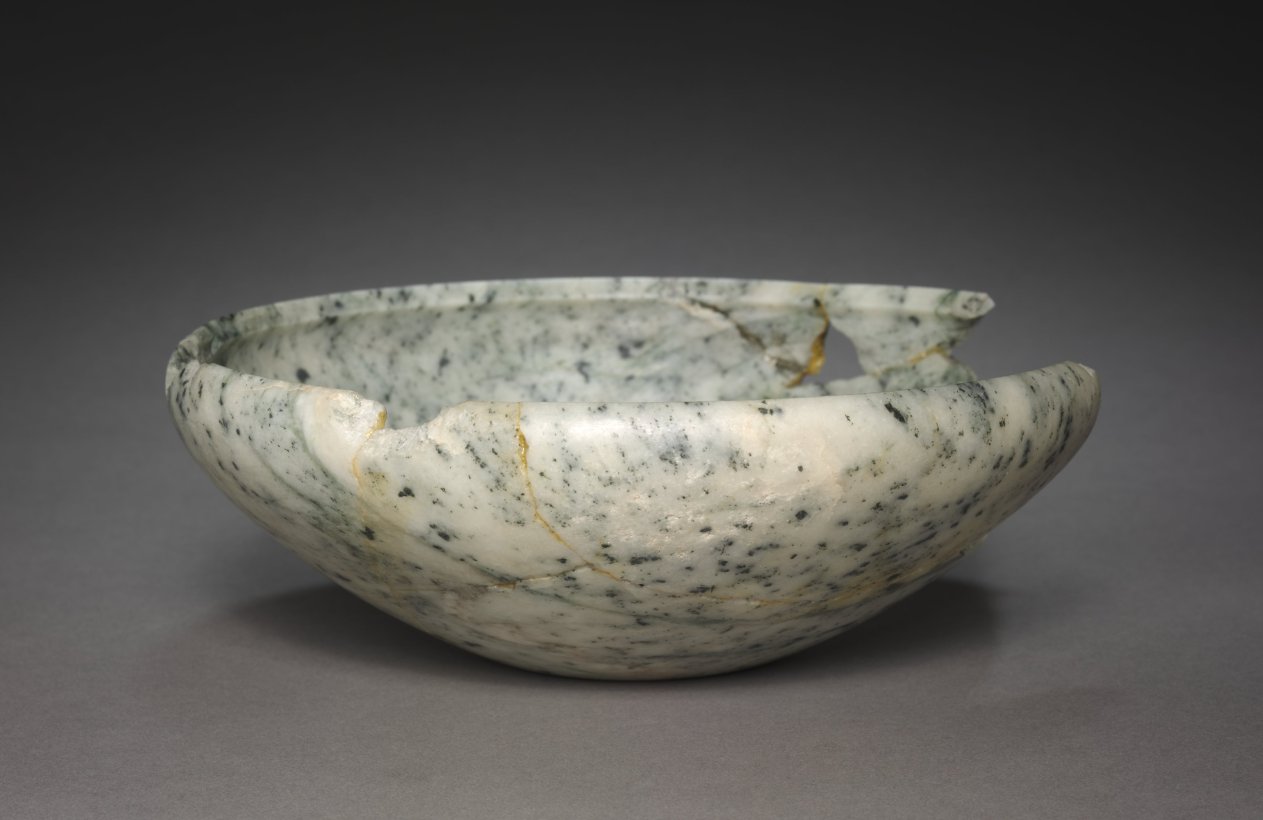
Dish
An anorthosite gneiss dish from the Second Dynasty, the kind of stone tableware mass-produced for elite households and tomb equipment alike.
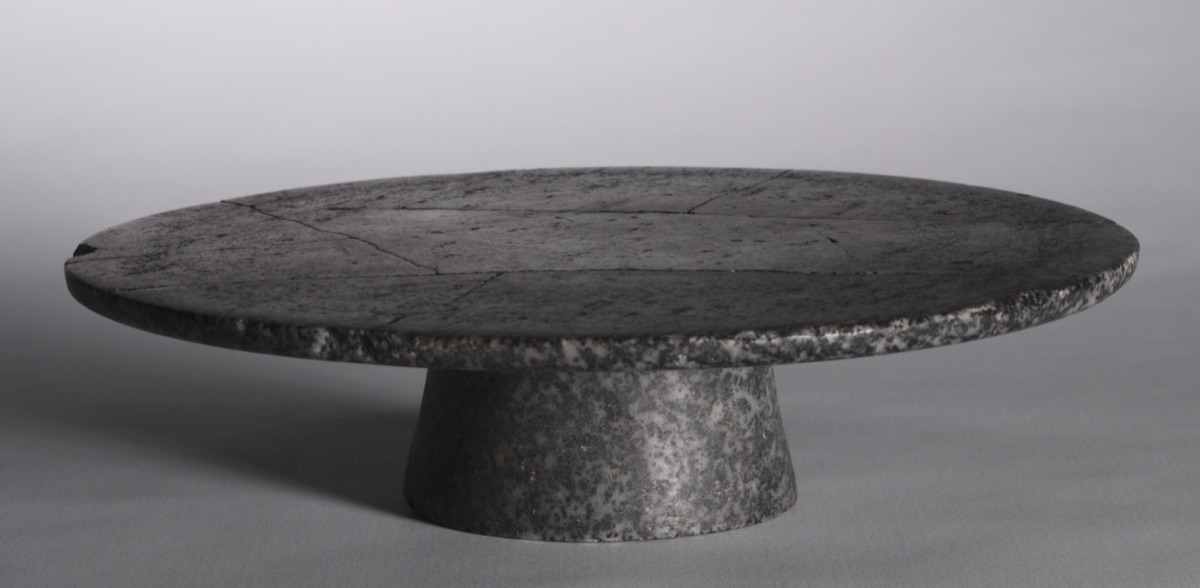
Offering Table
A stone offering table for presenting food to the dead, part of the funerary equipment tradition that Old Kingdom tomb culture would soon elaborate enormously.
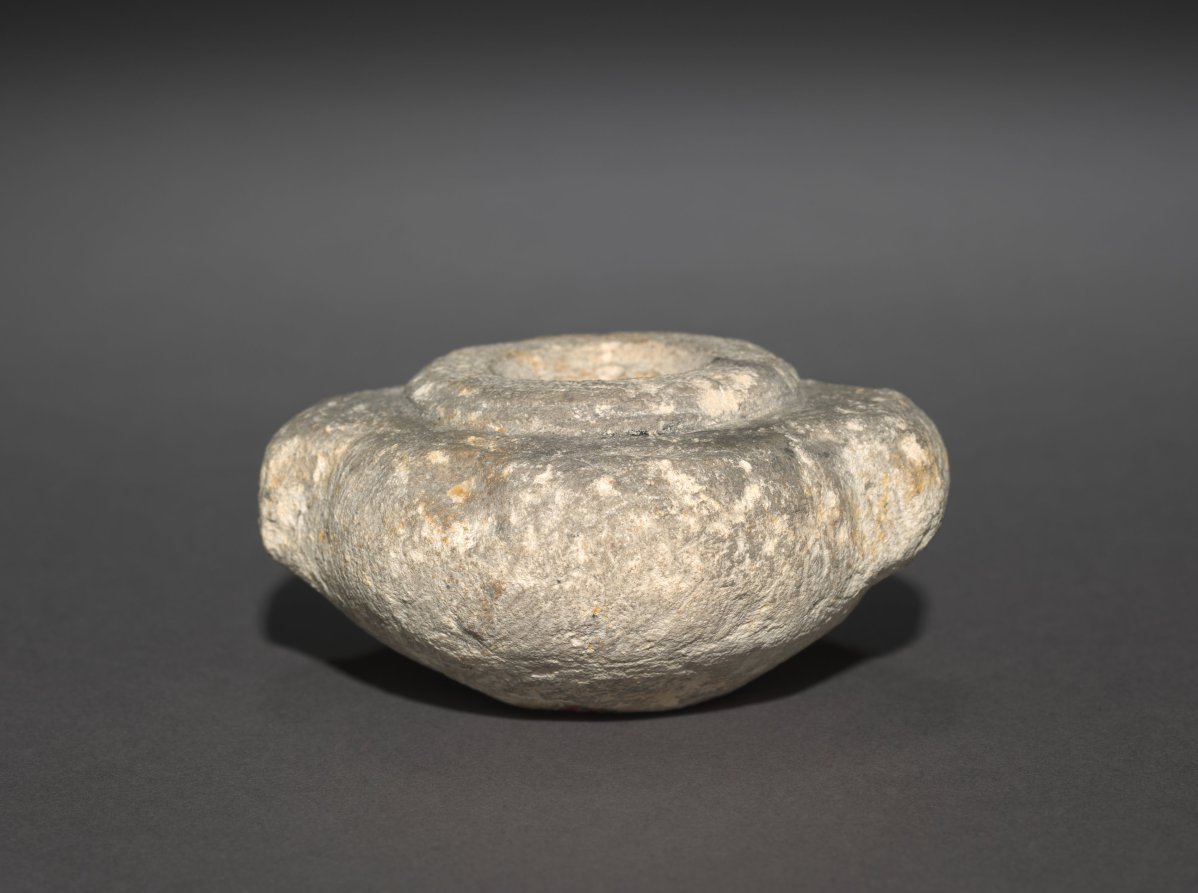
Squat Dummy Jar (Sandstone)
A solid sandstone "dummy" jar carved to stand in for a real vessel in a tomb, sculpture that functioned as magical provisioning rather than as a container.
New this century
No corpus entries yet from this century.
The canon by now
No tier-one work in the corpus predates this century.