Time travel
19th century BC
Senusret III drives Egypt's border to the Second Cataract while Sinuhe's tale and the Eloquent Peasant's speeches set a literary high-water mark, and Assyrian merchants keep threading Anatolia.
Mental Worlds: Evidence and Inference
By this century, an Egyptian court scribe finally has real narrative literature to read for pleasure as well as instruction, not merely for training in office. The Story of Sinuhe, already circulating as a classic, follows a courtier who flees Egypt in a moment of dynastic panic and spends decades in Levantine exile before an aging king summons him home, a story built around interior fear and eventual reconciliation rather than only royal praise. The Eloquent Peasant offers something else again: a robbed farmer who talks his way toward justice through nine increasingly elaborate speeches, prized less for its thin plot than for its virtuoso rhetoric, the kind of text a scribe memorizes to show off command of language. He also has the older Instructions of Ptahhotep and Kagemni, court wisdom staged as advice from Old Kingdom officials, and, if his temperament runs darker, the Admonitions of Ipuwer, a catalogue of social inversion and catastrophe that later readers will mistake for prophecy of Egypt's own future rather than a literary meditation on chaos.
He would know Nubia mainly as a frontier to be managed: Senusret III's fortresses at Semna, among the most advanced military architecture anywhere in the world at this date, exist to monitor river traffic and enforce a hard boundary on trade and settlement. He would know almost nothing certain of Mesopotamia beyond its reputation as a distant land of rival kings, Isin's star fading as Larsa's rises in a rivalry that has consumed most of a century without producing a clear victor.
A Mesopotamian scribe of the same decades has his own literature of loss to master: the Lament for Ur, formal and highly structured Sumerian verse mourning a dynasty two generations gone, alongside newer royal hymns commissioned by Isin's kings trying to borrow that vanished dynasty's prestige for their own diminished court. He would not know Sinuhe's name, nor would an Egyptian scribe know his kings'. The two literary traditions run in parallel this century, sharing no texts, though both circle the same anxious themes: what a ruler owes his people, what happens when the divine order guaranteeing kingship breaks down, how exile and displacement feel from the inside.
A merchant working the Kanesh road in Anatolia inhabits neither literary world directly. His archive is contracts, letters, and account tablets rather than hymns or narrative, evidence of a commercial infrastructure, credit arrangements, family partnerships, long-distance shipping of tin and textiles, sophisticated enough to leave a documentary record but never intended as literature at all. On Crete, no comparable archive survives yet in a form anyone can read; the first palaces are new, their painted Kamares pottery traded as far as the Nile Delta, and Cretan hieroglyphic, the script now appearing on seals and clay documents at Knossos, Malia, and Phaistos, remains as opaque to modern scholars as it would have been to a Larsa scribe.
Across all these worlds, a reader's horizon is narrow and largely self-contained: a Theban scribe's Egypt does not touch a Larsa scribe's Mesopotamia except through vague travelers' report and rare royal correspondence, and neither touches an Aegean world already writing in a script, Cretan hieroglyphic, soon to be joined by Linear A, that no one, then or since, has been able to read. Rigveda remains centuries from its first oral composition. What binds these separate literatures, if anything, is not shared text but shared form: hymn, lament, and instruction, the three genres every literate bureaucracy of the Bronze Age reaches for first.
The political map
Major Polities and Cultural Regions
- Middle Kingdom Egypt Peak under Senusret III, frontier pushed to the Second Cataract in Nubia
- Larsa Rising Mesopotamian power, gradually eclipsing Isin
- Isin Declining but still independent rival kingdom in southern Mesopotamia
- Ashur City-state running a merchant-colony network into Kanesh and central Anatolia
- Kerma Nubian kingdom south of the Second Cataract, the power Egypt's Semna fortresses are built to contain
- Minoan Crete Old Palace centers at Knossos, Phaistos, and Malia flourishing
Borders are approximate scholarly reconstructions from historical-basemaps (GPL-3). Nearest available basemap anchor year: 2000 BC.
State of the domains
Texts and Written Culture
Egyptian narrative reaches new sophistication: the Story of Sinuhe follows a courtier's exile and return with a psychological interiority rare for the period, while the Eloquent Peasant strings nine ornate speeches about justice around a thin frame story. The Admonitions of Ipuwer, whenever exactly composed within its broad possible range, describes social collapse in apocalyptic terms later ages will read as prophecy. The Instructions of Ptahhotep and Kagemni, framed as Old Kingdom wisdom, circulate in the copies that now define them. In Mesopotamia, the Lament for Ur mourns the dynasty's fall in formal Sumerian verse, and Isin's kings continue commissioning royal hymns of their own.
Art
Senusret III's portrait sculpture abandons idealized youth for a heavy-lidded, careworn face, an artistic choice scholars read as deliberate: kingship shown as burden rather than only glory. Fortress architecture becomes a major artistic and engineering achievement in its own right, with the Semna forts on the Second Cataract combining massive mudbrick ramparts with precise sightlines along the Nile. Temple relief carving at sites like Karnak continues to formalize Middle Kingdom style. Minoan Old Palace workshops on Crete refine polychrome Kamares ware pottery, thin-walled and vividly painted, traded as far as Egypt and the Levant.
Medicine
Egyptian medicine continues the practical-and-magical blend established in earlier centuries, treating wounds, digestive complaints, and gynecological conditions through empirical observation, drug treatment, and incantation together, without yet producing the subject-specific compendium the following century will. The Veterinary Papyrus of Kahun, composed sometime across this century and the next, applies the same diagnostic habits used on human patients to sick cattle and dogs, the only such text presently known to survive from ancient Egypt. No comparable specialized medical text survives yet from Mesopotamia, where healing still runs primarily through incantation and omen reading, illness read as a message to interpret rather than a mechanism to correct.
Science
The Moscow Mathematical Papyrus preserves problems on the volume of a truncated pyramid and, on one widely held but contested reading, the area of a hemisphere, evidence that Egyptian mathematics has moved well past simple accounting into geometric problem-solving, even without a general theory to unify it. Mesopotamian scribes continue refining sexagesimal tables for reciprocals, squares, and multiplication, tools for administration rather than abstract inquiry. Egyptian and Mesopotamian astronomy remain calendrical and omen-based; no systematic planetary observation program yet exists. Both traditions treat mathematics as a scribal craft, mastered through copied problem sets rather than taught as derivable general principle.
Military
Senusret III campaigns deep into Nubia and fortifies the frontier with a chain of forts at the Second Cataract, among the most sophisticated military architecture yet built anywhere, designed to control river traffic and warn of approach. Egyptian infantry still fights without chariots, relying on bowmen and spearmen. In Mesopotamia, Larsa steadily gains ground on Isin under kings pursuing patient territorial consolidation rather than dramatic conquest. No power in this century commands anything like the reach Ur once had; warfare remains regional, fought over irrigation rights, border forts, and dynastic prestige rather than empire-building.
Technology
Egyptian fortress builders at Semna combine mudbrick construction with engineered sightlines and signal stations, letting a small garrison monitor river traffic across a wide stretch of the Nile. Assyrian merchants operating out of Kanesh in Anatolia run a sophisticated credit and partnership system, recorded on clay tablets sealed and shipped alongside the tin and textiles they trade, an early instance of long-distance commercial infrastructure independent of royal control. Bronze remains the dominant metal; iron is known only as a rare, meteoric curiosity. Nile flood management and canal maintenance remain Egypt's central engineering concern.
Material world
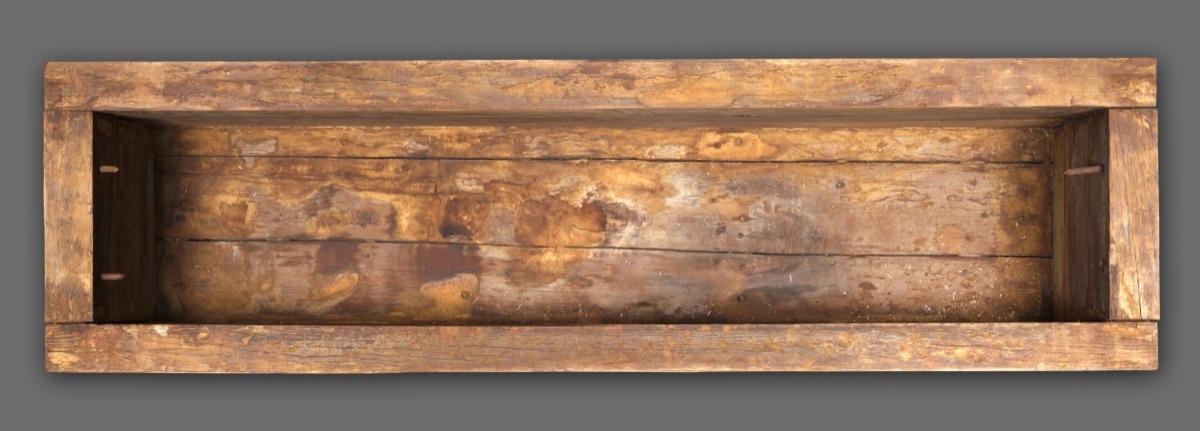
Coffin of Senbi
A gessoed and painted cedar coffin from the provincial cemetery at Meir, covered with the horizontal bands of funerary text and eye-panel typical of Middle Kingdom burial furniture.
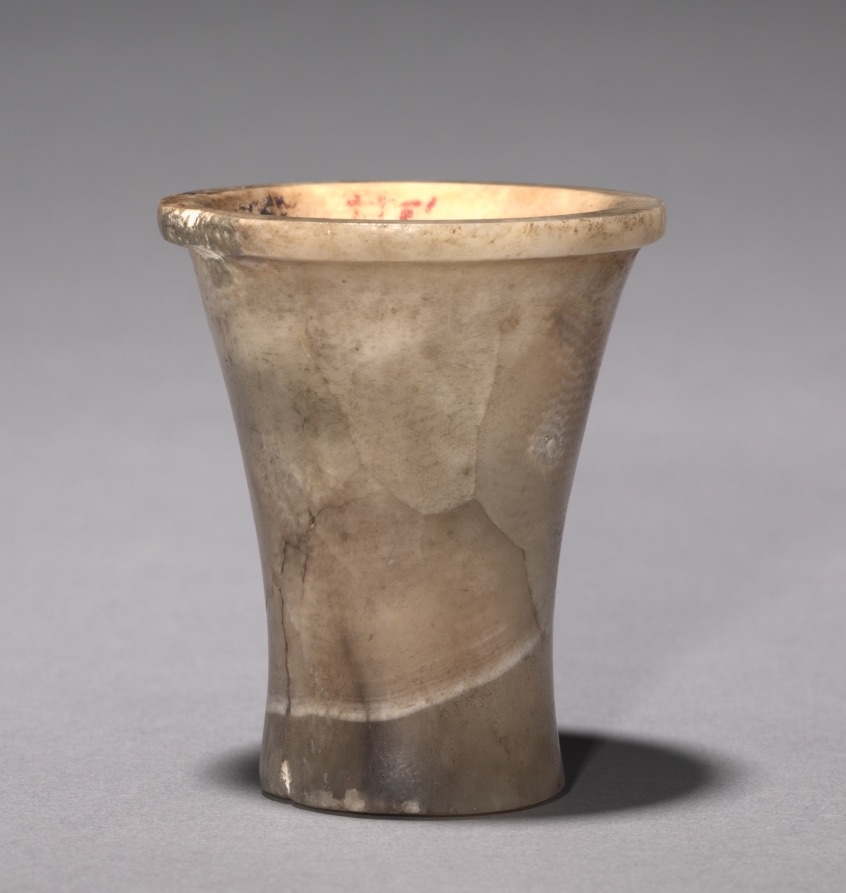
Cosmetic Vessel (Cylinder Beaker)
A travertine beaker for cosmetics or oil, cut from banded stone whose translucency Egyptian craftsmen prized above pottery for luxury toiletries.
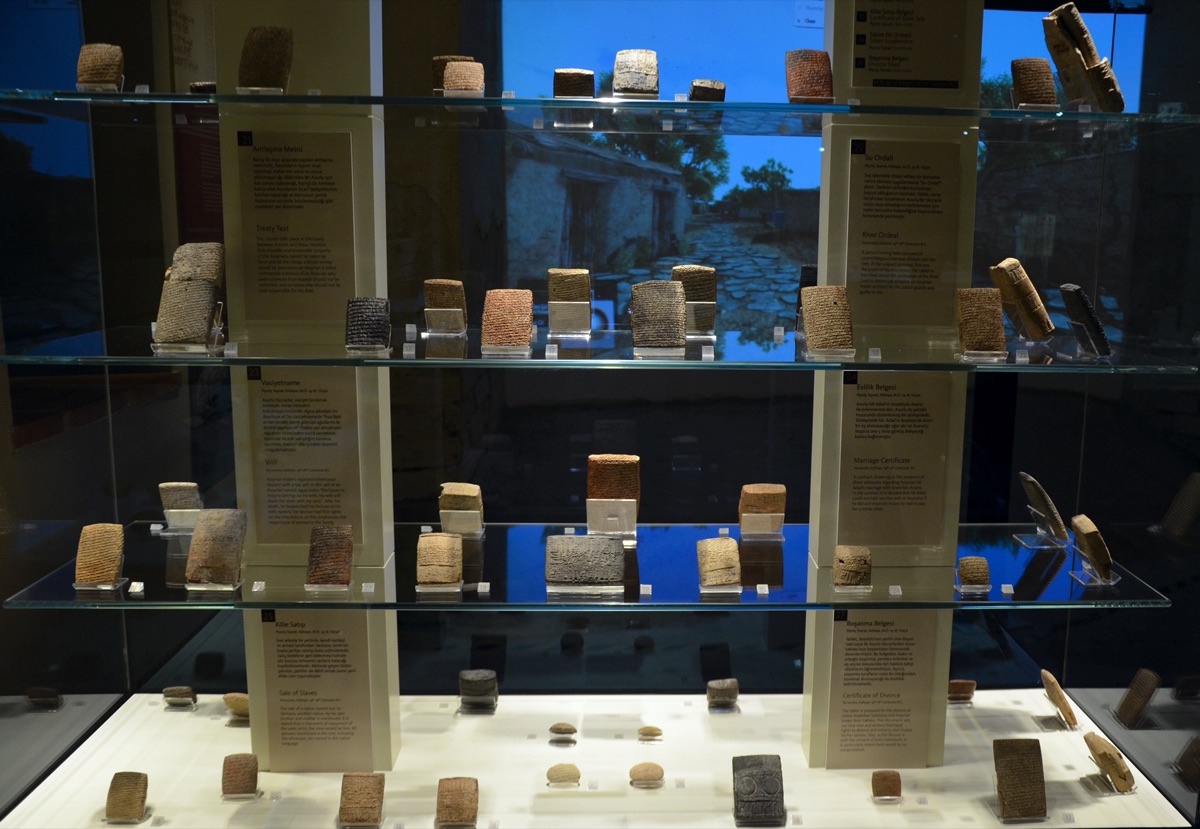
Clay Tablets from the Old Assyrian Trading Colony at Kanesh
Business letters and contracts in cuneiform from the karum at Kanesh, the archive that documents Assyrian merchants running a long-distance textile and tin trade into Anatolia.
Photo: Carole Raddato / Wikimedia Commons, Museum of Anatolian Civilizations, Ankara
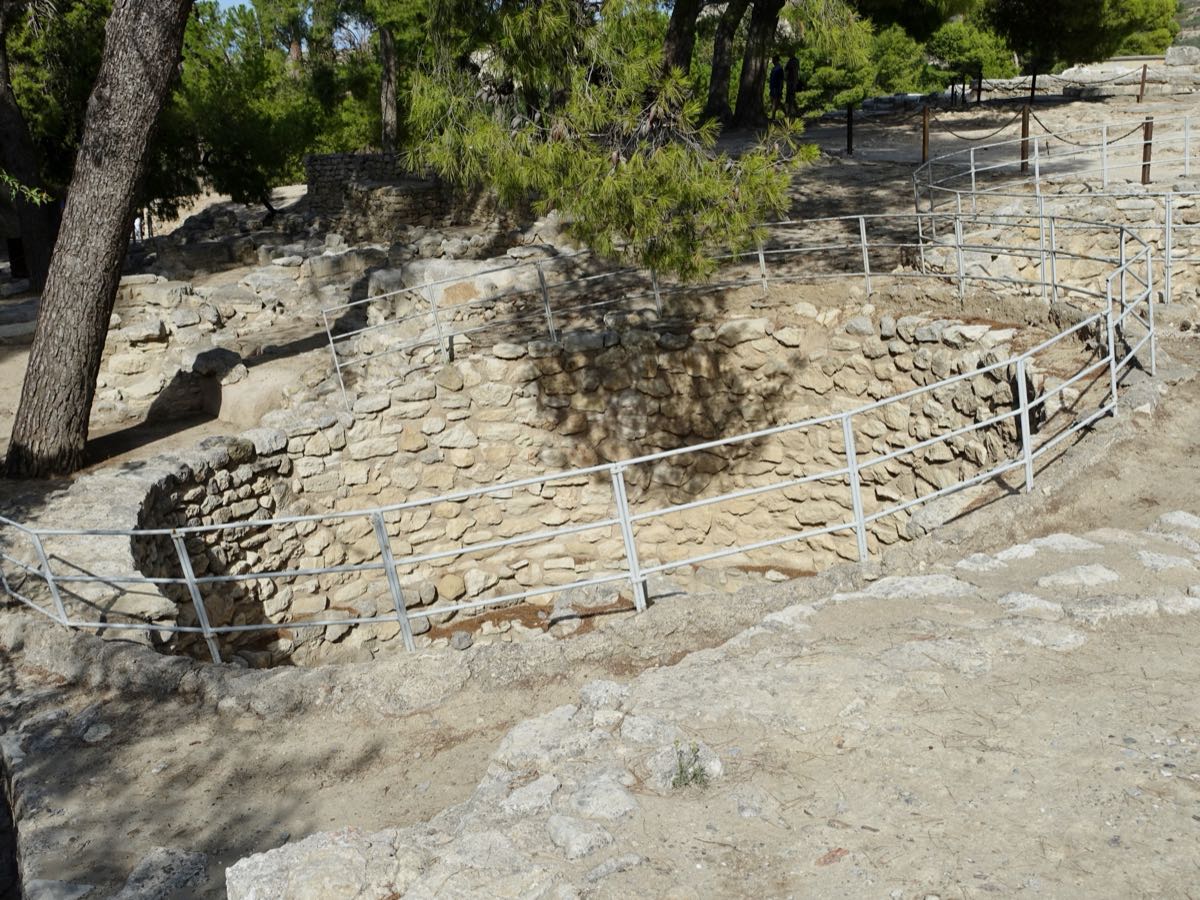
Kouloures (Old Palace Grain Silos), Knossos
Circular stone-lined pits west of the palace at Knossos, built to store grain during the first, Old Palace phase of Minoan civilization.
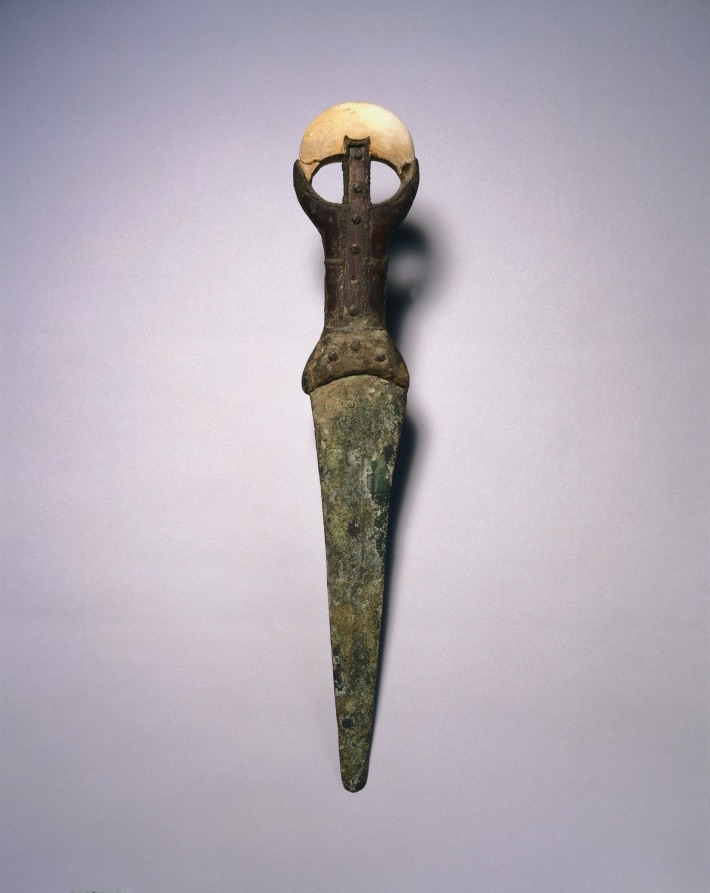
Dagger
A short bronze dagger blade with a wood and copper-alloy handle, the standard sidearm of a Middle Kingdom Egyptian household or soldier.
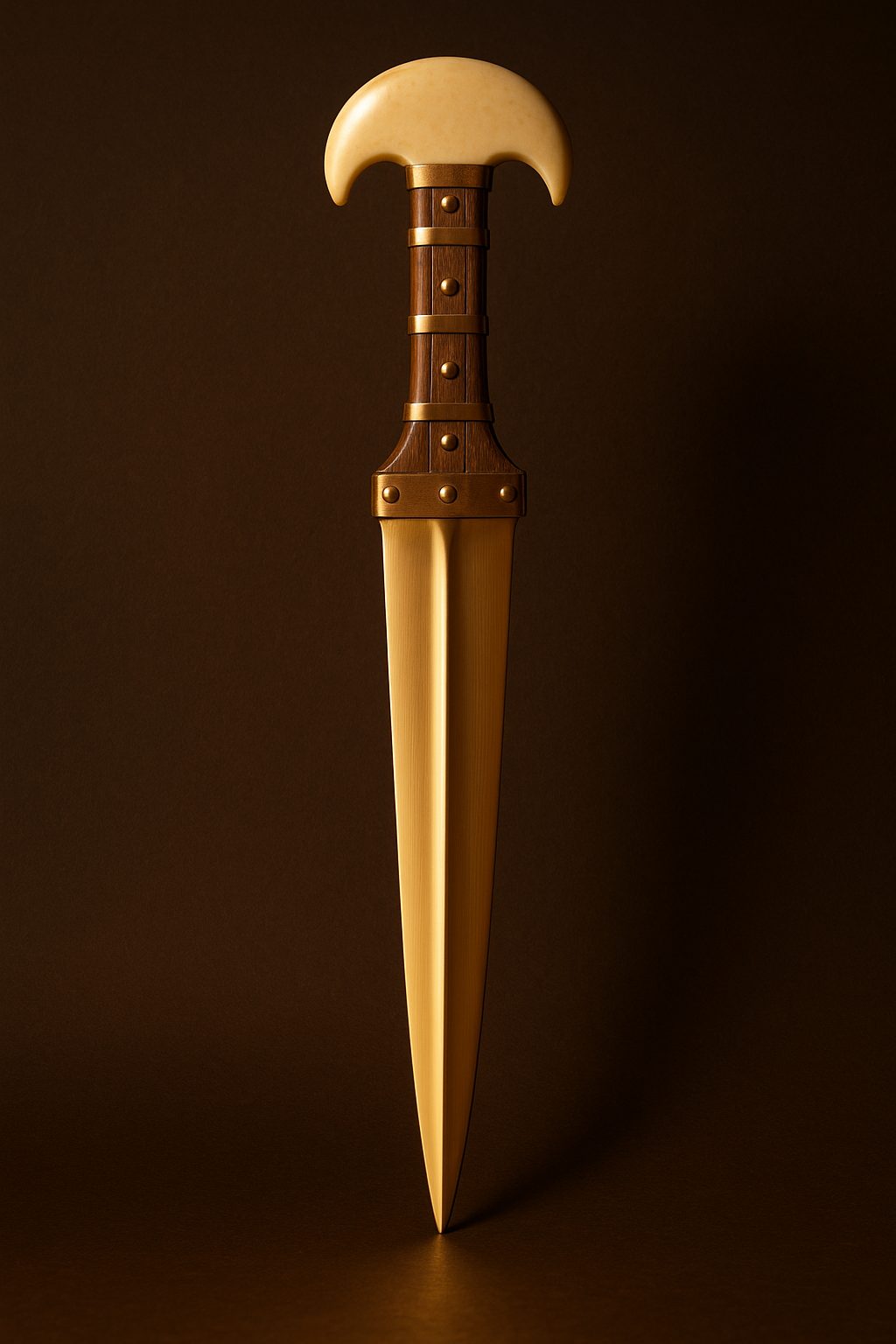
AI reconstruction
Middle Kingdom dagger - reconstruction
An Egyptian Middle Kingdom dagger restored to the day it was made: the short tapering bronze blade brightly polished, the slender wooden grip banded with copper alloy and set with small rivets, and the broad crescent pommel of pale ivory that let the hand lock over the butt. The original survives with its blade corroded green and its ivory cracked; this is the sidearm as its owner carried it.
AI reconstruction (2026), based on Dagger (Middle Kingdom), The Cleveland Museum of Art
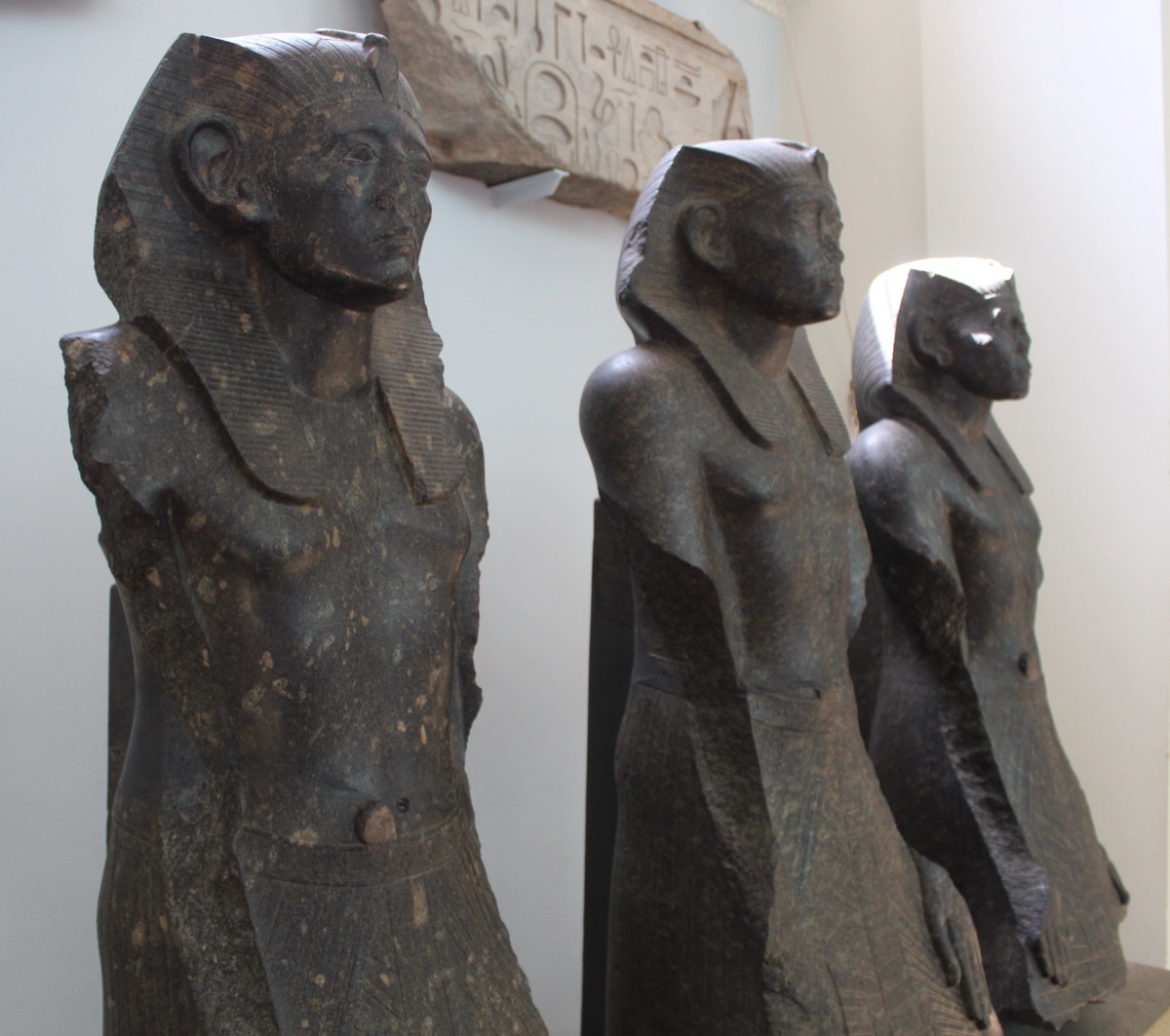
Statues of Senusret III
Royal portraits of Senusret III, whose heavy-lidded, careworn face broke with idealized kingship and became one of the most recognizable likenesses of the Middle Kingdom.
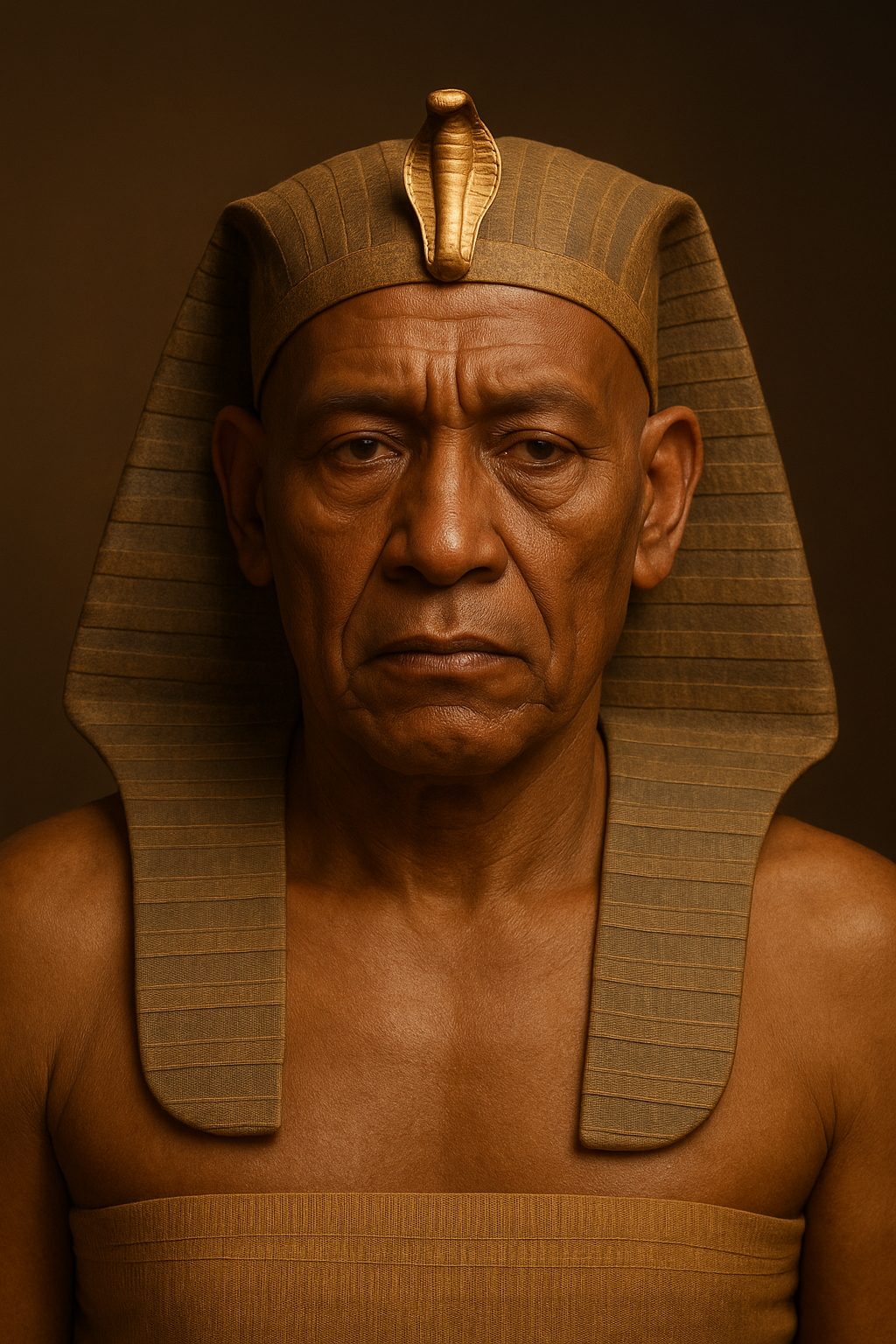
AI reconstruction
Senusret III - reconstruction
Senusret III of Egypt's Twelfth Dynasty, translated into flesh from his granite statues: the heavy-lidded eyes, the pouches beneath them, the drawn cheeks and downturned mouth that made his the most individual royal face of the Middle Kingdom. He wears the pleated nemes headcloth with the golden uraeus cobra at the brow. Whether the famous weariness records his actual face or a deliberate image of burdened kingship is still debated.
AI reconstruction (2026), based on Statues of Senusret III, The British Museum
New this century
- The Lament for Ur
A city's destruction becomes bearable only when its own gods are made to weep for it first, since a catastrophe the gods themselves mourn is no longer meaningless.
- Dispute Between a Man and His Ba
Even when the world offers only suffering and isolation, a man's own soul may counsel him to endure it rather than seek release in death, and the two can still be reconciled.
- Hymn to the Nile
The flood is a god without a fixed cult image or temple hierarchy, worshipped instead through the plain fact that every good in Egyptian life depends on his annual arrival.
- Admonitions of Ipuwer
Egypt's social and cosmic order can collapse so completely that servants command masters and the Nile runs with blood, and only a return to central kingship under a just ruler can restore it.
- Proto-Sinaitic Inscriptions
Canaanite-speaking workers stationed at Egyptian turquoise mines adapted a handful of Egyptian hieroglyphic signs to their own consonantal speech by acrophony, producing not literature but the first alphabetic script anyone is known to have used.
- Story of Sinuhe
Exile can be survived and even prospered in, but only return to Egypt and burial at home resolves the story, because no foreign success outweighs a proper Egyptian death.
- Instruction of Ptahhotep
Wisdom is teachable, and the good life consists of self-control, listening before speaking, and treating rank as a temporary gift rather than a fixed truth.
- Instruction of Kagemni
Silence and moderation at the table and in speech are the marks of a man fit to rise in the king's service.
- Eloquent Peasant
Justice delayed to test a man's eloquence is still justice deferred, and a magistrate who withholds a remedy in order to hear ever more beautiful speech is complicit in the wrong he is meant to correct.
- Moscow Mathematical Papyrus
Egyptian mathematicians could calculate the volume of a truncated pyramid correctly, a result presented as a worked recipe rather than a proven general formula.