Time travel
14th century BC
Akhenaten refounds Egyptian religion around the sun disc at Amarna, whose letters catch a world of great powers corresponding as equals; Ugarit adapts Sinai's alphabetic idea into signs of its own.
Mental Worlds: Evidence and Inference
An Egyptian scribe living through Akhenaten's reign this century has watched his religious world get remade from the top down. The old pantheon, Amun chief among them, has been officially set aside in favor of the Aten, the sun disc itself, worshipped without the old animal-headed imagery in a new capital built from nothing at Amarna. He can recite, or at least has heard performed, the Great Hymn to the Aten, its opening lines describing the god's daily rising as an act of universal, almost tender care extending to every creature, human and animal alike, a theology striking enough that later readers, wrongly or not, will keep comparing it to biblical psalms written centuries afterward. He also, if he works in the royal archive, has access to something no earlier Egyptian scribe did: a large standing correspondence file, written not in Egyptian but in Akkadian cuneiform, the shared diplomatic language of every court he deals with, Babylon, Assyria, Mitanni, the Hittites, and dozens of anxious Canaanite vassal kings all writing in, complaining, flattering, and occasionally threatening in the same borrowed script.
Those letters, the Amarna archive, let him see something remarkable: a world of formally equal great powers, addressing each other as brothers regardless of actual relative strength, exchanging gold, horses, and royal daughters in marriage while haggling constantly over the details, alongside a lower tier of small vassal kings in Canaan and Syria writing in increasingly desperate tones about raiders, rival cities, and neglect from an Egyptian crown too absorbed in religious reform to send the promised troops. He would have followed, at least in outline, the alarming rise of a new Hittite king, Suppiluliuma I, whose armies are in these very years grinding down Mitanni, the Hurrian kingdom that used to check Hittite ambition, absorbing its territory and turning former Mitannian vassals into Hittite ones instead. He could not have known that this same collapse frees Assyria, previously subordinate to Mitanni, to reemerge as an independent power that will matter enormously in centuries to come.
Along the Levantine coast, a scribe at Ugarit inhabits a genuinely new kind of literacy. His city's scholars have adapted an alphabetic principle already tried some centuries earlier in Sinai inscriptions into a script of some thirty simple wedge-shaped signs rather than the hundreds a Babylonian scribe must master, and are using it to write down mythology in their own Northwest Semitic language for what appears to be the first time: the Baal Cycle, recounting the storm god's battles against Sea and Death for kingship among the gods, the Legend of Keret, about a king who loses his family and must rebuild it, and the Tale of Aqhat, about a hero's bow and a goddess's fatal jealousy. None of these stories were available to read even one generation earlier; they represent literature in the process of being invented in something close to real time, using a technology, the alphabet, whose eventual importance to human writing this Ugaritic scribe could not possibly have guessed.
A Hittite scribe at Hattusa, meanwhile, serves a court absorbing Mitanni's old scholarly and religious heritage along with its territory, including Hurrian myth cycles like the Kumarbi tradition that Hittite scribes are now adapting into their own language. None of these figures, Egyptian, Ugaritic, Hittite, or the Babylonian and Assyrian correspondents writing into the same Amarna archive, could read every other's native script. What binds them, on a geographic scale no earlier Bronze Age century is known to have matched, is not shared literature but a shared diplomatic infrastructure, cuneiform Akkadian as lingua franca, letters, treaties, and marriage alliances crossing kingdoms that otherwise remain culturally, religiously, and linguistically separate, each producing its own literature in near-total isolation from the others even while their kings correspond as brothers.
The political map
Major Polities and Cultural Regions
- New Kingdom Egypt Amarna period under Akhenaten and Tutankhamun, its Levantine vassal network under growing strain
- Hittite Empire Under Suppiluliuma I, ascendant, destroying Mitanni and dominating northern Syria
- Mitanni Hurrian kingdom collapsing under Hittite pressure by century's end
- Kassite Babylon Established Mesopotamian power, party to Amarna-style great-power correspondence
- Assyria Reemerging as an independent kingdom after Mitanni's collapse
- Mycenaean Greece Palatial mainland kingdoms, Mycenae, Pylos, Thebes, known to the Hittites as Ahhiyawa
- Ugarit Small but culturally significant coastal kingdom, vassal to larger powers, host to a new alphabetic script
Borders are approximate scholarly reconstructions from historical-basemaps (GPL-3). Nearest available basemap anchor year: 1500 BC.
State of the domains
Texts and Written Culture
Akhenaten's Great Hymn to the Aten recasts Egyptian religious poetry around a single solar deity, its imagery of light and universal fatherhood echoed centuries later in biblical psalmody, though any direct link remains unproven. The Amarna Letters, several hundred cuneiform tablets exchanged between Egypt and its neighbors and vassals, preserve diplomacy, complaint, and flattery in unfiltered detail. At Ugarit, scribes devise a genuinely new writing system, a thirty-letter cuneiform alphabet, and use it to record the Baal Cycle, the Legend of Keret, and the Tale of Aqhat, among the earliest substantial mythological and epic literature known to survive from the Levantine coast.
Art
Amarna art breaks sharply with Egyptian convention: Akhenaten and his family are shown with elongated skulls, soft bellies, and intimate domestic affection, a deliberate stylistic departure whose meaning scholars still debate. Tutankhamun's later restoration reverses much of this innovation, returning royal art to older canons. Hittite Empire art under Suppiluliuma I remains architecturally focused on Hattusa's fortifications and temple precincts rather than figural innovation. Ugaritic material culture shows a coastal trading city absorbing Egyptian, Mesopotamian, and Aegean artistic influences simultaneously, a genuine crossroads aesthetic distinct from any single great power's style.
Medicine
The London Medical Papyrus, compiled this century, mixes practical remedies with a heavier proportion of magical incantation than the earlier Edwin Smith or Ebers texts, treating conditions from burns to scorpion stings through spells addressed directly to gods. No comparable Mesopotamian medical compendium from this exact century survives, though the omen-based diagnostic tradition continues uninterrupted under Kassite and Assyrian physicians alike. Akhenaten's religious reforms, focused on the Aten, do not appear to have significantly altered Egyptian medical practice, which remained rooted in older temple and magical traditions throughout his reign.
Science
The Amarna Letters incidentally reveal a functioning international scholarly infrastructure: Akkadian cuneiform serves as the era's diplomatic lingua franca even between courts, like Egypt's, that use it in no other context, requiring scribes trained specifically in a foreign script and language for correspondence alone. Ugarit's scribes adapt an alphabetic principle already tried three or four centuries earlier in Sinai inscriptions into thirty wedge-shaped cuneiform signs, a fraction of the hundreds a Babylonian-trained scribe must master, though it is that earlier Sinai tradition, not Ugarit's cuneiform-form adaptation, that feeds directly into the later Phoenician alphabet. No major new mathematical or astronomical text distinguishes this century in Egypt or Mesopotamia.
Military
Suppiluliuma I builds the Hittite Empire's real power this century, defeating Mitanni and absorbing much of its territory and vassal network, turning the Hittites into Egypt's chief rival for the Levant in place of the kingdom they just destroyed. Assyria, freed from Mitannian overlordship by that same collapse, reemerges as an independent kingdom for the first time in generations. Egypt under Akhenaten appears to have neglected its Levantine vassals' military appeals, judging by the anxious tone of many Amarna Letters, weakening Egyptian influence in Canaan even as Hittite power grows. Chariot warfare remains the standard decisive arm across every major army.
Technology
Ugarit's alphabetic cuneiform, adapting an alphabetic principle already tried in Sinai inscriptions some centuries earlier into wedge-shaped signs of its own, is this century's most consequential innovation in writing, simple enough to be learned faster than the hundreds of signs required for standard Mesopotamian cuneiform, even though it will take many more centuries before alphabetic writing becomes dominant. Egyptian building continues at Amarna, a purpose-built new capital constructed rapidly and largely abandoned within a generation of Akhenaten's death. Hittite Anatolia develops ironworking, though bronze remains standard for most weapons and tools throughout the wider Near East.
Material world
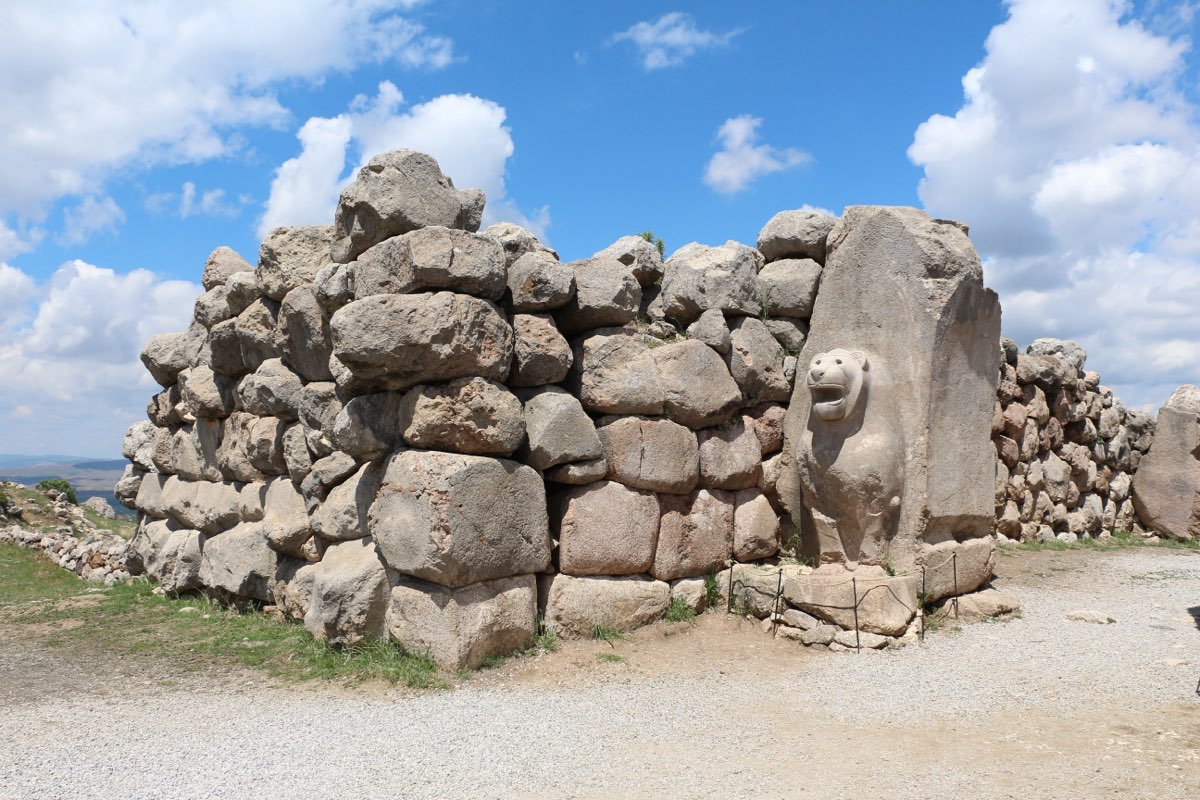
Lion Gate, Hattusa
A monumental gate in the fortifications of Hattusa, flanked by carved stone lions that guarded the Hittite Empire's capital against attack and evil alike.
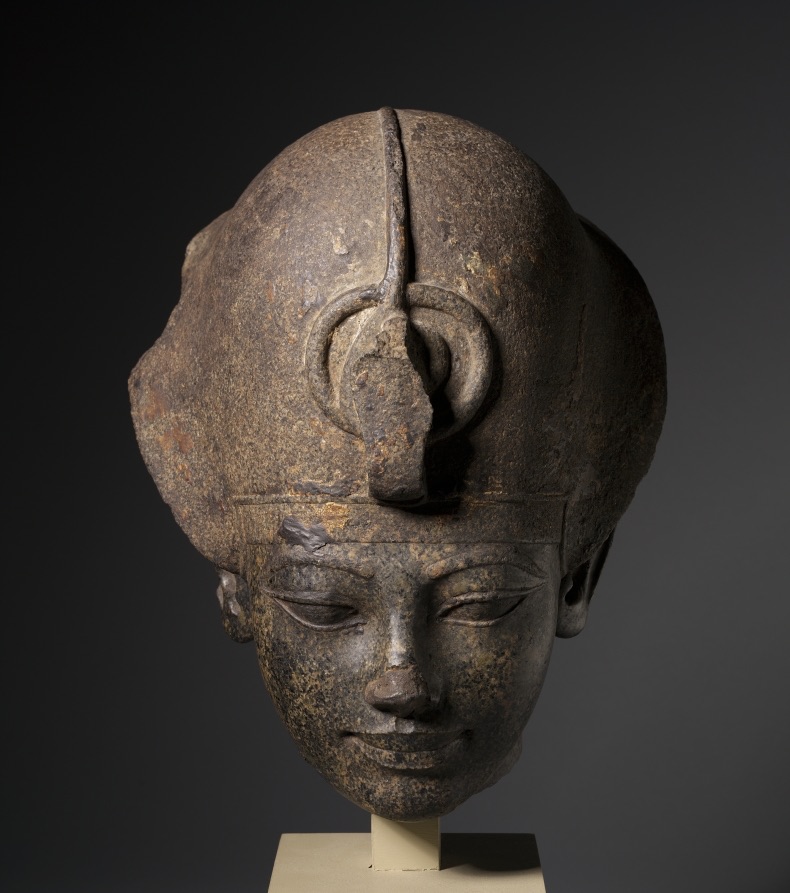
Head of Amenhotep III Wearing the Blue Crown
A granodiorite royal head wearing the blue war crown, carved during the reign of Amenhotep III, whose Egypt reached the peak of its New Kingdom wealth and diplomacy.
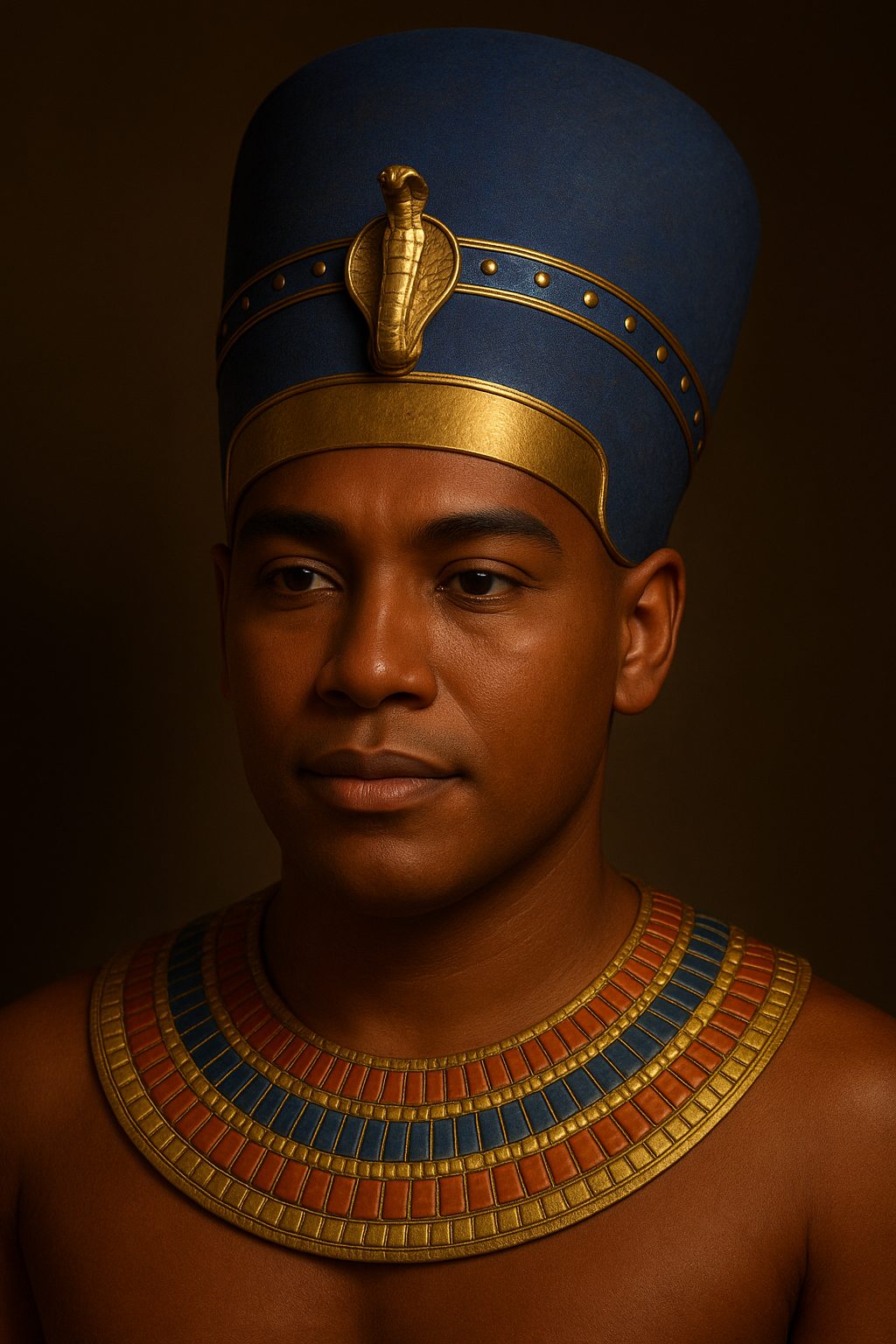
AI reconstruction
Amenhotep III - reconstruction
Amenhotep III, ruler of Egypt at the height of its New Kingdom wealth, brought to life from his granodiorite portrait head: the blue leather khepresh war crown studded with gold discs, the golden uraeus, a broad bead collar, and the rounded face with kohl-lengthened almond eyes and full lips his sculptors recorded. His portraits are idealized, so the living face likely carried more age than the stone admits.
AI reconstruction (2026), based on Head of Amenhotep III Wearing the Blue Crown, The Cleveland Museum of Art
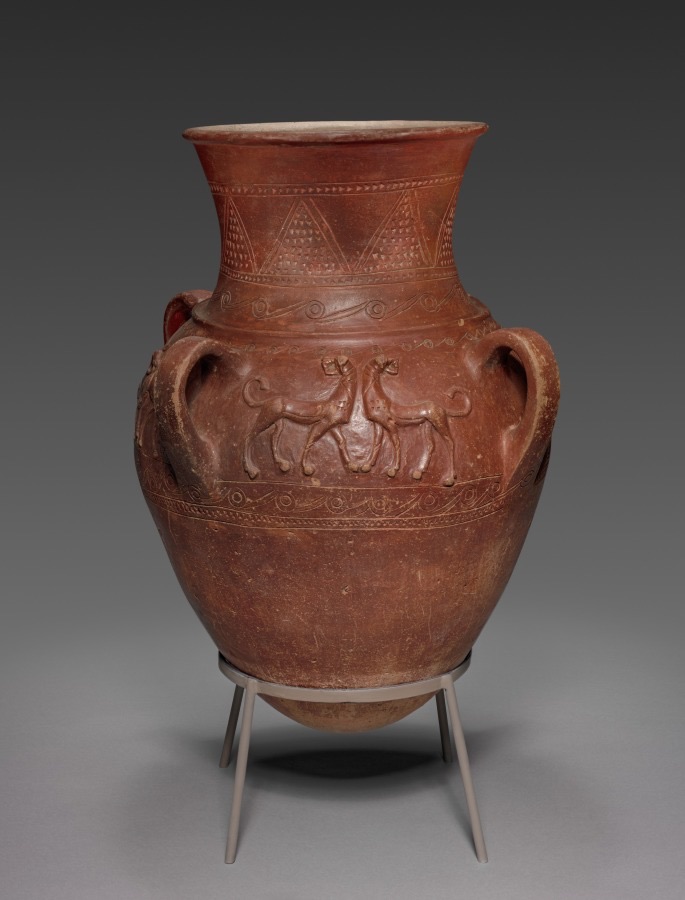
Hittite Vessel with Four Scenes Molded and Carved in Relief
A large burnished earthenware jar carrying four narrative scenes in relief, a rare survival of figural storytelling in Hittite ceramic art.
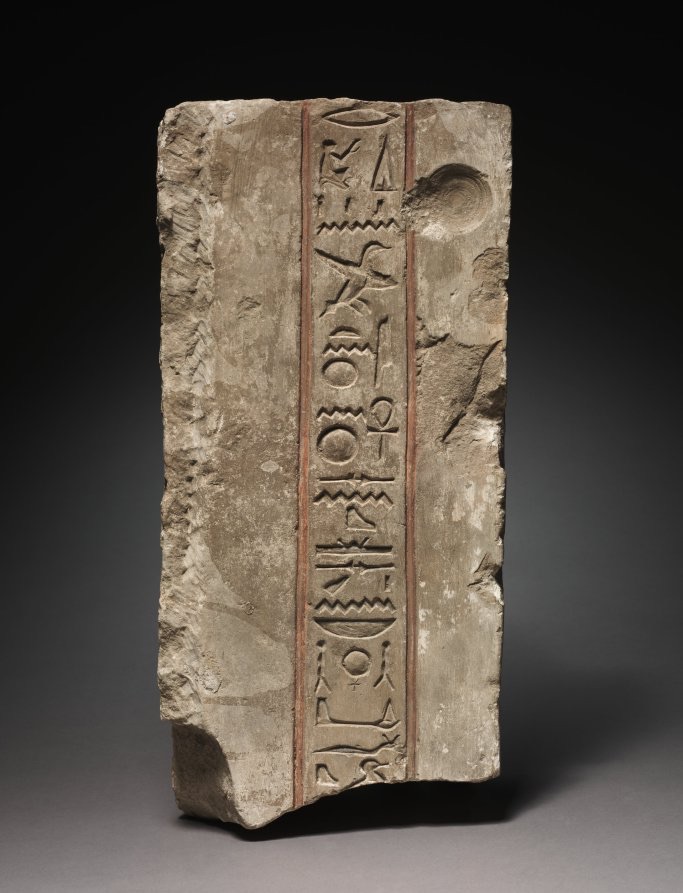
Inscribed Doorjamb with Praise to the Aten
A limestone doorjamb inscribed with a hymn to the Aten, the sun disk that Akhenaten promoted to Egypt's sole god during his brief religious revolution.
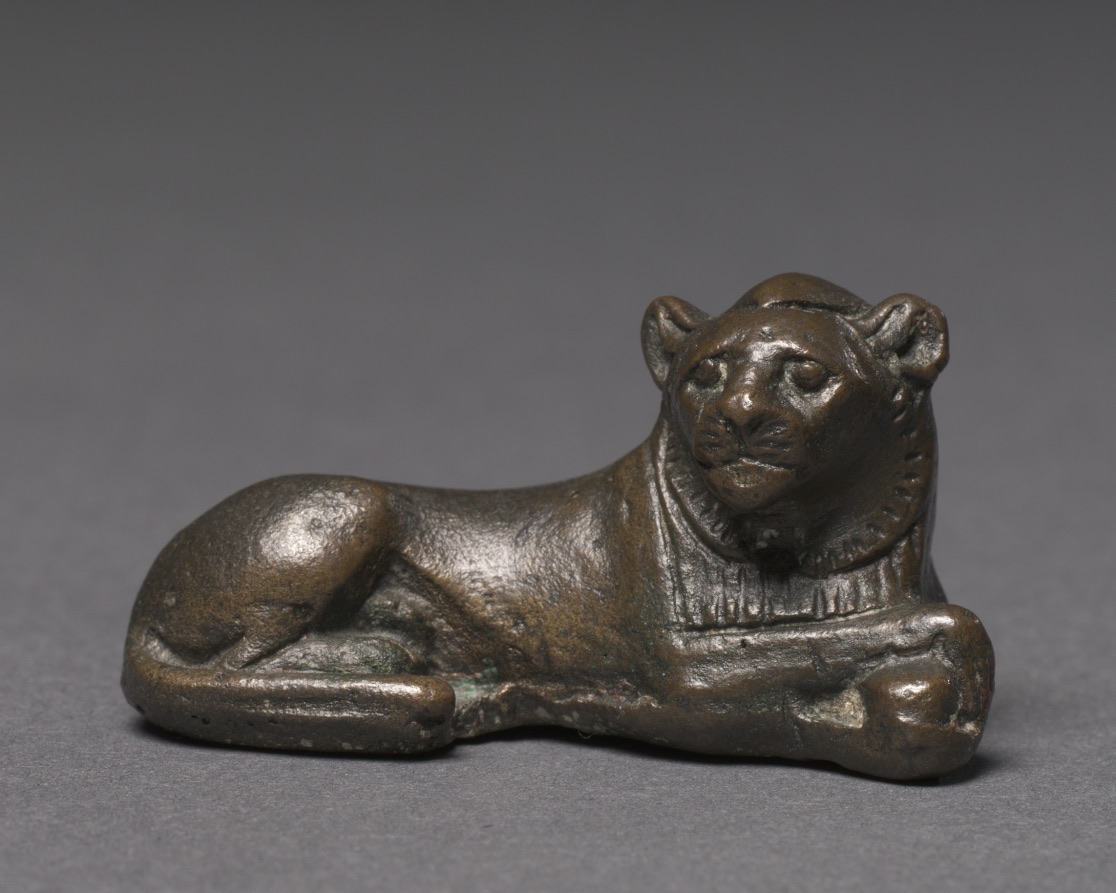
Weight in the Form of a Lion
A tiny bronze weight cast as a crouching lion, part of the standardized weight sets that let Egyptian officials measure precious metal for trade and taxation.
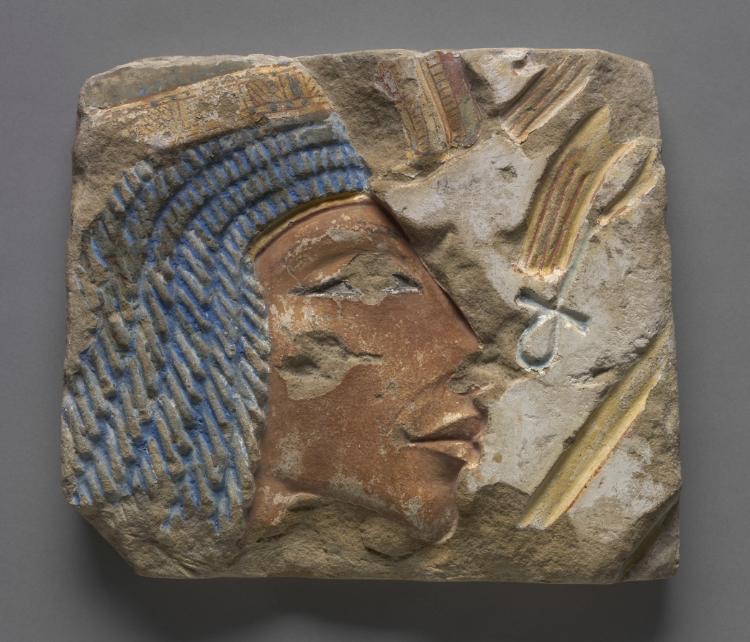
Talatat: Portrait of Nefertiti
A painted sandstone building block from a demolished Amarna-period temple at Karnak, carved with a portrait of Queen Nefertiti in the era's distinctive elongated style.
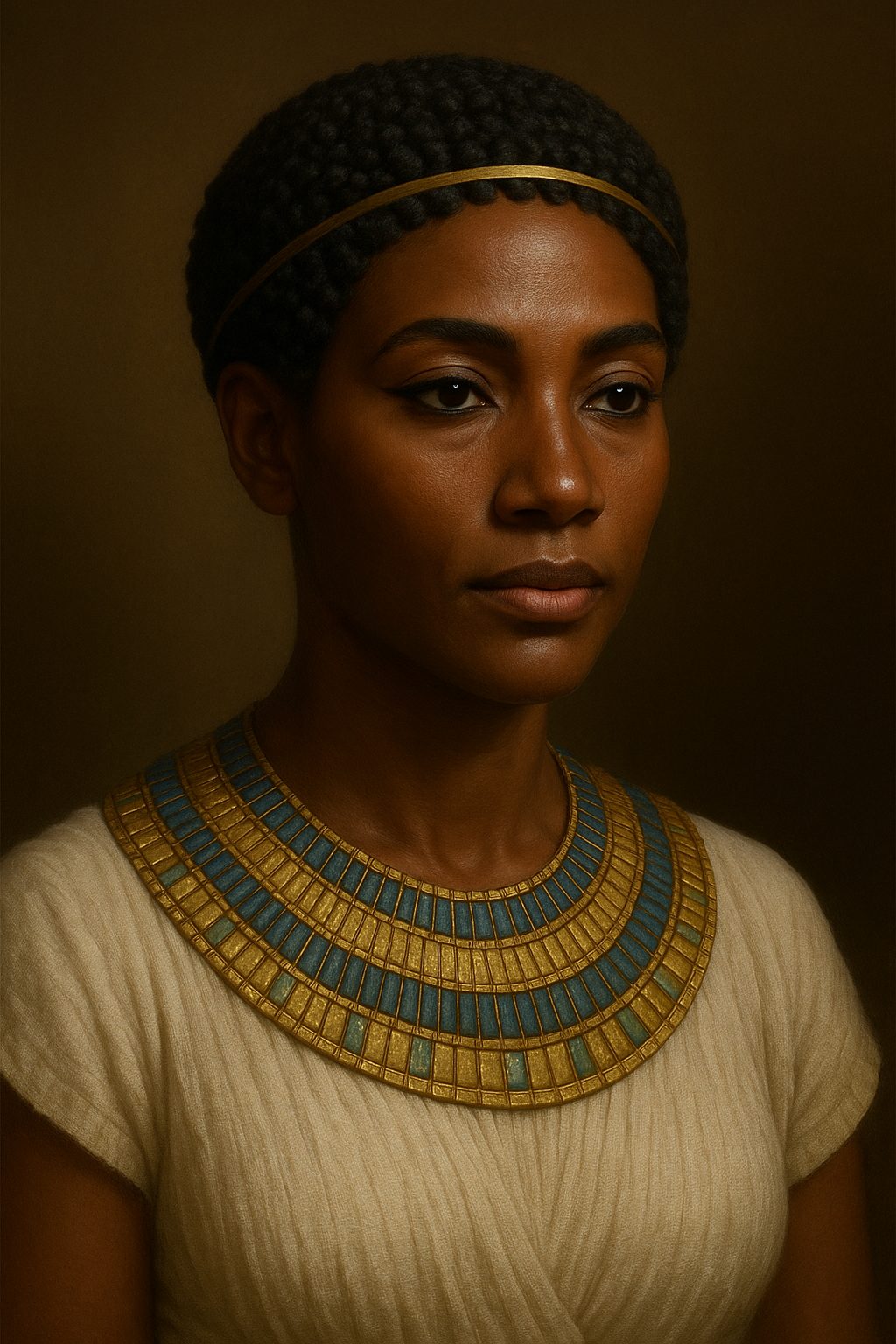
AI reconstruction
Nefertiti - reconstruction
Queen Nefertiti, imagined as a living woman from a painted sandstone relief carved in her lifetime: the short Nubian wig of tight curls the relief shows in blue, a thin gold diadem, kohl-lined eyes, a broad bead collar and pleated linen gown. The source is in the elongated Amarna court style, so its features are partly convention; this face moderates them toward plausible anatomy.
AI reconstruction (2026), based on Talatat: Portrait of Nefertiti, The Cleveland Museum of Art
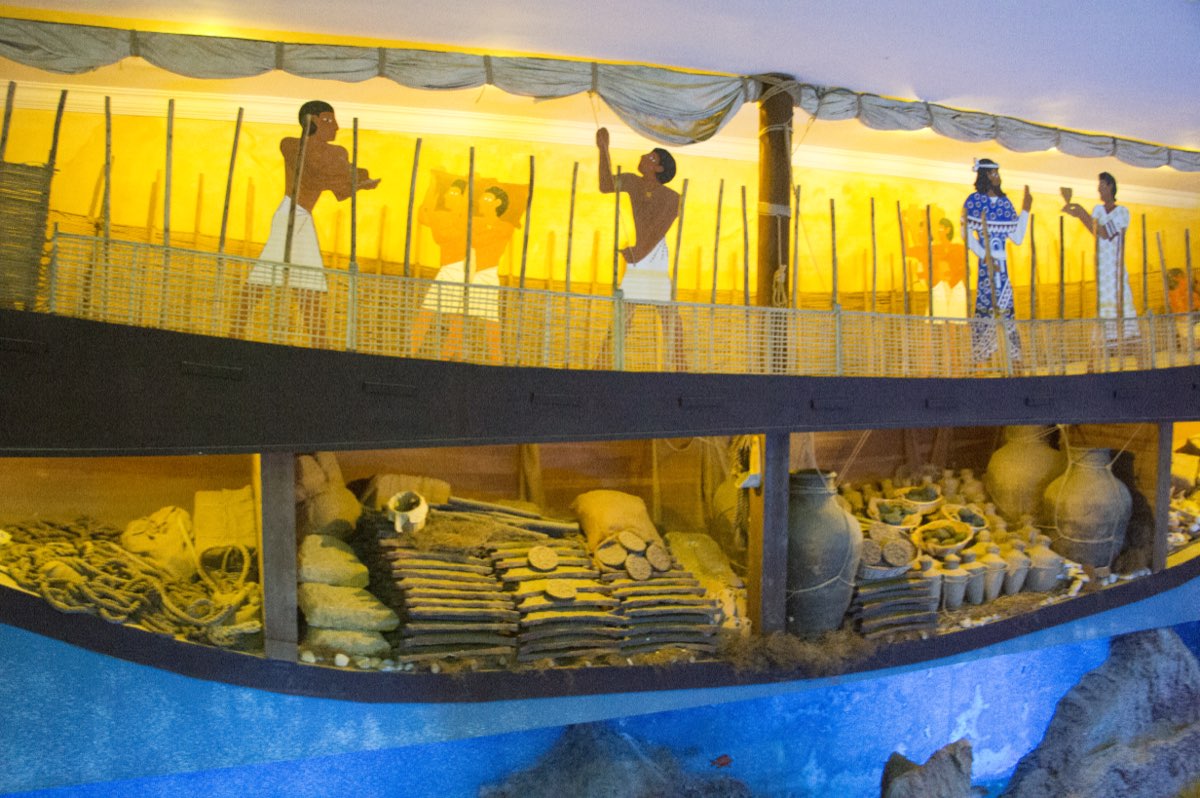
Reconstruction of the Uluburun Shipwreck
A full-scale reconstruction of the Uluburun wreck's hold, packed with copper and tin ingots, glass, ivory, and pottery from a ship that dendrochronology on its firewood dates to no earlier than about 1305 BC, placing the wreck in the late 14th century BC.
Photo: Dosseman / Wikimedia Commons, Bodrum Museum of Underwater Archaeology
New this century
- Instruction of Any
Ordinary domestic virtue, a quiet household, a respected wife, careful speech, matters as much as any grand career, and even received wisdom deserves to be questioned before it is accepted.
- Baal Cycle
Kingship among the gods is won by combat and confirmed by house-building, as the storm god Baal defeats the sea and then death itself to secure his throne on a mountain.
- Legend of Keret
A king's house can be destroyed and restored only through the favor of the gods, but a vow broken to a goddess brings punishment even on a king whom El himself has blessed.
- Tale of Aqhat
Even a righteous king's piety cannot shield his household from a god's jealousy, and a mortal's refusal to yield a divine gift to a goddess provokes fatal retribution.
- Ugaritic Ritual and Pantheon Texts
Ugarit's cult required its gods to be listed in a fixed order and its offerings scheduled and quantified, and these lists are the record by which the city organized its relationship to the divine.
- Ugaritic Abecedary
The alphabet is a fixed, teachable sequence: these school tablets assert an order of letters that Hebrew, Phoenician, and Greek would inherit and that literacy training still follows.
- Linear B Tablets
Literacy in Mycenaean Greece served the palace's storerooms rather than its poets: thousands of clay tablets record grain, textiles, and personnel with bureaucratic precision, and the script that recorded them vanished so completely with the palaces themselves that Greek would not be written on the mainland again for over four centuries.
- Great Hymn to the Aten
One sun disk, without myth or rival gods, sustains every living thing on earth by its light alone, and the king is presented as its sole prophet.
- Harper's Song
Since no one has ever returned from death to describe it, the living should set aside tomb-building anxiety and take pleasure in life while it lasts.
- Kikkuli Text
Chariot horses reach peak condition through a precisely numbered, months-long program of graduated exercise, controlled feeding, and rest intervals, not through unmeasured training or raw stock.
- Book of Gates
The underworld is a fortified territory divided by twelve gates, each guarded and each requiring the correct password, making safe passage a matter of security clearance as much as piety.
- Plague Prayers of Mursili II
A twenty-year plague is not random misfortune but the gods' punishment for a specific, identifiable broken oath, and the king must confess and correct that exact wrong before the suffering will end.
The canon by now
- Pyramid Texts
- Royal Inscriptions of Sargon of Akkad
- The Exaltation of Inanna
- The Curse of Agade
- Coffin Texts
- Admonitions of Ipuwer
- Eloquent Peasant
- Code of Hammurabi
- Old Babylonian Gilgamesh (Pennsylvania and Yale Tablets)
- Inanna's Descent to the Netherworld
- Edwin Smith Surgical Papyrus
- Book of the Dead
- Rigveda