Time travel
22nd century BC
Akkad's empire collapses under Gutian pressure and its own overreach, even as Gudea of Lagash rebuilds Ningirsu's temple in the era's longest surviving Sumerian poem, and Egypt's Old Kingdom breaks apart behind it.
Mental Worlds: Evidence and Inference
A subject of the Akkadian empire living through this century watches something that a person living a hundred years earlier, at the height of Naram-Sin's self-proclaimed divinity, would have found almost unimaginable: the empire itself coming apart. Shar-kali-sharri and the weak kings who follow him, Dudu and Shu-turul among the last names on any Akkadian king list, preside over a realm visibly shrinking under pressure from Gutian groups pressing down from the Zagros mountains, in a period so poorly documented that modern historians sometimes call it a dark age, not because nothing happened but because so little of what happened was written down at the time. A literate Akkadian subject living through this collapse had no access to any tidy explanation for it; the famous later Sumerian poem that blames the whole disaster on Naram-Sin's sacrilege against Nippur's temple, and stages it as divine punishment delivered through Gutian barbarism, will not be composed for roughly a century yet. What this century's own people experienced was simply disruption, without the comforting shape a later generation's storytelling would eventually give it.
Further south, at Lagash, a strikingly different experience unfolds in something close to real time. Gudea, ruling a city that seems to have largely escaped the worst of the Gutian disturbance, undertakes a building project of real ambition: reconstructing the god Ningirsu's Eninnu temple at Girsu, and commemorating it in two long inscribed cylinders that stand as the longest piece of Sumerian literature composed to this point. Timber, stone, and precious materials pour in from remarkably distant sources, cedar likely from the Levant, diorite from Magan on the Arabian coast, lapis lazuli carried by intermediary traders from close to the Indus valley itself, proof that long-distance exchange networks kept functioning even while the political structure that once organized much of the region around a single crown was falling apart. A worker or worshipper at Girsu this century could reasonably have felt the opposite of what a subject further north felt: not collapse, but flourishing, precisely because Akkad's weakening grip left Lagash freer to pursue its own local ambitions.
In Egypt, a comparable if independently caused unraveling proceeds on its own schedule. The extraordinarily long reign of Pepi II, which later Egyptian tradition remembers as stretching for decades, gives way at its end to a rapid, unstable succession of kings whose names barely survive, and the centralized authority that built the pyramids and sent Harkhuf to Nubia the previous century visibly weakens into regional fragmentation. Temple exemption decrees from Coptos, granting tax and labor immunity to a local cult, are a small but telling sign of a crown negotiating for loyalty rather than commanding it by simple right.
Two of the century's great powers, unconnected to each other, are breaking apart in the same decades, for entirely different reasons, and neither society yet has a story ready to explain why.
The political map
Major Polities and Cultural Regions
- Akkad (declining, under Shar-kali-sharri and successors) Empire contracting under Gutian pressure; ends the century with Dudu and Shu-turul ruling a fraction of Sargon's realm.
- Lagash (under Gudea) Sumerian city-state flourishing locally through temple-building even as wider Akkadian authority collapses.
- Gutian-dominated Mesopotamia Highland groups from the Zagros exercising loose, poorly documented control over parts of the Mesopotamian lowlands.
- Egypt (Sixth Dynasty into First Intermediate Period) Long Old Kingdom monarchy under Pepi II ends in rapid succession and growing regional fragmentation.
Borders are approximate scholarly reconstructions from historical-basemaps (GPL-3). Nearest available basemap anchor year: 2000 BC.
State of the domains
Texts and Written Culture
Gudea of Lagash commissions two long inscribed clay cylinders, the longest surviving work of Sumerian literature to this point, narrating in epic register his construction of the god Ningirsu's Eninnu temple at Girsu, with cedar, diorite, and lapis lazuli imported from trading partners as distant as Meluhha. It is composed while Akkadian central authority is visibly failing, evidence that Sumerian literary ambition did not depend on imperial patronage to flourish. In Egypt, temple-exemption decrees for the god Min's cult at Coptos, brief and formulaic grants of tax and labor immunity, survive from the very end of the Old Kingdom, testimony to a weakening crown buying local loyalty rather than commanding it outright.
Art
Dozens of diorite statues of Gudea himself, seated or standing with hands folded and an unusually calm, individualized expression, survive from Lagash's temples, among the best-preserved royal portraiture of the entire Early Bronze Age and evidence of a ruler using personal image as deliberately as text to assert legitimacy. Akkadian royal art elsewhere grows sparser as the dynasty's authority contracts. In Egypt, tomb decoration in the crumbling Sixth Dynasty and the unsettled years after it grows regionally variable, provincial workshops producing simpler reliefs as centralized royal patronage weakens, a shift in resources rather than any loss of underlying skill.
Medicine
Medicine still has no textual home in either civilization this century. Gudea's own cylinders describe purification rites accompanying the Eninnu temple's construction, ritual rather than medical acts, and no comparable healing text exists alongside them. Skeletal evidence from both Mesopotamia and Egypt continues to show the physical costs of warfare, forced migration, and hard labor consistent with a genuinely disrupted era in both regions, none of it accompanied by any written diagnosis, prognosis, or treatment. The first Mesopotamian prescriptions are less than a century off; Egypt's earliest medical papyri remain several centuries further away still.
Science
Gudea's temple-building cylinders describe the Eninnu's construction as directed through a divine dream requiring interpretation, a form of applied planning knowledge, exact dimensions, orientation, materials, expressed through religious rather than mathematical language. Long-distance sourcing of cedar, diorite, and lapis lazuli for the project implies detailed practical geography and established trade contacts reaching toward Meluhha, likely the Indus valley, and Magan, likely Oman. In Egypt, the political fragmentation following the Sixth Dynasty's end leaves little surviving evidence of centralized scientific or calendrical work, a genuine gap in the record rather than a lost achievement that can be reconstructed.
Military
Akkad's empire visibly disintegrates this century, its later kings, Shar-kali-sharri and his weak successors Dudu and Shu-turul, ruling a shrinking realm under mounting pressure from Gutian groups descending from the Zagros, in a poorly documented period archaeologically marked by reduced building activity across Mesopotamia. Lagash, further south, appears to escape the worst of this disorder, leaving Gudea's building program largely undisturbed. By the century's close, Utu-hegal of Uruk defeats the Gutian ruler Tirigan, and his general Ur-Nammu soon founds his own dynasty at Ur, beginning the recovery the next century inherits. In Egypt, the Sixth Dynasty's end and the rapid succession of kings that follows likely involved real regional conflict, though no detailed narrative survives from either civilization.
Technology
Gudea's Eninnu temple project draws timber, stone, and precious materials from a genuinely long-distance network, cedar from the Amanus or Lebanon, diorite from Magan, lapis lazuli reaching Sumer indirectly from sources near Meluhha, evidence that Mesopotamian trade contacts survived Akkad's political collapse even as centralized imperial control did not. Bronze tools and weapons remain in steady use across the region. In Egypt, stoneworking and craft production continue at a reduced but real level through the political disruption following the Sixth Dynasty, and Nile transport remains the connective technology holding Upper and Lower Egypt together even as central authority weakens.
Material world
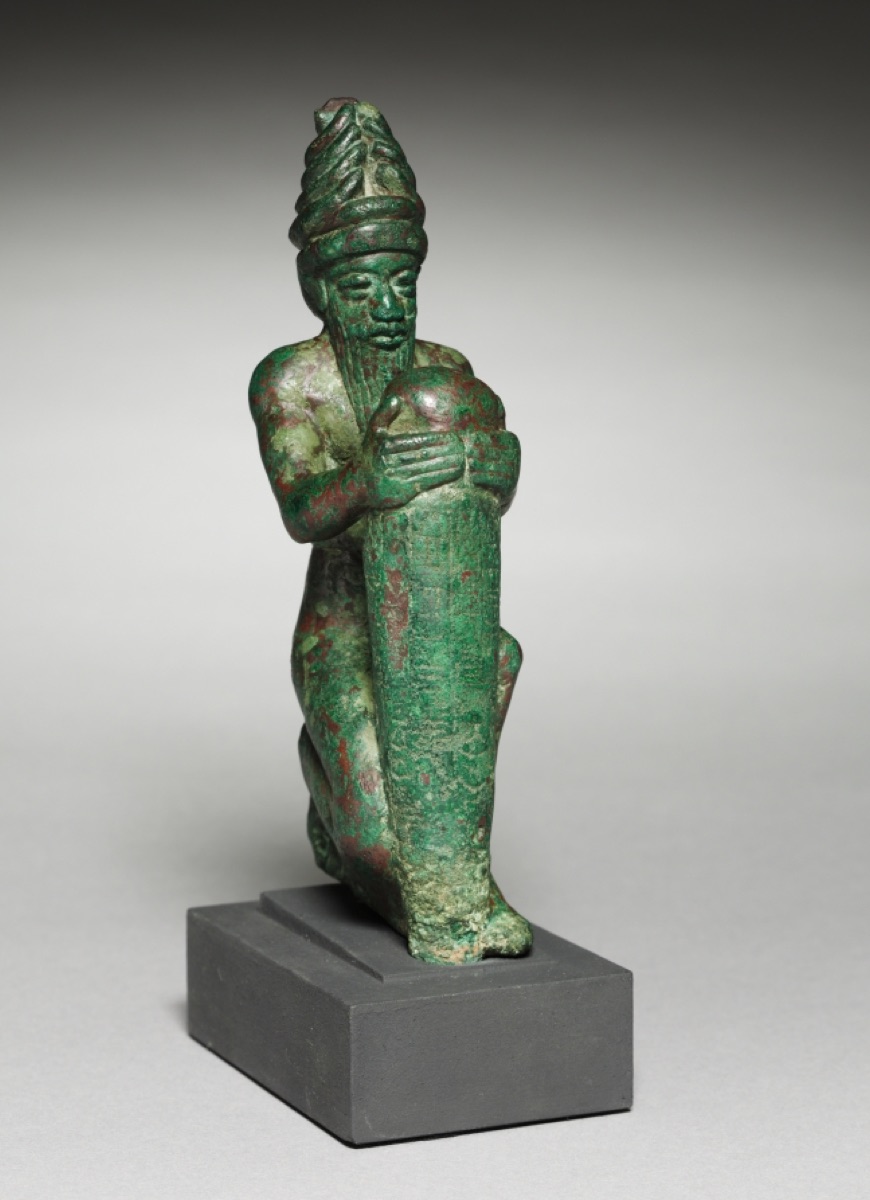
Foundation Nail of Gudea
A copper-alloy foundation nail cast in the form of a god and inscribed with Gudea's name, buried in a temple's foundations to record who built it.
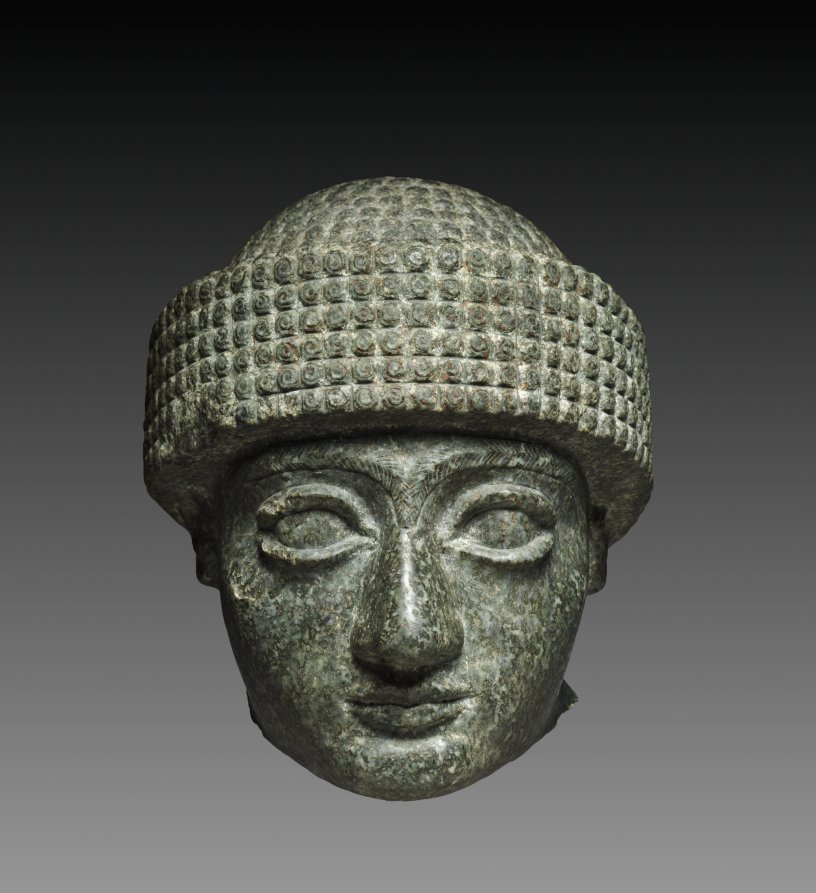
Head of Gudea
A dolerite head from another statue of Gudea, the calm, wide-eyed features that defined Neo-Sumerian royal portraiture.
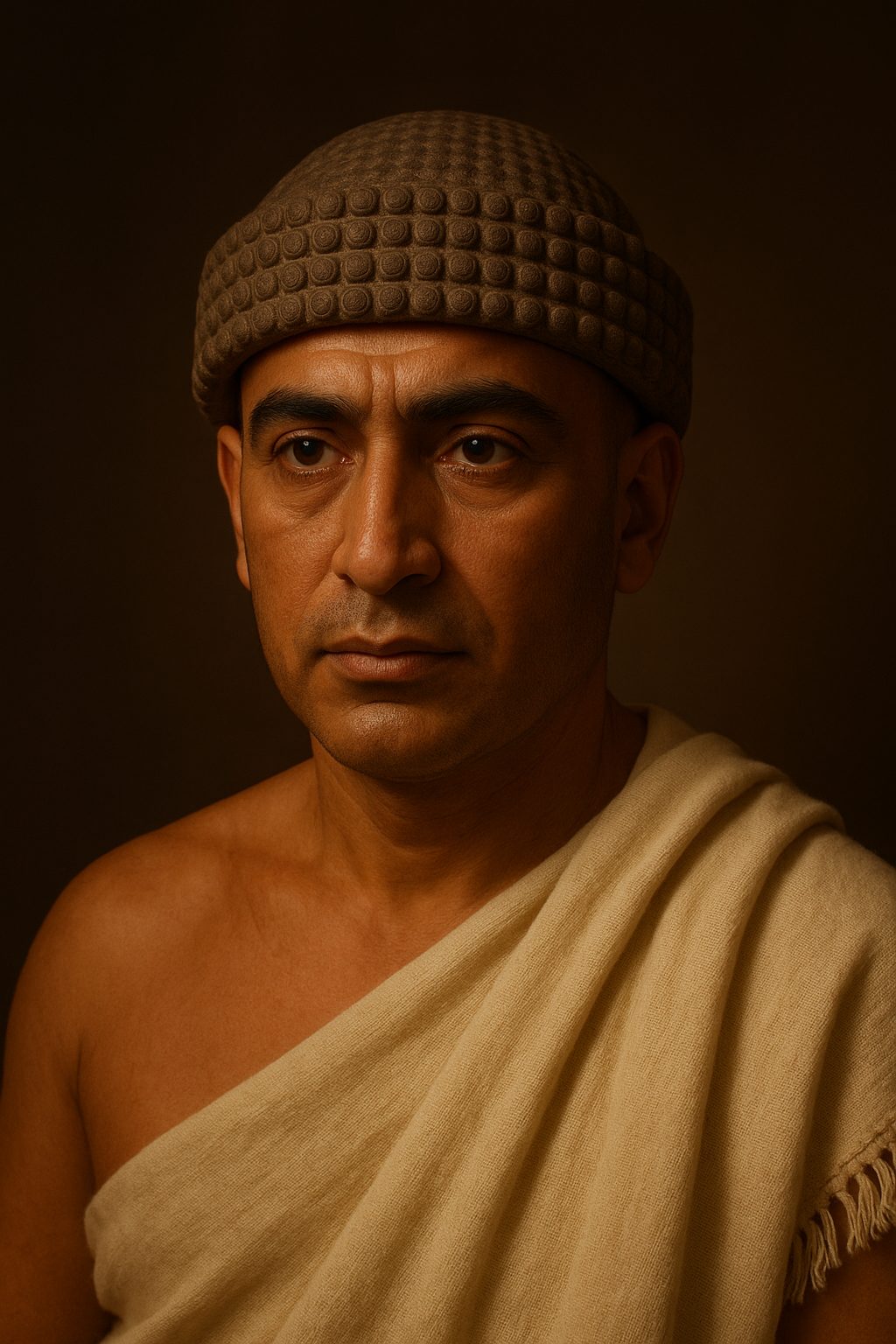
AI reconstruction
Gudea of Lagash - reconstruction
Gudea, ruler of the Sumerian city-state of Lagash, rendered as a living man from his dolerite portrait head: the royal brimmed cap of curled fleece, a fringed wool mantle over the left shoulder, and the calm wide-set eyes and near-joined brows the sculptors gave him. His many surviving statues are consistent enough to suggest a real likeness, though all follow the same pious convention.
AI reconstruction (2026), based on Head of Gudea, The Cleveland Museum of Art
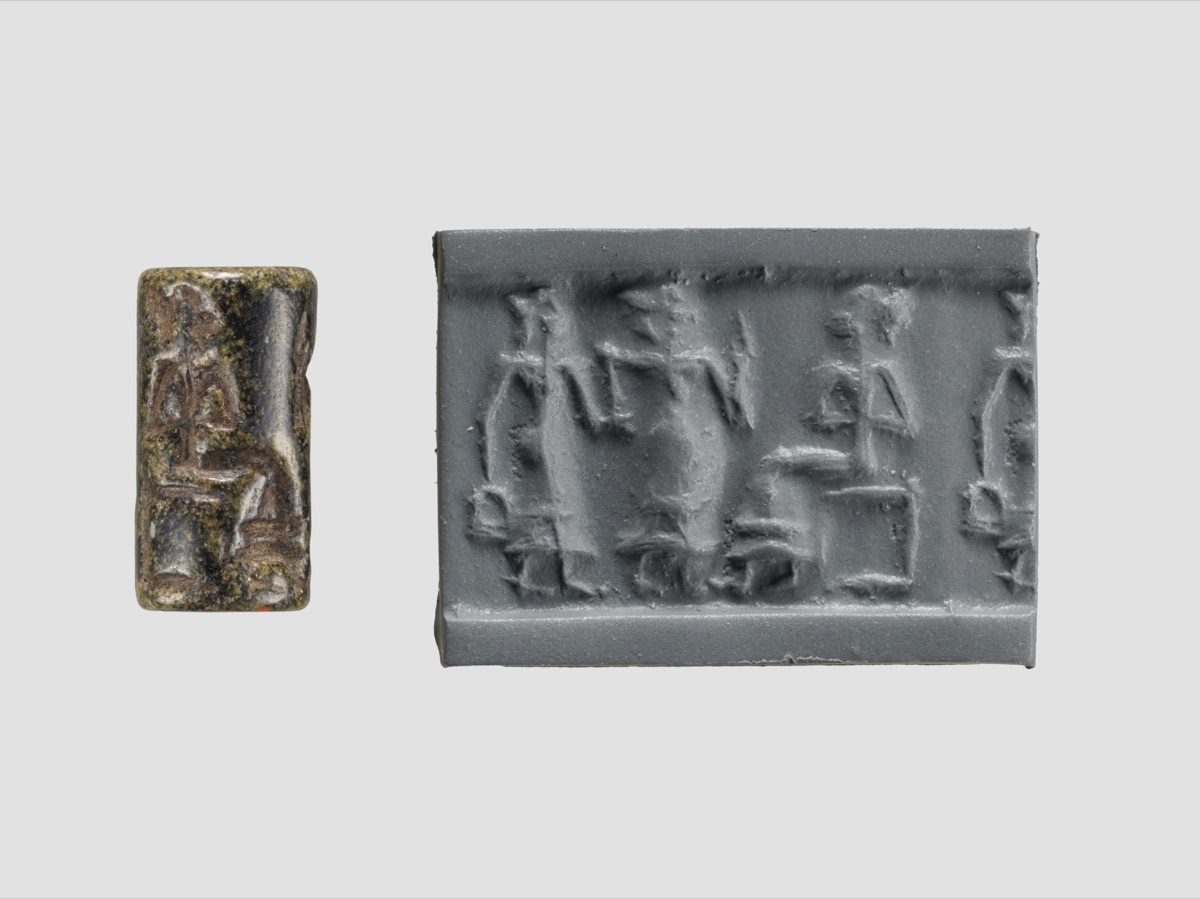
Cylinder Seal (Post-Akkadian)
A cylinder seal from the unsettled decades after the Akkadian empire's collapse, when Gutian rule and local dynasties briefly fragmented Mesopotamia.
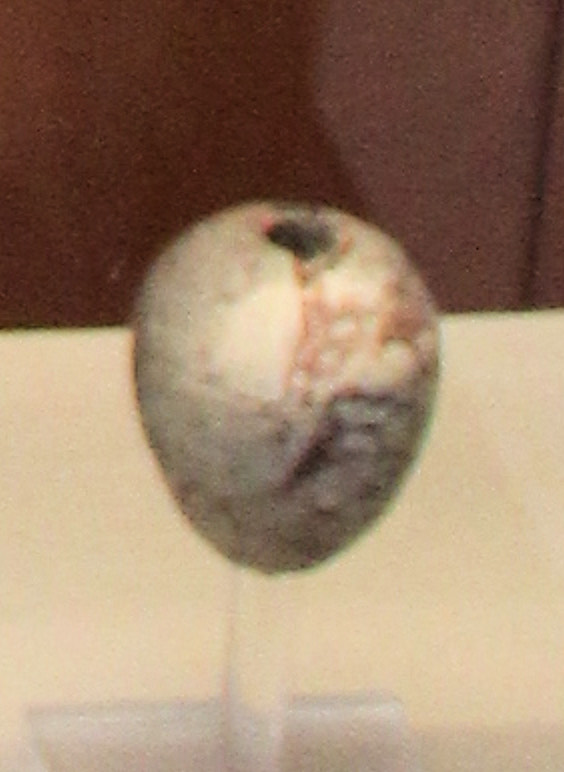
Macehead of Shar-Kali-Sharri
A stone macehead dedicated to the god Shamash in the name of Shar-Kali-Sharri, one of the last kings of Akkad as the empire his father Naram-Sin built began to fray.
The British Museum, BM 91146. Photo: Gary Todd, via Wikimedia Commons
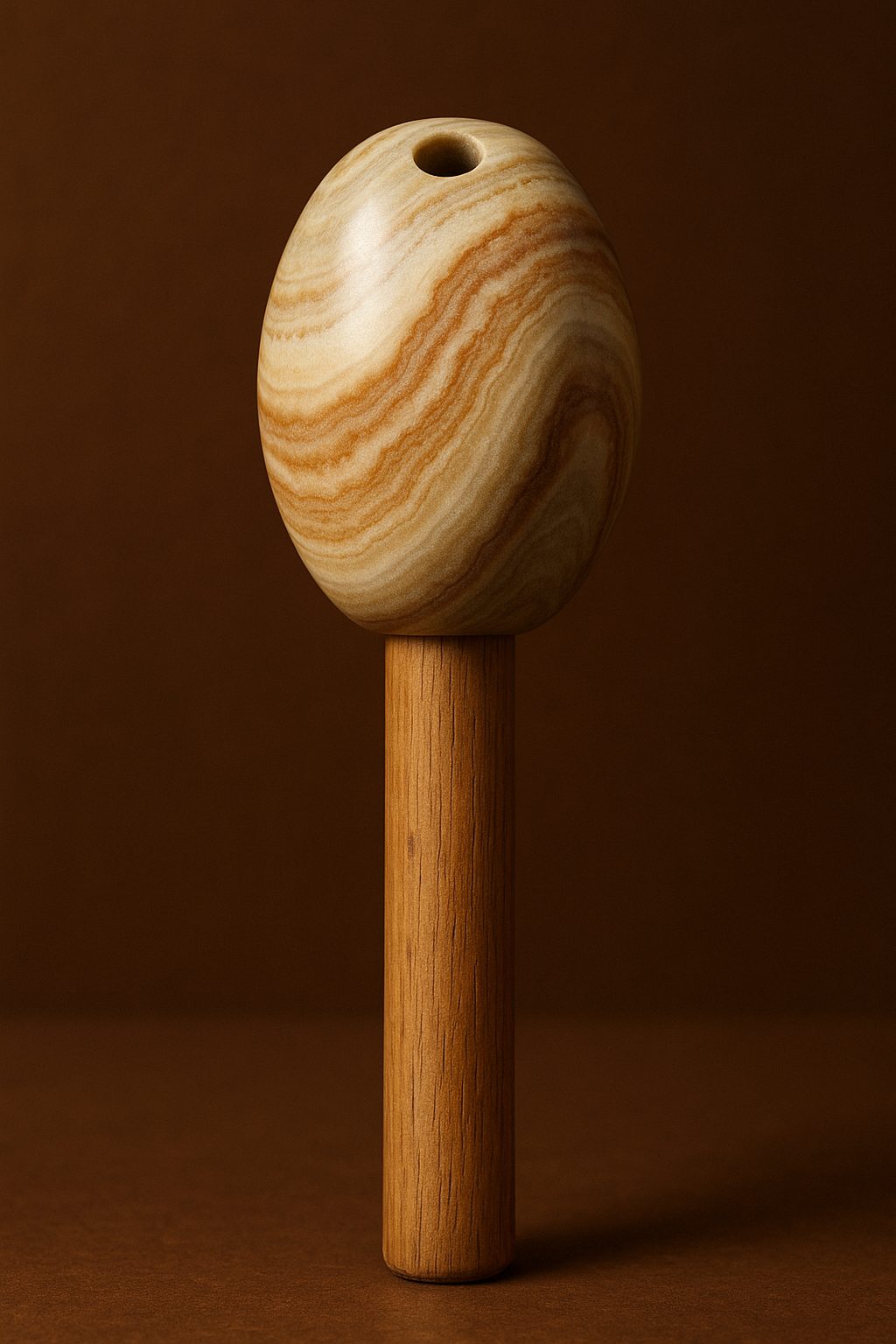
AI reconstruction
Macehead of Shar-Kali-Sharri - reconstruction
The votive macehead of Shar-Kali-Sharri, king of Akkad, restored to new condition and mounted on a plain wooden handle: an egg-shaped head of banded stone, freshly polished so the natural veining shows. The original was dedicated to the sun god Shamash and carries a cuneiform dedication, which is not reproduced here; the handle is a plausible mounting, not a surviving part.
AI reconstruction (2026), based on Macehead of Shar-Kali-Sharri, The British Museum
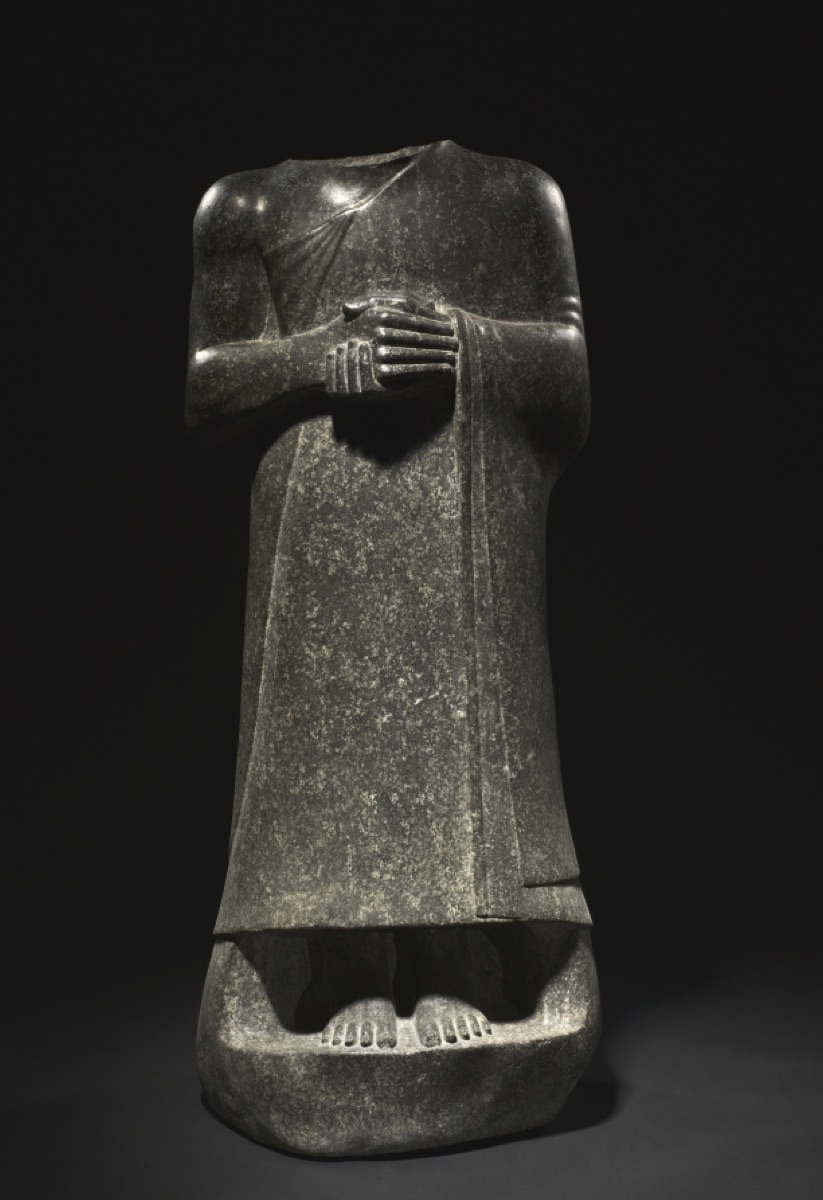
Statue of Gudea
A dolerite statue of Gudea, ruler of Lagash, shown standing with hands clasped in a gesture of devotion, part of a series of portraits he commissioned throughout his city.