Time travel
33rd century BC
Uruk's administrative technology travels outward along trade routes into Syria, Anatolia, and Iran, while at Abydos the same idea of a labeled tag spreads from one royal tomb to the next.
Mental Worlds: Evidence and Inference
A merchant or official living this century, whether at Uruk itself or at one of its distant colonies, inhabits a world organized around the movement of goods rather than the movement of ideas. The tablets and seals that define the century's writing exist to certify that a shipment of grain, wool, or metal left one hand and arrived intact in another; they are trust made durable, a way of making a transaction survive the memory of the two people who made it. A person at Habuba Kabira in Syria, hundreds of miles from Uruk, uses the same bevel-rim bowls, the same sealing practice, the same rough accounting signs as a temple scribe on the Euphrates delta, evidence that an entire administrative culture, not merely a handful of traders, has been exported along the trade routes.
In Egypt, a parallel and apparently independent habit of mind is at work. Successive rulers buried at Abydos are equipped with imported wine from Canaan and oil recorded on small ivory tags, a practice that has now been running for at least a generation. The tags occasionally combine signs in ways that may name places or officials, a step beyond pure tallying, though scholars remain cautious about reading full sentences into anything this early. What is not in doubt is the underlying impulse: that a mark on a durable material can outlast the transaction it records, and that a ruler's household wants its wealth counted and remembered even after the goods themselves are consumed or buried.
Beyond these two river valleys, the century's most striking feature is how little any of this mattered to most people alive in it. Farming communities across the Indus valley, herding populations across the Iranian plateau, and village societies from the Aegean to the Yellow River had no access to writing in any form, and nothing suggests they felt its absence as a lack. Authority in such places rested on kinship, on ritual, on the practical knowledge of soil and season, transmitted by voice and demonstration rather than tablet or tag. The written record, where it exists at all, belongs to an unusually small circle: temple administrators, royal households, and the merchants who served them.
What this century's texts cannot yet do is carry a private thought across distance or time. No letter exists complaining of a debt, praising a god by name, or mourning a death; the closest anyone comes is a jar labeled with a quantity and, perhaps, a place. A thinking person's inner life, whatever grief, ambition, or curiosity moved through it, still had no channel into permanence except the fragile one of being remembered by someone else who was there. The century's real achievement is narrower and more practical than consciousness itself: it is the discovery, tested now in two unconnected places, that some kinds of knowledge are worth fixing in a form other than a living person's memory.
The political map
Major Polities and Cultural Regions
- Uruk and its trade colonies Southern Mesopotamian temple-city projecting administrative and material culture into Syria, Anatolia, and the Iranian highlands.
- Susa (proto-Elamite sphere) Lowland Iranian center trading with Uruk, still without a legible script of its own.
- Naqada Egypt Upper Egyptian polities centered on Abydos, Hierakonpolis, and Naqada, consolidating toward a single kingship.
- Indus valley farming communities Early Harappan settlements of the Indus and its tributaries; still villages, not yet cities.
Borders are approximate scholarly reconstructions from historical-basemaps (GPL-3). Nearest available basemap anchor year: 3000 BC.
State of the domains
Texts and Written Culture
Writing still means only accounting, but the practice now travels. Uruk-style clay tablets, cylinder seals, and the mass-produced bevel-rim bowls used to ration labor appear at colony sites far from southern Mesopotamia, including Habuba Kabira on the Euphrates in Syria and Godin Tepe in the Iranian highlands, carrying the same tallying system outward along trade routes. At Abydos in Egypt, successive royal tombs continue the ivory and bone tagging practice begun the previous century, recording oil, linen, and other goods with combinations of signs and, on some tags, what appear to be place names. No sentence exists anywhere yet; the century's writing still only counts and labels.
Art
Cylinder seal carving grows more elaborate at Uruk, with rows of animals, boats, and ritual banquet scenes now common on sealed goods traveling to and from its colonies. Painted Naqada pottery in Egypt shows boats, animals, and human figures in registers, alongside decorated ceremonial knife handles carved from hippopotamus ivory. Monumental building continues at Uruk's temple precinct, and comparable large mudbrick tomb structures, precursors to the later mastaba form, appear at Abydos and Hierakonpolis for Egypt's leading families. Neither tradition yet inscribes a narrative caption onto a scene; images tell their own story without accompanying text.
Medicine
Healing this century leaves no written trace anywhere in the world, only the bodies it worked on. Egyptian and Mesopotamian burials of this period occasionally show healed fractures and dental wear consistent with a hard, gritty diet, evidence injury was survived and presumably treated by hand, though the treatment itself is invisible to any surviving record. Healed trepanations from Neolithic sites across the wider Near East and Europe show the operation was survivable in this general period, but evidence specifically from dynastic Egypt or Mesopotamia this early remains thin and contested. Healing remained an oral craft, resin, herbs, splints, midwifery, passed directly between practitioners, never recorded on a tablet or tag, both reserved for goods rather than bodies.
Science
Counting technology continues to mature rather than any explanatory science. Uruk's accountants refine their sexagesimal and metrological systems as trade extends further afield, and the practice of sealing containers with cylinder seals functions as an early form of verification, a way to certify that a shipment reached its destination unopened. In Egypt, the tags found in royal tombs record quantities precisely enough that modern scholars can reconstruct a basic decimal counting system already in use. Lunar and seasonal observation almost certainly guides planting and festival timing in both regions, but neither leaves behind any text that explains, rather than merely applies, that knowledge.
Military
Direct evidence of warfare remains scarce, but the century's trade expansion was not entirely peaceful. Some Uruk colony sites in the north, including Habuba Kabira, are fortified with substantial walls, suggesting friction with surrounding populations rather than simple welcome. In Egypt, early rock inscriptions and decorated ivory objects from this period show bound captives and smiting poses associated with emerging rulers, iconography that will become standard royal self-presentation within a few generations. No text anywhere describes a battle, a casualty count, or a campaign; what survives is imagery asserting dominance rather than any narrated conflict.
Technology
Uruk's colonial network depends on riverine and overland transport of bulk goods, timber, metal, and stone that the alluvial south lacks, and administrative technology, sealed containers, standardized ration bowls, travels with it. Copper working continues to spread, and the first securely attested wheeled vehicles, model wagons and cart imagery, begin appearing in this period across the wider Uruk sphere. In Egypt, faience production and copper tool manufacture both intensify, and boats are already central to elite burial practice, with wooden boat pits and boat imagery accompanying tombs at Abydos, evidence of a Nile-based transport culture as developed in its own way as Mesopotamia's canals.
Material world
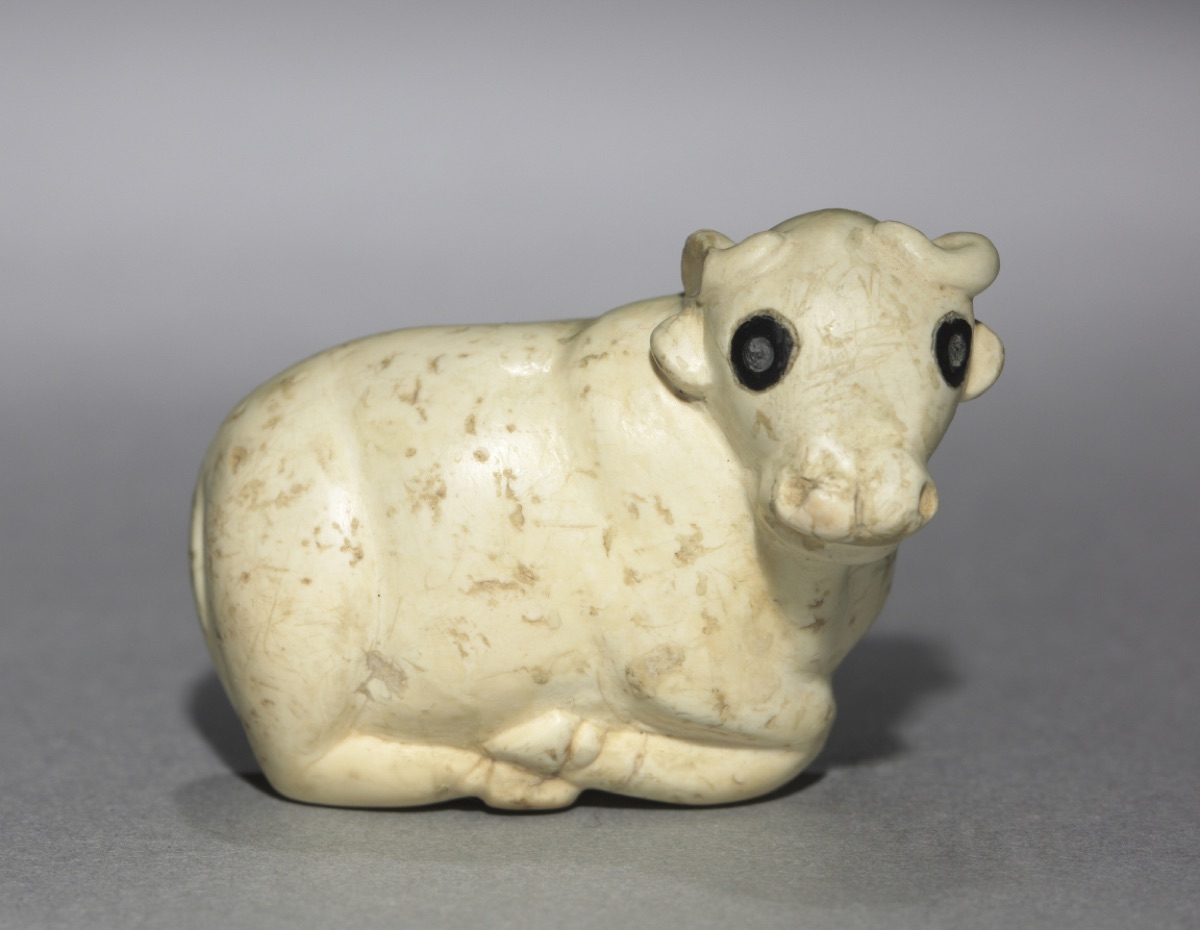
Amulet Seal in the Form of a Bull
A small stone amulet carved as a bull with inlaid black-stone eyes, its underside incised with two running animals so it doubled as a stamp seal, a personal marker of ownership from earliest Sumer.
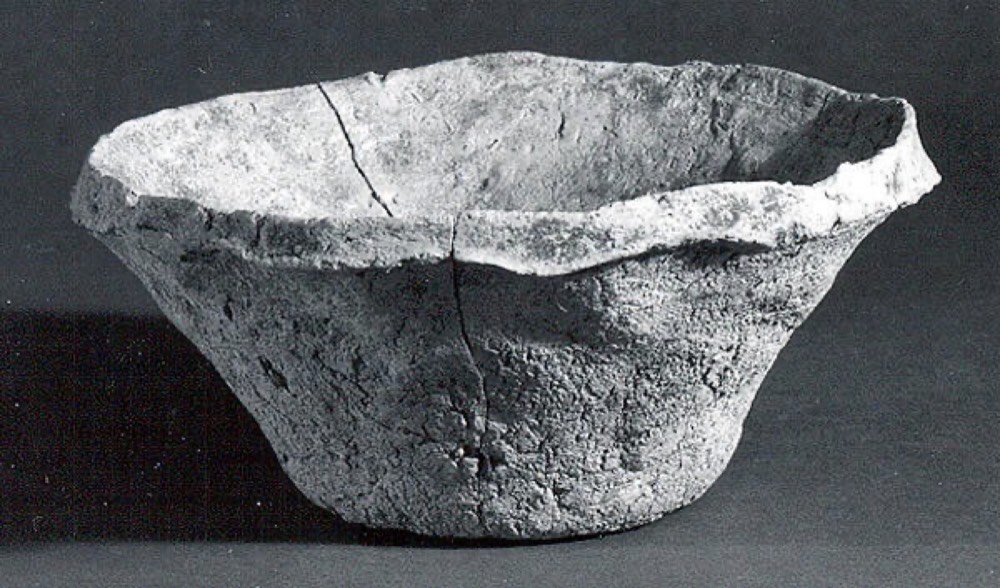
Beveled Rim Bowl
A crudely mold-made ration bowl, the single most numerous surviving artifact type from the Uruk world and evidence of an early standardized food-distribution system.
The Metropolitan Museum of Art, 62.70.25. Photo via Wikimedia Commons
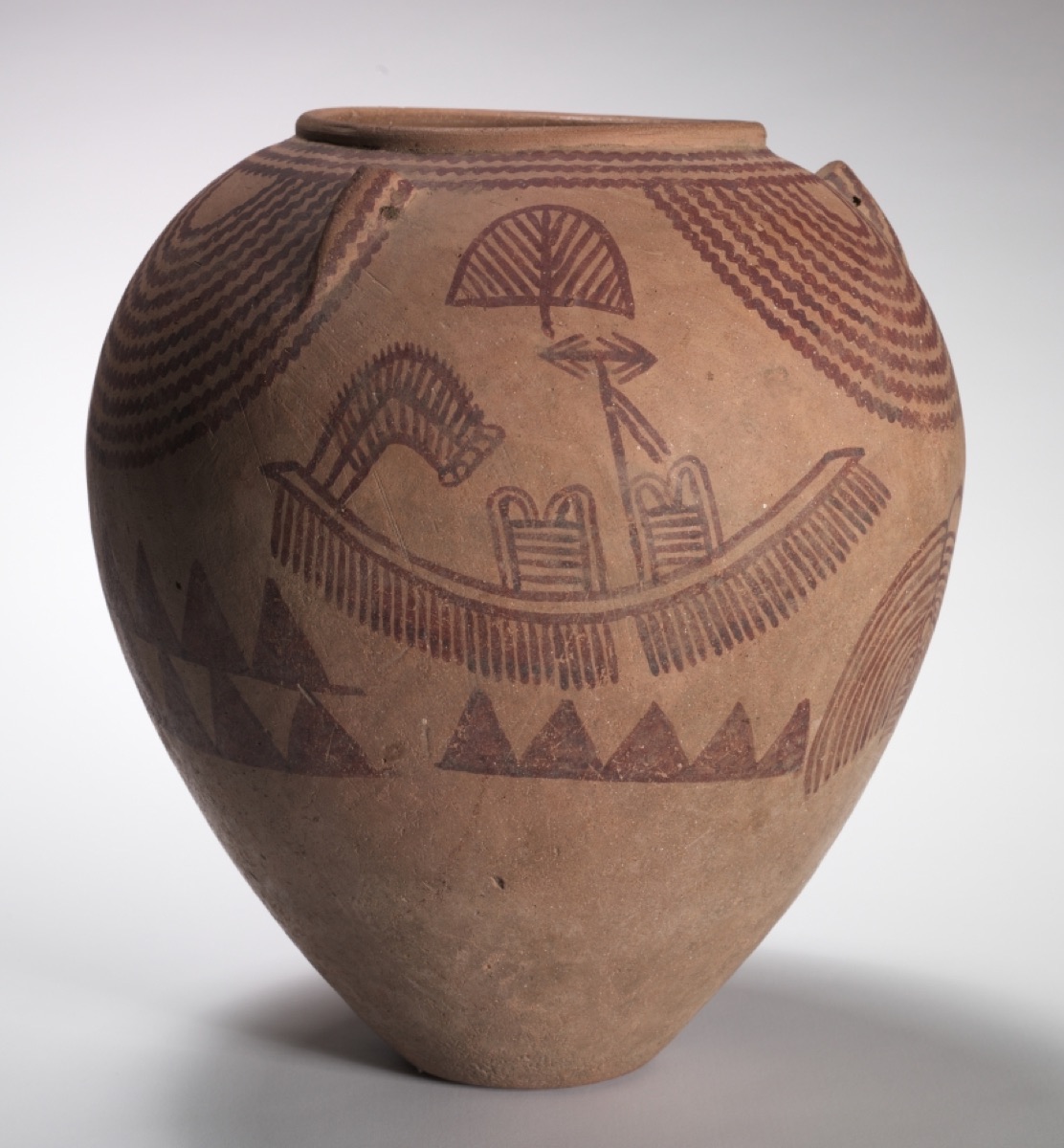
Decorated Jar with Boat Scenes
A marl-clay jar painted with rowed boats and standards, a motif linked to the ceremonial river processions of late Predynastic Egypt.
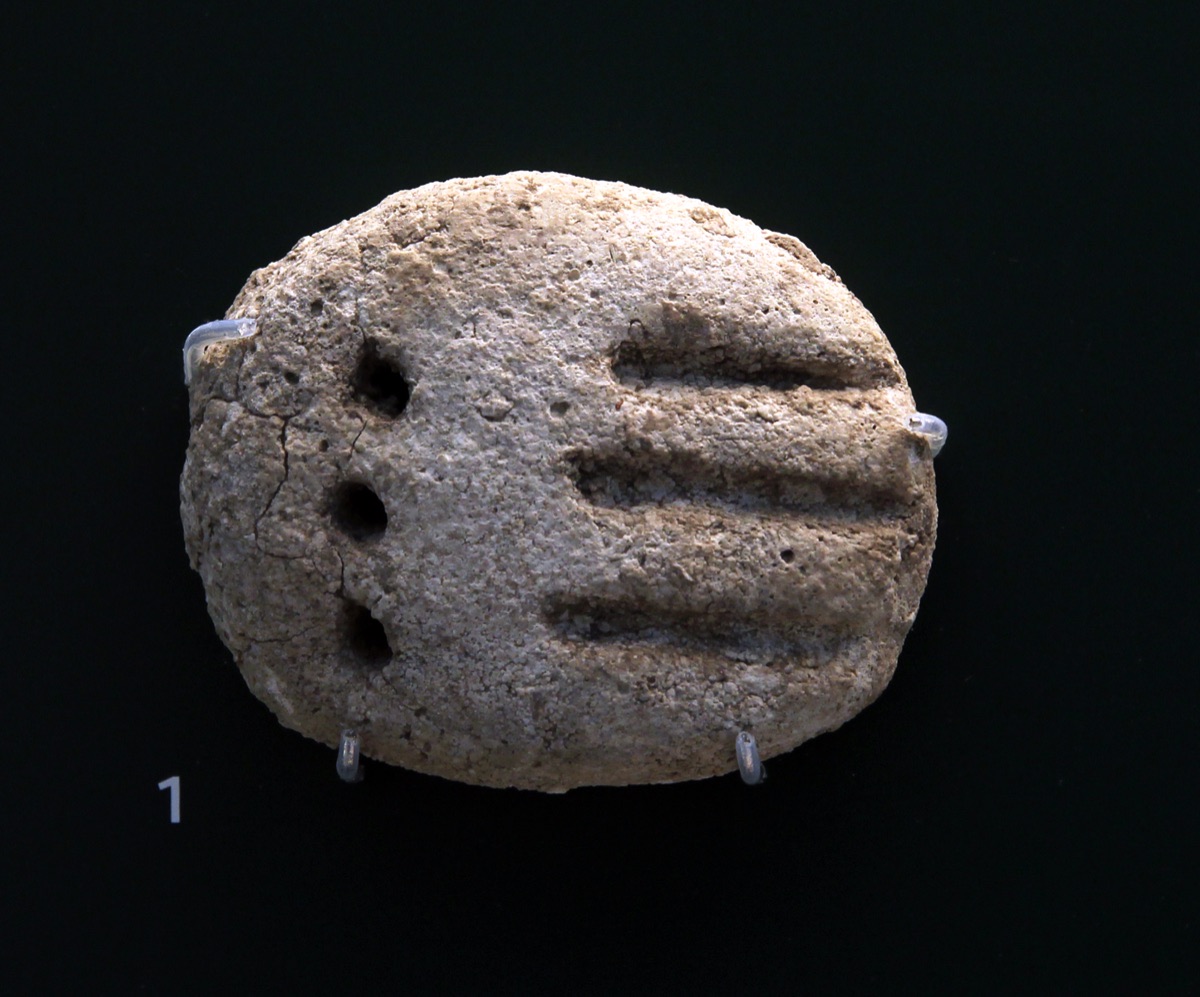
Gypsum Tablet with Archaic Numbers
A gypsum tablet bearing only numerals, from the archaic accounting system that predates true writing by a matter of decades.
New this century
- Tomb U-j Bone and Ivory Labels
More than 150 small bone and ivory labels, incised with numerals and signs that some specialists read as early place-names or commodity notations, were attached to grave goods in tomb U-j at Abydos and rank among the earliest Egyptian writing presently known; their date range overlaps the earliest Mesopotamian proto-cuneiform closely enough that whether Egyptian recording developed independently or was partly stimulated by interregional contact remains debated rather than settled.
The canon by now
No tier-one work in the corpus predates this century.