Time travel
4th century AD
This is the century Christianity stops being a private conviction and becomes a state's business, first by imperial council in Constantine's Rome and then through a king's own coinage and inscriptions in Ezana's Aksum.
Mental Worlds: Evidence and Inference
Constantine's toleration of Christianity, formalized after his victory at the Milvian Bridge in 312 and confirmed at Milan the following year, changes what kind of century this is for Christian intellectual life more than any single doctrinal development within it. Within barely a decade the emperor is convening bishops at Nicaea in 325 to settle, by imperial-backed council, questions about Christ's relationship to God the Father that individual theologians had previously argued out independently and inconclusively. Eusebius, present at Nicaea, writes the Ecclesiastical History, a project begun earlier in the century and repeatedly revised into the Constantinian period, the earliest surviving sustained attempt to narrate Christianity's own institutional past now that doing so is no longer dangerous. Over the following decades the Cappadocian Fathers, Basil of Caesarea and Gregory of Nazianzus among them, and in Egypt the tradition Athanasius represents, give the doctrine settled in outline at Nicaea its full technical vocabulary in Greek, theological systematization every bit as rigorous, in its own terms, as anything Ptolemy or Galen produced two centuries earlier in their fields.
Two thousand miles south, a king converts to the same religion through a process his own coinage and inscriptions document with unusual directness. Ezana of Aksum, ruling from a kingdom on the Red Sea trade route whose armies campaign into the Nile valley around Meroe as the Kushite kingdom collapses during his reign, has his own royal inscriptions altered within that reign, crediting his military victories first to the traditional Aksumite gods and, in later inscriptions from the same reign, explicitly to the Christian god instead. Later Christian tradition, recorded by Rufinus, connects this shift to Frumentius, a Christian brought to Aksum's court through Red Sea merchant networks and later consecrated bishop by Alexandria's church; Aksum's conversion, on the evidence available, is a story of Red Sea commerce and ecclesiastical contact with Alexandria as much as it is a story of one king's own carved voice, and it proceeds on its own timeline, connected to Red Sea commerce, Christian merchant communities, Frumentius and the Alexandrian church rather than to the specific proceedings at Nicaea in the same general years far to the north.
Judaism undergoes its own major institutional consolidation this century, on a track independent of Christianity's imperial backing and considerably more precarious. The Mishnah, the codified oral law completed under Judah ha-Nasi's editorship around 220, has by this century become the base text a new generation of scholars in Roman Palestine argue over case by case, producing what becomes known as the Jerusalem Talmud across the second half of the fourth century, its redaction left incomplete, likely interrupted by the deteriorating conditions for Jewish communities under an increasingly Christian Roman administration in exactly the same province where Christian doctrine is simultaneously being formalized with full state backing. Genesis Rabbah, a verse-by-verse homiletical commentary treating Genesis as worthy of sustained interpretation in its own right, begins taking shape in the same milieu toward the century's end.
Rome's political structure cannot hold the shape Constantine gave it back together indefinitely. The catastrophic defeat and death of the emperor Valens at Adrianople in 378, at the hands of Gothic forces the empire had itself admitted as refugees fleeing the Huns, exposes the western frontier's fragility in a way no single battle had before; by 395, at Theodosius I's death, the empire divides permanently between his two sons into eastern and western halves that never again rule as one. Augustine writes the Confessions in these same final years of the century, an autobiographical examination of his own conversion, without clear earlier precedent in the same sustained form, that turns inward just as the empire around him is visibly fracturing outward. Far to the east, India's Gupta dynasty, founded in 320, is entering a genuine golden age under royal patronage that produces Kalidasa's court poetry and drama, a reminder that this century's crises are only some of Eurasia's story and not all of it. In northern China, the Jin dynasty's collapse after 316 opens the fragmented Sixteen Kingdoms period, non-Chinese steppe dynasties ruling the north while a diminished Jin court survives in the south, a political fracture running on its own schedule but rhyming, again, with Rome's.
The political map
Major Polities and Cultural Regions
- Roman Empire Reunited under Constantine by 324, permanently divided into eastern and western halves by 395
- Sasanian Persia Iran and Mesopotamia under Shapur II's long reign, Rome's steady eastern rival
- Jin China, fragmenting into the Sixteen Kingdoms after 316 North lost to steppe dynasties, Jin court survives in the south
- Gupta Empire Ganges plain, founded 320, opening India's classical golden age
- Aksum Red Sea trade kingdom, converted to Christianity under Ezana, whose armies campaign into the Nile valley around Meroe as the Kushite kingdom collapses
- Hunnic peoples Appearing on the steppe frontier beyond the Danube by century's end
Borders are approximate scholarly reconstructions from historical-basemaps (GPL-3). Nearest available basemap anchor year: AD 300.
State of the domains
Texts and Written Culture
Eusebius writes the Ecclesiastical History, composing and repeatedly revising it across the early fourth century and bringing its surviving form into the Constantinian period after Constantine's toleration edict makes such a project safe to publish; it stands as the earliest surviving extended history of the Christian church. The Cappadocian Fathers, Basil of Caesarea and Gregory of Nazianzus among them, and in Egypt Athanasius, whose Life of Antony popularizes the monastic ideal, give Christian doctrine its lasting technical vocabulary in Greek. Augustine writes the Confessions at the century's end, an autobiographical examination of conscience without clear earlier precedent in the same sustained form. Ammianus Marcellinus writes the last great classical-style Latin history, the Res Gestae. In Persian Mesopotamia, Aphrahat's Syriac Demonstrations mark a Christian tradition already reaching beyond the Mediterranean world toward Persia, Central Asia, India, and eventually China. In India, Kalidasa's Gupta-era plays and poetry open a golden age of Sanskrit court literature.
Art
Constantine's new capital at Constantinople, founded in 330 on the site of Byzantium, reorganizes late Roman art and architecture around an explicitly Christian program, including some of the first monumental churches built at state expense. Ezana of Aksum has his own royal inscriptions and coinage changed within his reign, from crediting traditional gods to the Christian god for his victories, unusually direct evidence for a religious shift tied to Red Sea commerce, Christian merchants, Frumentius, and the Alexandrian church. Gupta India's sculpture and temple architecture begin the stylistic synthesis later ages treat as India's classical standard. Roman portrait sculpture, meanwhile, grows increasingly abstract and frontal, less interested in likeness than in symbolic authority. Farther south in Oaxaca, Zapotec Monte Alban carves monuments recording visits from ambassadors garbed in Teotihuacan style, evidence of contact between distant Mesoamerican centers even as both remain unaware of events across the Atlantic or in Asia.
Medicine
No dominant new medical treatise emerges from this century in the corpus; Galen's system, now nearly two hundred years old, remains medicine's working framework across the late Roman world, taught and excerpted rather than superseded. Monastic communities, multiplying rapidly after Athanasius popularizes the Antony model, begin developing informal traditions of care for the sick alongside ascetic practice, an institutional seed that grows into the hospital tradition of later centuries. Gupta India's medical tradition continues developing the Ayurvedic framework established in earlier centuries' Charaka Samhita, though no new landmark treatise from this century appears in the corpus record.
Science
Pappus of Alexandria compiles the Collection around 320, a wide survey and extension of earlier Greek geometry preserving several otherwise-lost theorems, narrower in ambition than Ptolemy's two centuries earlier or Diophantus's within living memory. Sasanian Persia and Gupta India both patronize astronomical work translating and synthesizing older Greek material, though the landmark Indian astronomical treatises belong to the following century. Alexandria's scientific tradition continues under increasing Christian institutional pressure on its traditionally pagan philosophical schools, a tension the following century's murder of Hypatia makes brutally visible. The century's deeper intellectual energy goes into theological system-building instead, at Nicaea in 325 and in the Cappadocians' technical vocabulary for the Christian godhead.
Military
Constantine reunifies the Tetrarchy's four-way division by 324 through civil war against his co-emperors, then moves the empire's functional capital east to Constantinople. Rome fights Persia intermittently across the frontier without decisive result on either side. The Battle of Adrianople in 378 sees a Roman emperor, Valens, killed and his army destroyed by Gothic forces the empire had itself admitted as refugees fleeing the Huns, a catastrophic sign of the western frontier's coming collapse. In China, the Jin dynasty, having briefly reunified the Three Kingdoms, loses the north to non-Chinese steppe dynasties after 316, beginning the fragmented Sixteen Kingdoms period, while the Jin court survives in the south.
Technology
Constantinople's fortifications and harbor works establish the new eastern capital's defensive advantages, ones that let it outlast Rome's western half by a thousand years. The Notitia Dignitatum, a Roman administrative register from century's end, documents an empire reorganizing its military and civil bureaucracy along an increasingly formal east-west division. Vegetius writes the Epitoma Rei Militaris, a manual arguing that the legions have declined from their old standard and need to relearn discipline the ancestors already knew, itself evidence of the strain the century's military crises place on Rome's traditional fighting force. Gupta India's coinage and irrigation works reflect a newly confident, wealthy state.
Material world
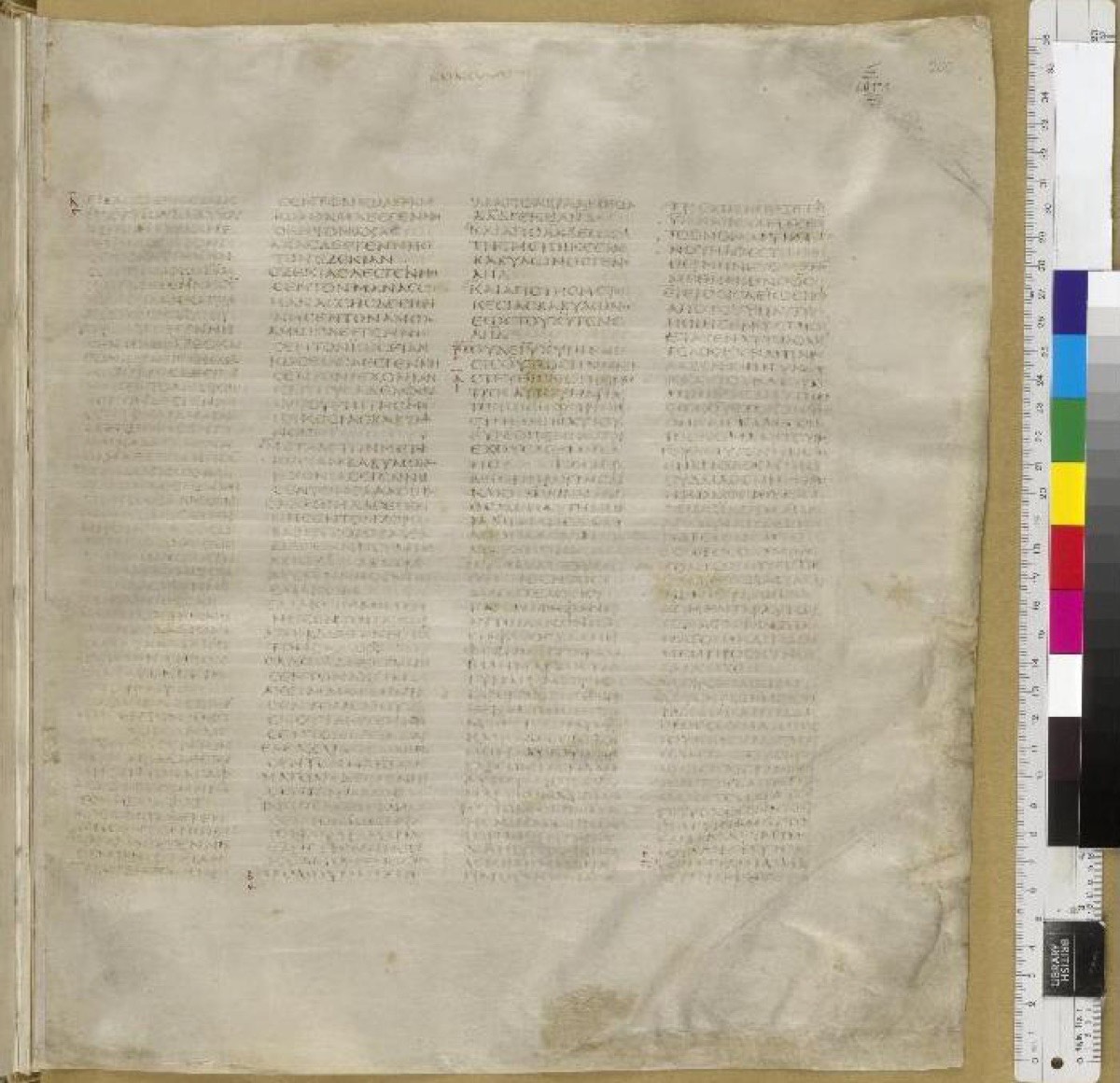
Codex Sinaiticus (Gospel of Matthew)
A page from the Codex Sinaiticus, the earliest known surviving complete Christian New Testament (its Old Testament survives only in part), copied by several scribes onto parchment not long after Constantine legalized the faith.
Codex Sinaiticus Project, codexsinaiticus.org. Public domain
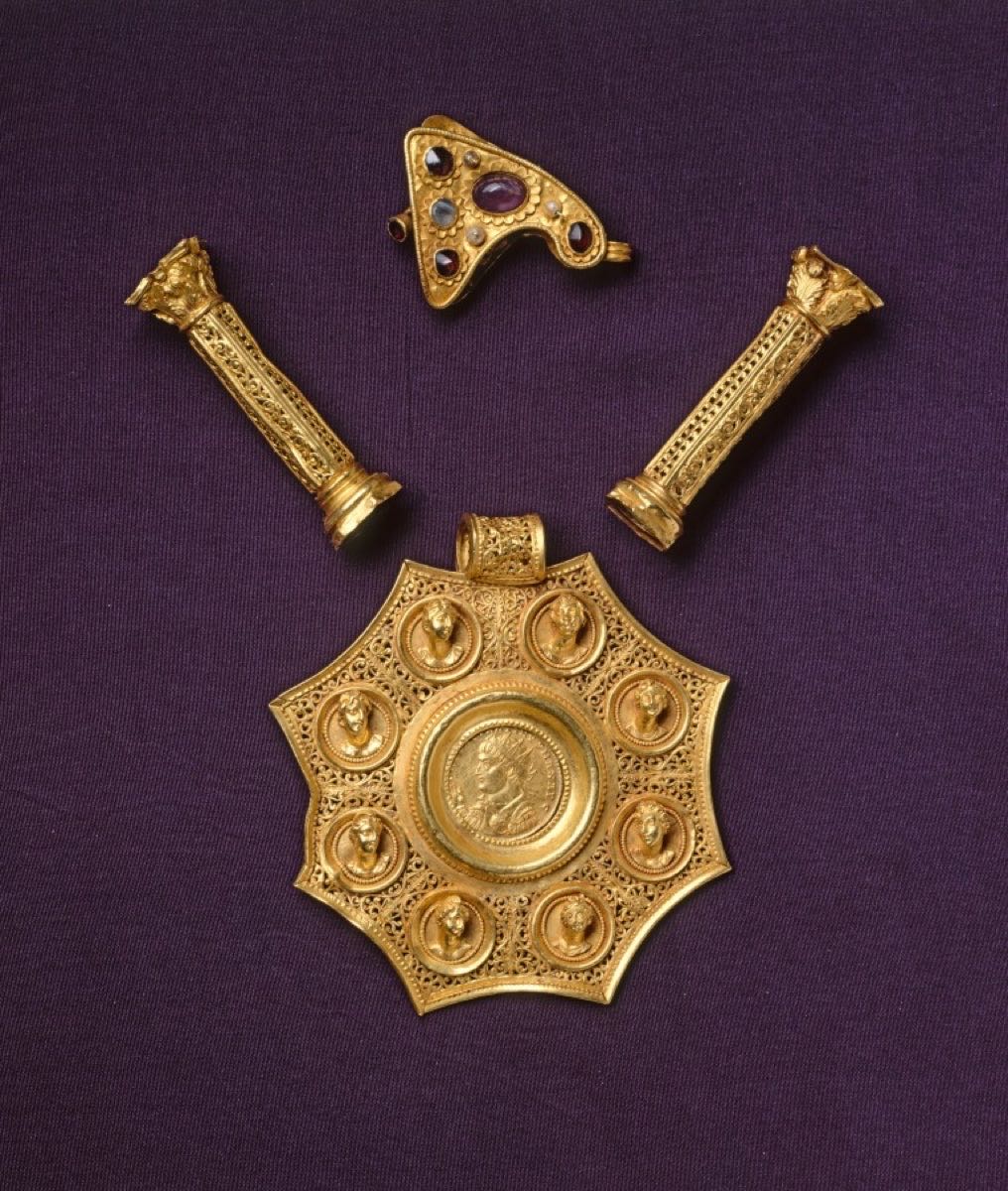
Octagonal Pendant with Corinthian Column Spacers and Clasp Set
A gold necklace set with gems in the years Constantine defeated Licinius and refounded Byzantium as his new capital - the kind of portable wealth worn by the Roman elite.
The Cleveland Museum of Art, Leonard C. Hanna Jr. Fund, 1994.98
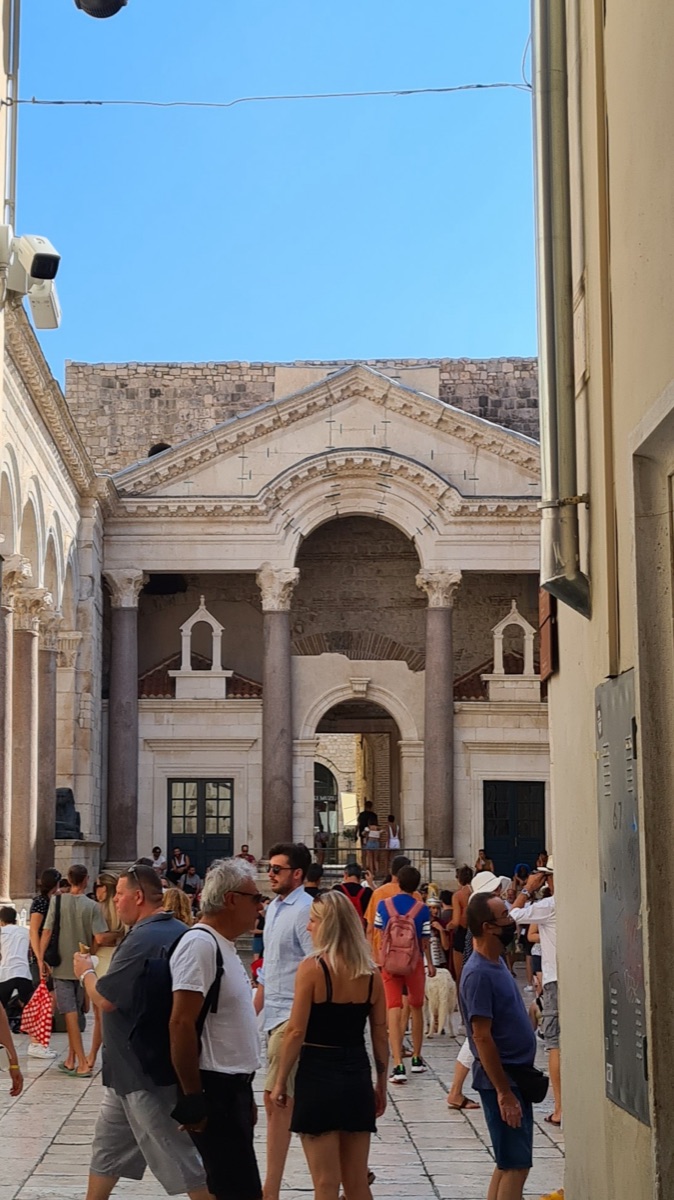
Diocletian's Palace
A fortress-palace on the Dalmatian coast built for Diocletian's retirement, its peristyle court laid out on the military-camp plan of the frontier forts he had spent his reign reforming.
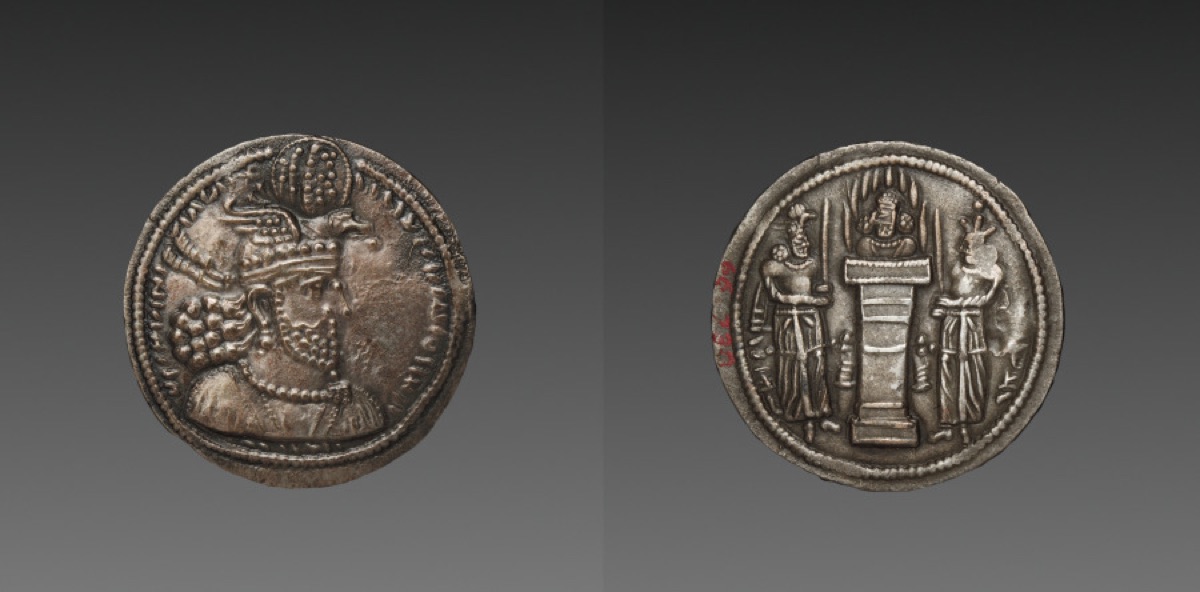
Drachm: Bust of Hormizd II (obverse); Fire Altar with Bust (reverse)
A silver coin struck in the short reign of Hormizd II, its Pahlavi legend and Zoroastrian fire altar carrying the Sasanian state's religious claims into everyday transactions.
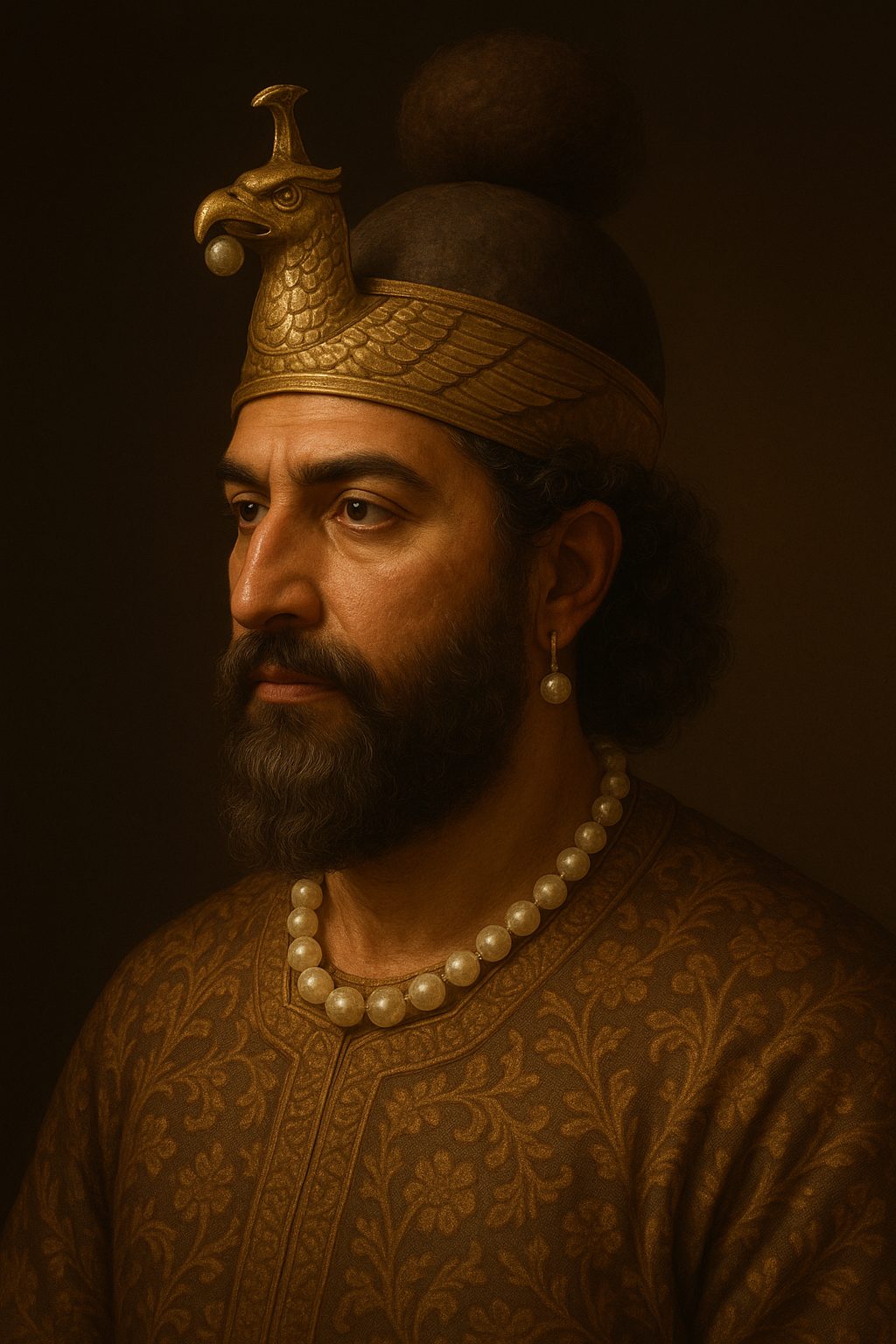
AI reconstruction
Hormizd II - reconstruction
Hormizd II, Sasanian king of kings, reconstructed from his silver drachm: the eagle-crested gold crown of his coinage, a bird of prey holding a pearl in its beak, beneath the korymbos, the silk-bound globe of hair that marked Sasanian royalty. He wears pearl earring and necklace over a patterned silk kaftan, with the full pointed beard of the coin portrait. Coin dies compress detail, so the face is an informed inference.
AI reconstruction (2026), based on Drachm of Hormizd II, The Cleveland Museum of Art
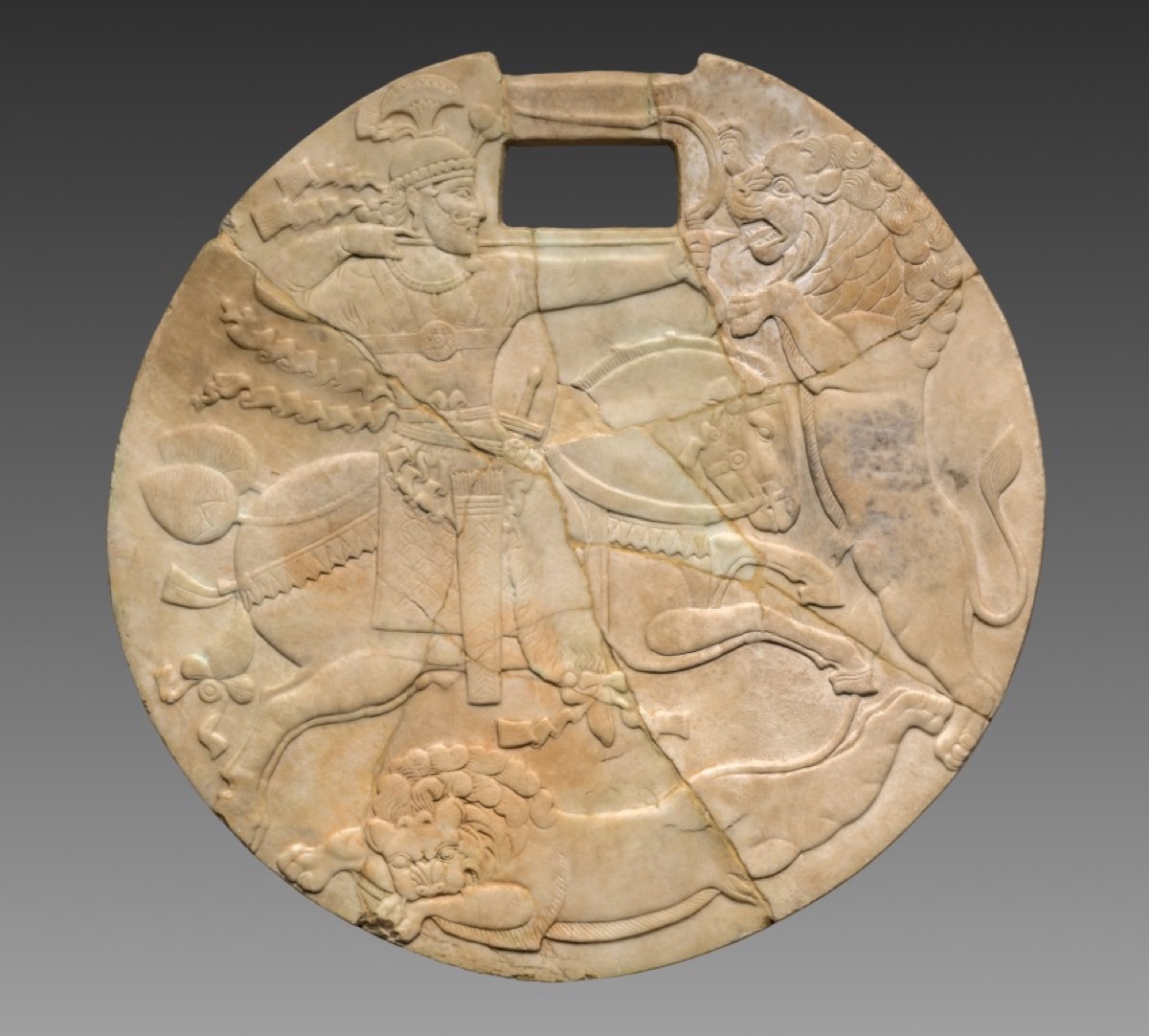
Sasanian King Hunting Lions
An alabaster relief of a Sasanian king spearing lions from horseback, the royal hunt that Persian kings used across centuries of silverwork and stone to broadcast their fitness to rule.
The Cleveland Museum of Art, Leonard C. Hanna Jr. Fund, 1963.258
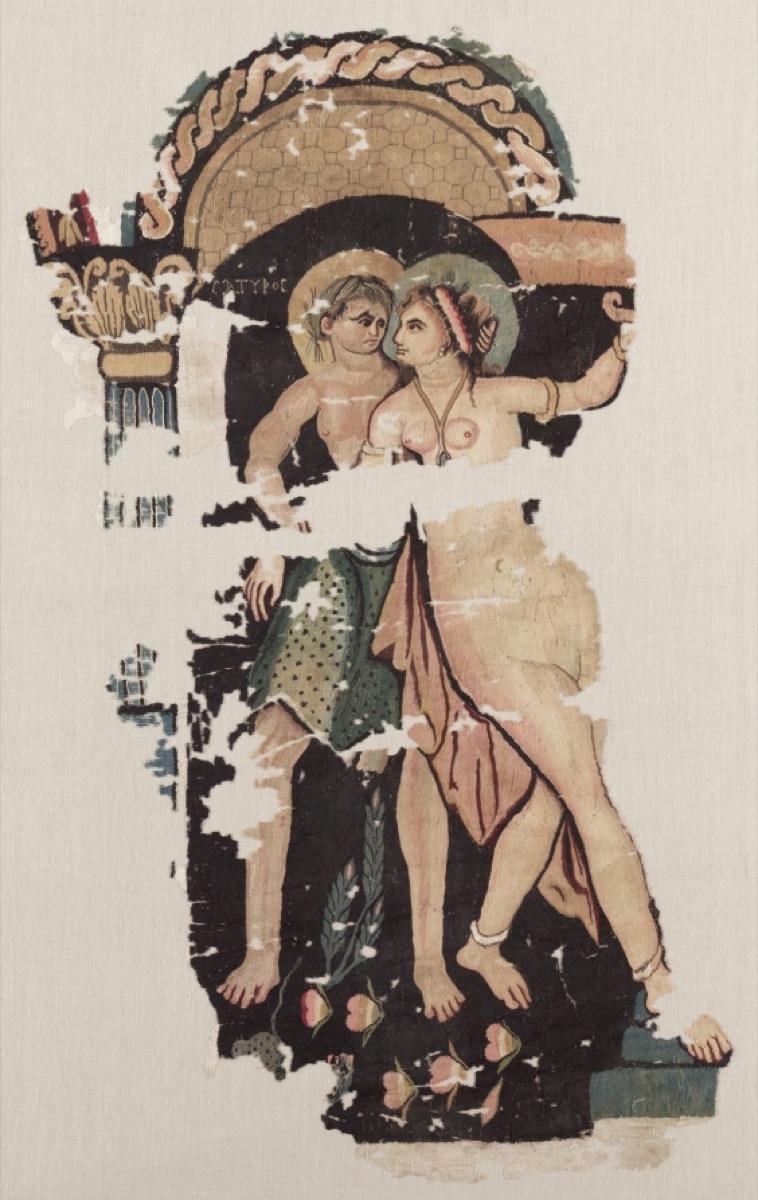
Fragment with Satyr and Maenad
A linen-and-wool tapestry fragment from Roman Egypt, its undyed linen ground worked with dyed wool tapestry weave, still depicting classical Dionysiac figures even as the empire that produced it was turning Christian.
The Cleveland Museum of Art, Purchase from the J. H. Wade Fund, 1975.6
New this century
- Sogdian Ancient Letters
A lost mailbag of merchant and family letters, written in Sogdian and carried west from northern China, gives diaspora traders and their households a directness of voice that royal inscriptions and administrative archives rarely allow.
- Baopuzi
Physical immortality is a real, achievable goal, attainable through alchemical elixirs, breath cultivation, and moral conduct together, and a person who wants to pursue it should also stay engaged in ordinary Confucian civic duty rather than abandon society for reclusion.
- Inscriptions of Ezana of Aksum
Ezana records his military campaigns, including the conquest of Meroe, as proof first of the traditional Aksumite gods' favor and later, in inscriptions from the same reign, as proof of the Christian god's favor, giving unusually direct material evidence for a conversion process elsewhere connected to Red Sea commerce, Christian merchants, Frumentius, and the Alexandrian church.
- Hymns of Ephrem the Syrian
Writing in Syriac at Nisibis and, after its cession to Persia in 363, at Edessa, Ephrem composed dense, paradox-driven cycles of hymns, on Paradise, on faith, against heresies, and against the emperor Julian among others, that made him the major poet-theologian of the Syriac tradition, using tightly patterned verse and image rather than discursive argument to explore doctrine, and his enormous later reputation across Greek, Latin, and Syriac Christianity attracted a large body of pseudonymous work that modern scholarship has had to work to separate from his genuine corpus.
- Jerusalem Talmud
The Mishnah requires generations of further argument to be applied to real life, and that argument, preserved here in the terser, less polished form produced under Roman rule in the land of Israel itself, is as much a part of the law as the Mishnah's own rulings.
- Mosella
The Moselle river valley, its vineyards, fish, villas, and reflections, is worthy of the same sustained descriptive attention Greek and Roman poetry usually reserved for more famous rivers and landscapes, and describing it well is itself an act of regional pride.
- Res Gestae
Rome's fourth-century decline into military disaster and internal division, most vividly the catastrophic defeat at Adrianople, can still be understood through the same rigorous, eyewitness-grounded historical method the Greeks used centuries earlier, even by a Greek-speaking soldier writing in his adopted Latin.
- De Officiis Ministrorum (On the Duties of the Clergy)
Cicero's Roman ethical framework of honorable and expedient conduct still holds, but only once refounded on Christian revelation and scripture rather than pagan philosophy, so that the clergy's duties can be taught through the same disciplined structure Cicero used for Roman public men.
- De Raptu Proserpinae
The old mythological subject of Proserpina's abduction into the underworld can still support a fully serious classical epic, written in polished Virgilian hexameters, even at the very end of the pagan literary tradition and under an officially Christian empire.
- Confessions
A single restless life, from stolen pears to a garden conversion, becomes proof that the human heart cannot rest until it rests in God, and that even sin serves a story of grace in the end.
- Genesis Rabbah
Genesis rewards verse-by-verse, even word-by-word, homiletical excavation, and the accumulated interpretive tradition built up around it over generations of sages deserves to be preserved as a text in its own right, not treated merely as background to the Mishnah's law.
- Abhijnanashakuntalam
Love authenticated by memory and recognition, rather than by contract or first impression, is what survives forgetting, betrayal, and time, dramatized through a king who forgets his wife under a curse and is redeemed only by a chance-recovered ring.
- Meghaduta
Longing itself can be transformed into art, argued through an exiled spirit's plea to a passing raincloud to carry a message to his distant wife by mapping desire onto the geography of an entire subcontinent.
The canon by now
- Pyramid Texts
- Royal Inscriptions of Sargon of Akkad
- The Exaltation of Inanna
- The Curse of Agade
- Coffin Texts
- Admonitions of Ipuwer
- Eloquent Peasant
- Code of Hammurabi
- Old Babylonian Gilgamesh (Pennsylvania and Yale Tablets)
- Inanna's Descent to the Netherworld
- Edwin Smith Surgical Papyrus
- Book of the Dead
- Rigveda
- Baal Cycle
- Ludlul Bel Nemeqi
- Epic of Gilgamesh
- Instruction of Amenemope
- Gathas
- Book of Songs
- Torah
- I Ching (Book of Changes)
- Mahabharata
- Iliad
- Odyssey