Time travel
27th century BC
Egypt's Third Dynasty king Djoser and his architect Imhotep raise the Step Pyramid at Saqqara, one of the world's earliest known large-scale cut-stone buildings, as Mesopotamian city-states continue their established rivalry.
Mental Worlds: Evidence and Inference
A person standing near Saqqara this century watches something rise from the desert plateau that nothing in the world has quite matched before: a stepped mountain of dressed limestone, six tiers climbing toward the sky, ringed by a stone wall carved to mimic the wood and reed panels of an ordinary palace, as though the king's earthly household had been translated permanently into rock. Egyptian tradition will eventually credit the design to a named official, Imhotep, remembered by later generations as physician, sage, and eventually god, though what this century's own workers understood of his role, whether as a revered master builder or simply one senior official among the king's court, is not something any contemporary text tells us. The pyramid argues for royal and divine power more forcefully than any inscription of the period actually states in words; a structure this large, this permanent, this unlike anything a private person could ever build, makes its own case for the distance between a king and everyone else.
What a stonemason or laborer on the project actually knew was intensely practical: how to quarry a block of a given size, how to drag it on wetted sand or wooden sledges, how to set a course level against courses already laid. This is real engineering knowledge, precise and consequential, yet none of it survives as an explanation, only as an outcome. A modern engineer can infer a great deal about Third Dynasty surveying and construction method by studying the building itself, but no papyrus or ostracon from this century lays out the reasoning the way a later mathematical text will. The century's genius is embodied in stone rather than committed to writing about stone, and that gap, between what people clearly knew how to do and what they thought worth explaining in words, runs through the whole of this early period.
In Mesopotamia, no comparably singular monument marks this century. A scribe or official in Ur, Uruk, or Lagash continues the steady, undramatic work of temple and palace accounting, their world organized around a single city's politics and economy rather than any unifying royal project on Egypt's scale. This is not evidence of lesser ambition, only of a different political structure: fragmented city-states investing in temples, canals, and fortifications appropriate to their own more modest scale, rather than a single king able to mobilize an entire kingdom's resources toward one building.
Further afield, the century leaves the rest of the world essentially unchanged. Indus valley communities continue their gradual movement toward the urbanism that will define the following two centuries; herding and farming populations from Iran to the Aegean continue lives shaped by oral tradition rather than writing. What distinguishes Egypt this century is not literacy, since its texts remain as terse and formulaic as ever, but architecture: the discovery that stone, patiently and precisely worked, could hold a claim about power more permanently and more visibly than any sentence yet written anywhere on earth.
The political map
Major Polities and Cultural Regions
- Egypt (Third Dynasty, Djoser) United Nile kingdom under Djoser, whose Step Pyramid at Saqqara is the era's most ambitious building project.
- Early Dynastic Mesopotamian city-states Ur, Uruk, Kish, Lagash, Umma, and others, still independently ruled and periodically rivalrous.
- Susa and the Iranian lowlands Regional center in southwestern Iran, its earlier proto-Elamite script tradition now largely faded.
- Indus valley farming communities Pre-urban cultures of the Indus system, approaching but not yet reaching full urbanism.
Borders are approximate scholarly reconstructions from historical-basemaps (GPL-3). Nearest available basemap anchor year: 3000 BC.
State of the domains
Texts and Written Culture
Contemporary written material for Djoser's reign is sparse and mostly formulaic, royal titulary and short building inscriptions rather than any connected account, though later Egyptian tradition remembers his architect Imhotep by name, eventually elevating him to legendary and finally divine status centuries after this century's end. No text from this period explains Imhotep's own reasoning or method; the Step Pyramid itself is the argument, a building making a claim about royal power that no surviving inscription states outright. In Mesopotamia, city-state temple and palace archives continue the established Early Dynastic accounting tradition, still without producing a narrative text or a named individual voice.
Art
The Step Pyramid complex at Saqqara, a stepped structure of six diminishing stone tiers rising over sixty meters, ringed by an elaborate stone-walled enclosure imitating perishable reed and wood architecture in permanent limestone, represents the most significant architectural leap of the entire era, among the earliest known monumental buildings in the world constructed primarily of dressed stone rather than mudbrick. Its scale dwarfs anything built in Mesopotamia this century, where temple architecture remains impressive but continues in the established mudbrick and cone-mosaic tradition. Egyptian relief carving within the complex, showing the king running a ritual course, adds a new register of royal ceremonial imagery.
Medicine
Neither Egypt nor Mesopotamia commits a word of medical explanation to writing this century. The scale and precision of the Step Pyramid project implies considerable practical knowledge of construction injury, fatigue, and workforce management on Djoser's part or his officials', none of it committed to any surviving written form. Skeletal evidence from contemporary burials in both regions continues to show healed trauma and hard physical wear, consistent with large-scale labor projects, but the explanatory and therapeutic knowledge behind any treatment remains entirely oral, and entirely lost to any documentary record from this century.
Science
The Step Pyramid's construction required real advances in surveying, quarrying, and structural engineering, precise leveling, calculated tapering of stone courses, and organized transport of limestone, even though no contemporary text records the mathematics or method behind it; what survives is the result, not the reasoning. This makes the building itself the century's most significant scientific evidence, engineering knowledge legible only through the object it produced. In Mesopotamia, sexagesimal counting and standardized measures continue in steady administrative use, without any comparable architectural leap or any surviving explanatory text in either region.
Military
No major military campaign is securely documented for this century in either Egypt or Mesopotamia. Djoser's reign appears to have been comparatively stable, with royal resources directed toward the Step Pyramid project rather than any recorded conflict, though Egyptian kings of this period continued to claim the smiting posture and bound-captive imagery established generations earlier as a standard part of royal self-presentation. In Mesopotamia, Early Dynastic city-states continue their pattern of fortification and periodic local conflict over agricultural land and canal access, well attested archaeologically even without a named battle from this specific century.
Technology
Egyptian stoneworking reaches a genuine technological threshold this century: quarrying, transporting, and precisely dressing limestone at a scale never before attempted, using copper tools, wooden sledges, and an organized labor and supply system capable of sustaining thousands of workers over years of construction. This achievement rests on administrative technology as much as engineering, the capacity to feed, house, and coordinate a large workforce. In Mesopotamia, bronze alloying continues spreading gradually, and canal-fed irrigation remains the essential technology sustaining the region's dense, competing urban populations.
Material world
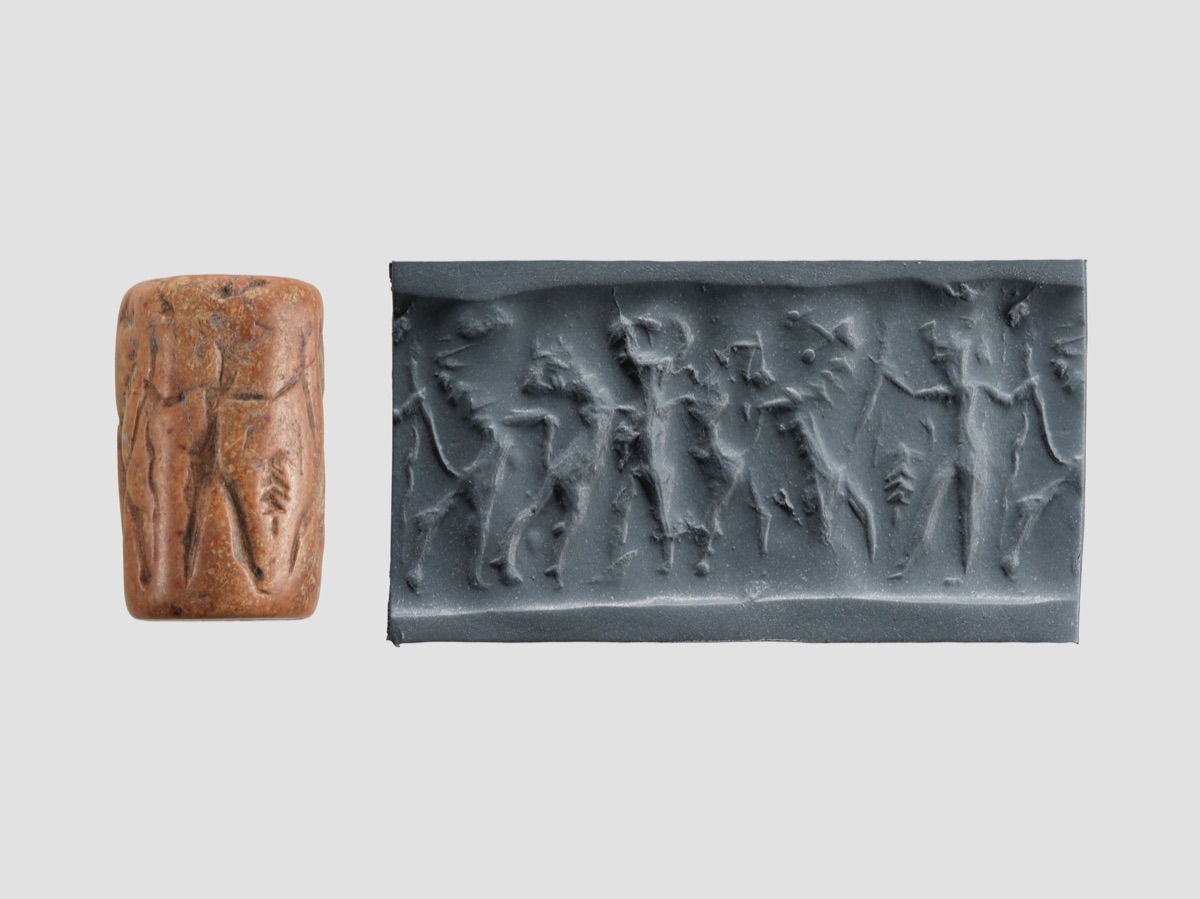
Cylinder Seal (Early Dynastic II)
An Early Dynastic II cylinder seal, cut as the Sumerian city-states of Ur, Uruk, and Kish jostled for regional dominance.
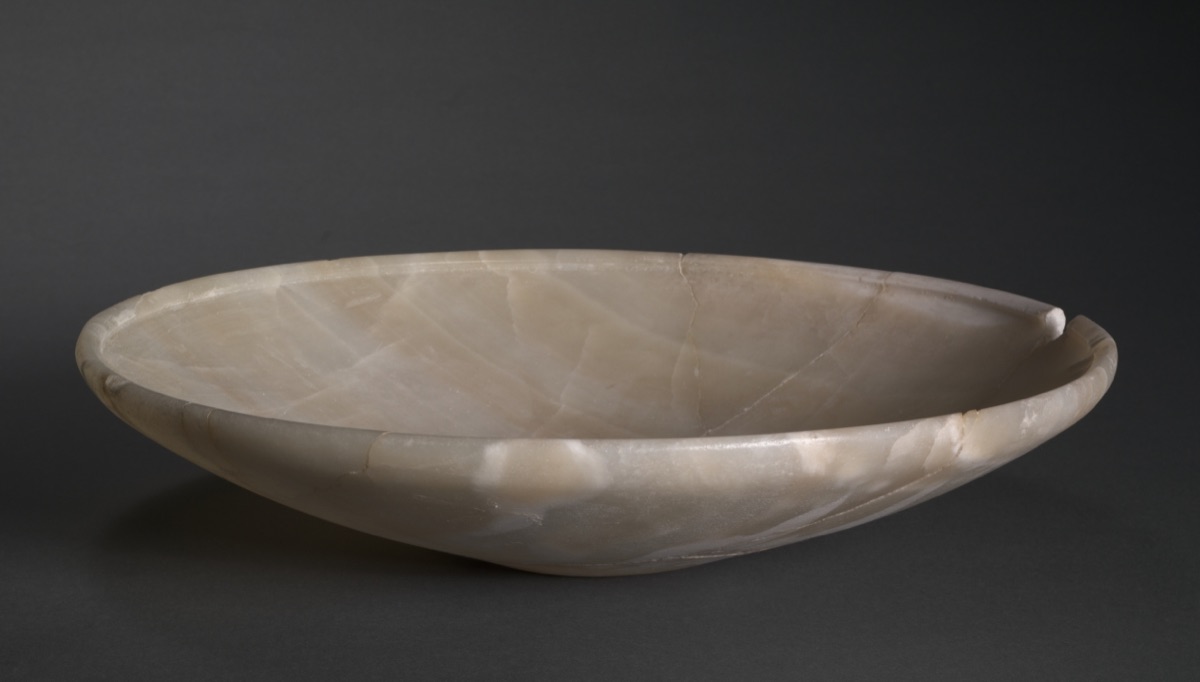
Shallow Dish
A travertine dish contemporary with Djoser's pyramid complex, the same stoneworking tradition scaled down to tableware.
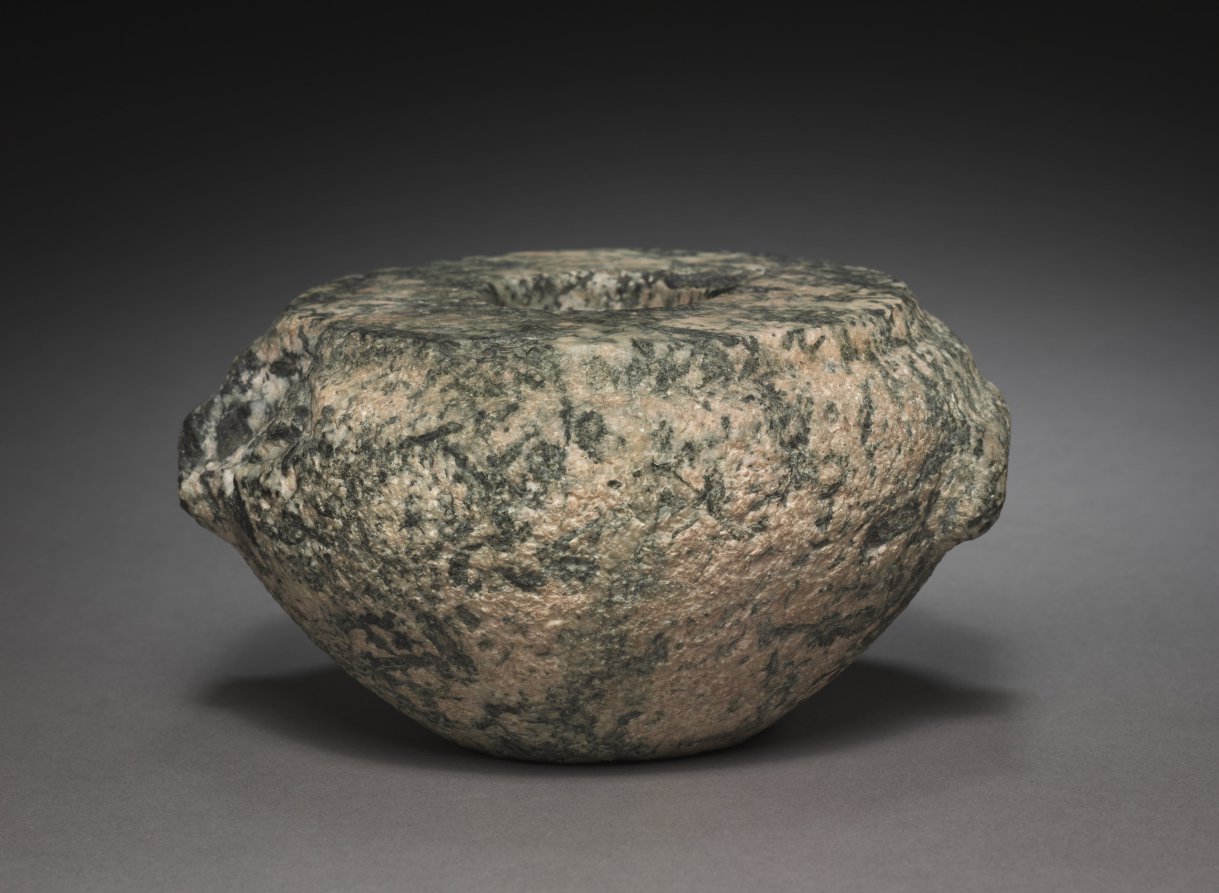
Squat Dummy Jar (Diorite)
A hornblende diorite dummy jar carved for tomb equipment, its hard stone worked with the same quarrying and abrasive techniques used on Djoser's funerary complex.
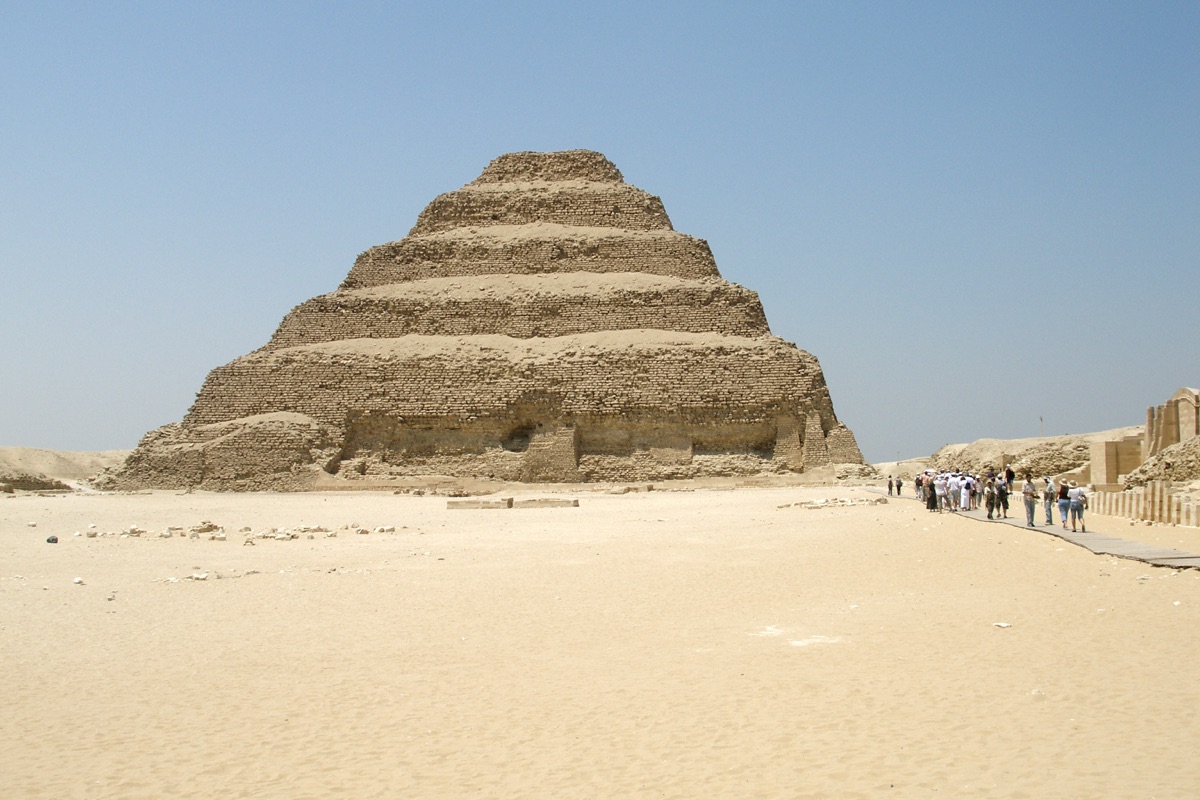
Step Pyramid of Djoser
Imhotep's stepped stone pyramid at Saqqara, among the earliest known monumental buildings in dressed stone anywhere and the direct ancestor of the true pyramids at Giza.
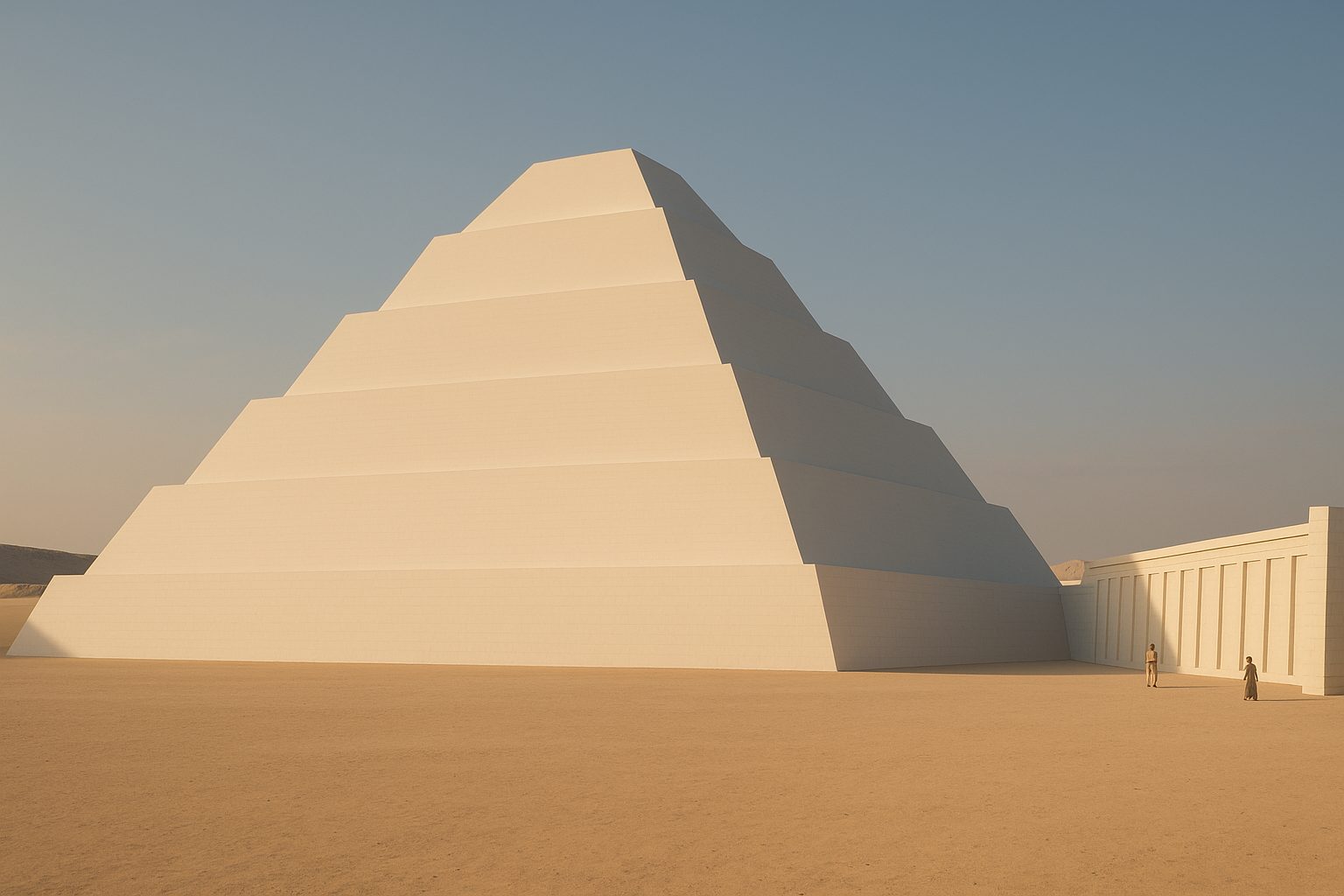
AI reconstruction
Step Pyramid of Djoser - reconstruction
Imhotep's pyramid at Saqqara as it stood when finished: the stepped mass cased in smooth dressed Tura limestone, edges sharp, the pale stone catching late light, with the niched white enclosure wall of the mortuary complex at its base. Today the casing is gone and the steps stand as weathered core masonry; the crisp white finish shown here follows the surviving casing evidence.
AI reconstruction (2026), based on Step Pyramid of Djoser, photo Vyacheslav Argenberg via Wikimedia Commons
New this century
No corpus entries yet from this century.
The canon by now
No tier-one work in the corpus predates this century.